
Fishing Vessel Air-Cooled Condenser | Marine Finned Tube Solution


Fishing vessel refrigeration systems operate in an environment that is fundamentally different from conventional land-based refrigeration equipment.
When an air-cooled condenser is installed on a fishing vessel, the condenser must reject heat while exposed to salt-laden marine air, vessel vibration, changing ambient temperatures, limited installation space and airborne contaminants.
For this reason, a fishing vessel air-cooled condenser should not be designed simply by adapting a standard commercial refrigeration condenser.
The finned tube, tube arrangement, fin spacing, materials, mechanical support and corrosion protection all need to be considered together.
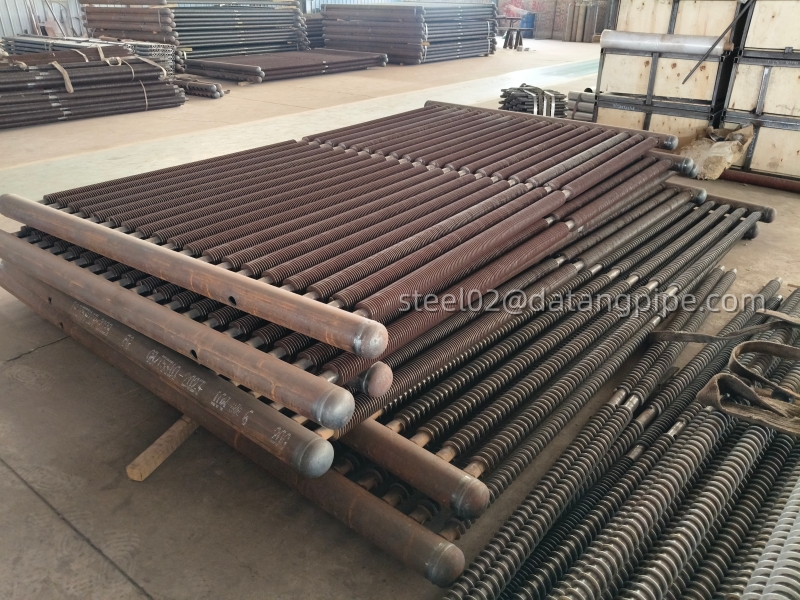
We provide customized finned tube and finned tube bank solutions for marine refrigeration and fishing vessel air-cooled condenser applications, including wound finned tubes and tube-bank configurations manufactured according to customer drawings and operating requirements.
What Is a Fishing Vessel Air-Cooled Condenser?
A fishing vessel air-cooled condenser is a refrigeration heat exchanger that rejects heat from the refrigerant to ambient air using a fan-driven airflow.
After leaving the compressor, the high-temperature, high-pressure refrigerant enters the condenser. Heat passes through the tube wall and extended fin surface before being transferred to the surrounding air. As heat is removed, the refrigerant condenses into a high-pressure liquid and continues through the refrigeration cycle.
In a typical air-cooled condenser, the refrigerant flows inside the tubes while air passes across the external finned surface.
The main heat-transfer components are therefore the tubes and fins, but the complete condenser performance also depends on airflow, tube arrangement, fin geometry, heat-transfer area and operating conditions.
For fishing vessels, these factors must be evaluated together with the marine environment.
Air-Cooled vs. Water-Cooled Condensers on Fishing Vessels
Fishing vessel refrigeration systems can use different condenser arrangements.
An air-cooled condenser uses forced ambient air and a finned tube coil or tube bank to reject heat. A water-cooled condenser uses a water circuit, commonly involving seawater or freshwater depending on the system design.
These are fundamentally different heat exchanger configurations.
Air-Cooled Condenser
The air-cooled configuration generally includes:
- Refrigerant tubes
- External fins
- Tube banks or condenser coils
- Fans
- Headers or manifolds
- Side plates and support structures
The refrigerant remains inside the tubes while forced air flows across the finned surface.
Water-Cooled Shell-and-Tube Condenser
A seawater-cooled shell-and-tube condenser uses a shell-and-tube construction rather than an external finned air-side tube bank.
Cooling water flows through the heat exchanger and removes heat from the refrigerant.
For marine applications, both technologies can be used depending on vessel design, refrigeration capacity, available space, water systems and maintenance requirements.
This page focuses specifically on the finned tube and tube-bank requirements of fishing vessel air-cooled condensers.
Why Fishing Vessel Condensers Need Special Consideration
The refrigeration cycle itself is familiar. The challenge is the environment in which the equipment must operate.
Salt-Laden Marine Air
Salt particles carried by humid marine air can accelerate corrosion of exposed condenser components.
Fins have a large exposed surface area, making corrosion protection an important part of condenser design.
Depending on the required service conditions, corrosion-resistant materials, protective coatings or alternative material combinations may be considered.
Continuous Vibration
A fishing vessel is not a stationary installation.
Engine vibration, vessel movement and repeated mechanical loading can affect refrigerant piping, tube connections, fins and supporting structures.
The condenser assembly therefore needs appropriate mechanical support and vibration management.
For applications where long-term mechanical integrity is particularly important, the fin-to-tube connection method should also be evaluated rather than selected only according to manufacturing cost.
High Ambient Temperature
The condenser rejects heat to the surrounding air.
When ambient temperature increases, the available temperature difference between the condenser surface and the air decreases. This can increase condensing temperature and place additional load on the refrigeration system.
Condenser capacity should therefore be evaluated using the actual design ambient condition of the vessel and its operating area.
Salt and Dust Fouling
Salt deposits, dust and other airborne contaminants can accumulate on the fin surface.
As deposits build up, airflow can become restricted and the effective heat-transfer performance of the condenser may decrease.
Fin spacing should therefore be selected as a balance between heat-transfer area, airflow resistance and cleaning requirements.
Limited Installation Space
Fishing vessels often have compact machinery spaces.
The condenser must fit within the available envelope while maintaining sufficient airflow and providing practical access for inspection and cleaning.
This is one reason customized tube-bank dimensions can be more appropriate than standard condenser coils.
Finned Tube Selection for Marine Air-Cooled Condensers
The finned tube is the core heat-transfer element of an air-cooled condenser.
However, there is no single finned tube specification that is suitable for every fishing vessel.
The appropriate configuration depends on factors such as:
- Refrigeration capacity
- Refrigerant type
- Condensing temperature
- Ambient temperature
- Airflow rate
- Fan capacity
- Allowable air-side pressure drop
- Tube diameter
- Fin material
- Fin pitch
- Tube arrangement
- Marine exposure
- Installation dimensions
- Cleaning requirements
For this reason, we recommend selecting the finned tube as part of the complete condenser design.
Wound Finned Tubes for Customized Tube Banks
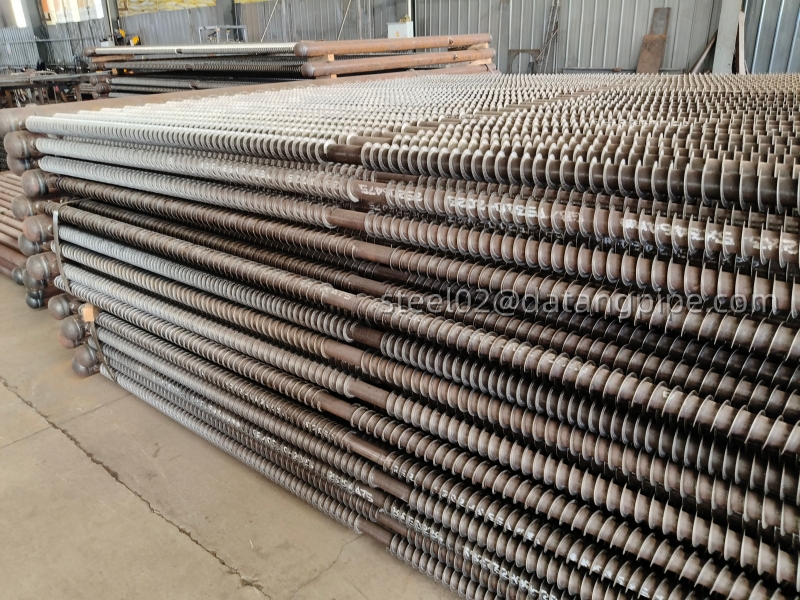
Wound finned tubes can be manufactured with different base tube diameters, fin materials, fin thicknesses and fin pitches to meet specific heat exchanger requirements.
For customized condenser projects, the base tube diameter can be selected according to the customer’s thermal, mechanical and installation requirements.
For example, we recently supplied a customized tube-bank solution for a fishing vessel air-cooled condenser using a 42 mm outside diameter base tube with wound fins.
The project demonstrates why the tube diameter should not be selected independently from the complete condenser configuration.
The final tube-bank design needs to consider the refrigerant circuit, airflow, available space, mechanical support and required heat-transfer performance.
Tube Arrangement and Airflow
Tube arrangement has a direct influence on air-side heat transfer and pressure drop.
For multi-row condenser tube banks, staggered arrangements can improve air-side interaction compared with simple in-line arrangements, but the optimum configuration depends on the required capacity, fan performance and allowable pressure drop.
A typical engineering evaluation considers:
- Number of tube rows
- Tube pitch
- Transverse tube spacing
- Longitudinal tube spacing
- Fin pitch
- Air velocity
- Air-side pressure drop
- Refrigerant-side pressure drop
- Required heat-transfer capacity
The objective is not simply to maximize the number of fins or tubes.
A practical marine condenser needs an appropriate balance between heat-transfer performance, airflow, fouling resistance, cleaning access and mechanical reliability.
Corrosion Protection for Marine Condenser Finned Tubes
Corrosion protection should be considered according to the actual exposure level of the condenser.
For marine applications, possible approaches include:
- Copper tube and copper fin construction
- Corrosion-resistant fin materials
- Protective fin coatings
- Marine-grade coatings for structural components
- Appropriate material combinations
- Protective covers where direct salt spray is possible
- Proper drainage and cleaning provisions
The best material combination depends on the vessel location and operating environment.
A condenser installed inside a protected machinery room may have very different corrosion exposure from a condenser installed directly on an exposed deck.
Therefore, material selection should be based on the actual installation conditions rather than simply choosing the most corrosion-resistant material available.
Mechanical Design for Fishing Vessel Applications
The condenser tube bank is part of a larger mechanical assembly.
The tube bank should be securely supported to prevent excessive movement under vibration and vessel motion.
Important considerations can include:
Reinforced Side Supports
Side plates and support structures should provide sufficient rigidity for the size and weight of the tube bank.
Vibration Isolation
Where required, vibration isolators and suitable flexible connections can reduce the transmission of mechanical vibration into the condenser and refrigerant piping.
Pipe Connection
Refrigerant connections should be designed to avoid unnecessary mechanical stress caused by vibration or thermal movement.
Maintenance Access
The condenser should allow practical access for cleaning, inspection and component replacement.
These details can have a significant effect on long-term equipment reliability.
Cleaning and Maintenance
Marine condenser maintenance should consider both heat-transfer performance and corrosion.
Depending on the operating environment, the fin surface may need periodic inspection and cleaning to remove accumulated salt, dust and other contaminants.
A suitable fin pitch can make cleaning easier and reduce the risk of severe airflow blockage.
The condenser installation should also provide sufficient space for maintenance personnel to access the coil or tube bank.
For exposed installations, protective measures can also be considered to reduce direct seawater spray and salt deposition.
Customized Finned Tube Bank Manufacturing
We manufacture customized finned tubes and tube-bank components according to customer drawings and project requirements.
The manufacturing scope can be adapted to the customer’s condenser design and may include:
- Base tubes
- Wound finned tubes
- Customized fin pitch
- Customized tube length
- Tube-bank arrangement
- Headers or manifolds
- Side plates
- Support structures
- Assembly dimensions
Customers can provide drawings, existing condenser dimensions or basic operating information for technical evaluation.
Where a complete drawing is not available, preliminary information such as required refrigeration capacity, refrigerant, ambient temperature, airflow, tube diameter and available installation space can be used as the starting point for engineering discussion.
Applications
Customized finned tube solutions can be considered for various marine refrigeration applications, including:
- Fishing vessel refrigeration systems
- Fish hold refrigeration
- Fish freezing systems
- Marine cold storage
- Refrigerated cargo spaces
- Fishing fleet refrigeration equipment
- Marine condensing units
- Onboard air-cooled refrigeration systems
The final condenser configuration should always be selected according to the actual vessel and refrigeration system requirements.
Why Work With a Finned Tube Manufacturer?
For condenser manufacturers and marine refrigeration equipment suppliers, sourcing the finned tube directly from a specialized manufacturer can simplify customization.
Instead of selecting a standard coil and adapting the equipment around it, the finned tube and tube-bank dimensions can be developed around the customer’s condenser design.
Our engineering support focuses on the heat-transfer component itself, including tube diameter, fin configuration, tube arrangement and customized manufacturing.
This is particularly useful for OEM condenser manufacturers, marine refrigeration system integrators and engineering companies developing non-standard equipment.
Fishing Vessel Air-Cooled Condenser: Key Design Checklist
Before specifying a finned tube bank for a fishing vessel condenser, the following information should be evaluated:
| Design Item | Why It Matters |
|---|---|
| Refrigerant | Determines refrigerant-side design conditions |
| Refrigeration capacity | Determines required heat rejection |
| Design ambient temperature | Influences condensing temperature |
| Tube diameter | Affects flow, pressure drop and mechanical design |
| Fin material | Influences heat transfer, weight and corrosion resistance |
| Fin pitch | Balances heat transfer, airflow and fouling resistance |
| Tube arrangement | Influences air-side heat transfer and pressure drop |
| Air velocity | Affects heat rejection and fan power |
| Marine exposure | Determines corrosion protection requirements |
| Installation dimensions | Determines tube-bank geometry |
| Vibration conditions | Influences mechanical support requirements |
| Maintenance access | Determines cleaning and serviceability |
Providing these parameters at the quotation or engineering stage allows the finned tube configuration to be evaluated more accurately.
Related Project: 42 mm Wound Finned Tube Bank for Fishing Vessel Condenser
A practical example of this approach is
42 mm outside diameter wound finned tube project for a fishing vessel condenser
.
our customized fishing vessel condenser project using a 42 mm outside diameter wound finned tube.
The customer required a finned tube bank for an air-cooled condenser used in a fishing vessel refrigeration system.
Instead of applying a standard refrigeration coil specification, the tube-bank configuration was developed around the customer’s equipment requirements.
The project involved a customized wound finned tube solution with a 42 mm base tube and a tube-bank configuration suitable for integration into the customer’s condenser assembly.
This case demonstrates how finned tube geometry can be adapted for marine refrigeration equipment when standard condenser configurations do not meet the customer’s mechanical or dimensional requirements.
Frequently Asked Questions
What is a fishing vessel air-cooled condenser?
A fishing vessel air-cooled condenser is a refrigeration condenser that uses forced ambient air to remove heat from the refrigerant. The refrigerant flows through tubes while air passes over the external finned surface.
What type of finned tube is suitable for a fishing vessel condenser?
The suitable finned tube depends on the refrigeration capacity, refrigerant, ambient temperature, airflow, corrosion exposure, tube diameter, fin geometry and installation conditions. There is no single finned tube specification suitable for every vessel.
Can wound finned tubes be used for fishing vessel air-cooled condensers?
Yes. Wound finned tubes can be manufactured in customized tube diameters, fin configurations and lengths and can be incorporated into condenser tube banks according to the equipment design.
Why is corrosion protection important for marine condenser coils?
Marine air can contain salt particles that accelerate corrosion of exposed condenser surfaces. The required protection depends on the installation location, material combination and degree of exposure to salt-laden air or direct spray.
Can you manufacture a customized 42 mm finned tube?
Yes. We can manufacture customized finned tubes using a 42 mm outside diameter base tube according to project requirements, drawings and technical specifications.
Can you manufacture the complete condenser?
Our primary focus is customized finned tubes and finned tube bank components. For projects requiring a complete condenser, we can evaluate the required tube-bank configuration and discuss the scope according to the customer’s equipment design.
What information is required for a finned tube condenser quotation?
Useful information includes refrigeration capacity, refrigerant, design ambient temperature, tube diameter, tube length, fin material, fin pitch, airflow or fan information, tube arrangement and available installation dimensions.
Engineering Support for Marine Refrigeration Applications
A fishing vessel air-cooled condenser has to do more than transfer heat efficiently.
It must work within the limitations of a moving vessel and remain serviceable in an environment affected by salt, vibration, temperature changes and contamination.
For this reason, we approach marine condenser projects from the perspective of the complete heat-transfer component rather than a standard finned tube catalogue.
If you are designing or replacing a fishing vessel air-cooled condenser, send us your drawing, existing tube dimensions or operating conditions.
We can evaluate the required finned tube and tube-bank configuration and provide a customized manufacturing solution for your marine refrigeration application.
