Air Cooler for Oil Cooling | Air-Cooled Oil Cooler
Short Description:
Air cooler for oil cooling in mining, power generation, refineries and gas processing. Designed for turbine, compressor, pump, hydraulic, seal and thermal oil cooling.
Air Cooler for Oil Cooling | Air-Cooled Oil Cooler for Mining, Power Generation and Industrial Equipment
An air cooler for oil cooling is a heat exchanger designed to remove heat from oil by transferring it to ambient air. Unlike a water-cooled oil cooler, an air-cooled system uses air as the cooling medium, normally with a fan providing the required airflow across the finned heat-transfer surface.
Air-cooled oil coolers can be used for a wide range of applications, including lubrication oil cooling, hydraulic oil cooling, turbine oil cooling, compressor lube oil cooling, generator seal oil cooling, diesel engine oil cooling and thermal oil cooling.
The appropriate cooler configuration depends on the actual operating conditions of the equipment. Oil type, flow rate, inlet and outlet temperature, ambient temperature, operating pressure, allowable pressure drop and available installation space should all be considered during the design stage.
This article explains how air-cooled oil cooling works, where it is used, why it can be preferred when cooling water is inconvenient, and how project-specific oil coolers can be developed for mining, power generation, refinery and natural gas processing applications.
Table of Contents
What Is an Air Cooler for Oil Cooling?
Why Choose Air Cooling for Oil?
Where Are Air-Cooled Oil Coolers Used?
Air Cooler for Mining Equipment
Air Cooler for Power Generation
Air Cooler for Refineries and Gas Processing
How an Air-Cooled Oil Cooler Works
Key Design Considerations
Our Project Experience in Oil Cooling Applications
Air Cooler Design and Customization
Frequently Asked Questions
Conclusion
What Is an Air Cooler for Oil Cooling?
An air cooler for oil cooling, also known as an air-cooled oil cooler or oil-to-air heat exchanger, removes heat from circulating oil and transfers it to ambient air.
The basic heat-transfer path is:
Hot Oil → Heat Transfer Tube → Finned Surface → Ambient Air → Heat Released to Atmosphere
The oil-side circuit is connected to the equipment that generates or accumulates heat. The air side uses natural or forced airflow to carry the heat away from the finned heat-transfer surface.
Depending on the application, an air-cooled oil cooler may be designed for:
Lubricating oil cooling
Hydraulic oil cooling
Turbine oil cooling
Compressor lubrication oil cooling
Gear oil cooling
Diesel engine oil cooling
Generator seal oil cooling
Thermal oil cooling
Circulating oil cooling
The cooler should be selected according to the actual thermal duty rather than simply by the oil pipe diameter. The required heat rejection, oil flow rate, temperature difference and allowable pressure drop determine the heat-transfer area and overall configuration.
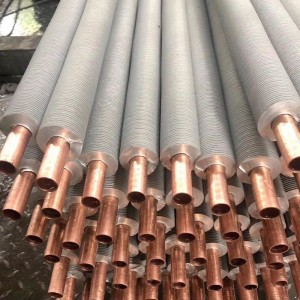
Air cooler for oil cooling using a finned heat-transfer surface to reject heat to ambient air.
Why Choose Air Cooling for Oil?
The main difference between an air-cooled and water-cooled oil cooler is the cooling medium. An air-cooled oil cooler uses ambient air instead of cooling water to remove heat from the oil.
This can become particularly useful when cooling water is unavailable, difficult to supply, difficult to recycle or inconvenient for the equipment installation.
1. No Cooling Water Required
An air-cooled oil cooler does not require a dedicated cooling-water circuit on the cooling-air side. The system uses ambient air and a fan to reject heat from the oil.
This can be considered for:
Remote mining sites
Large engineering equipment
Mobile or off-highway equipment
Power-generation facilities
Oil and gas installations
Remote industrial plants
Locations with limited cooling-water infrastructure
2. Suitable for Mobile and Remote Equipment
Large mining and engineering machines may operate far away from fixed utility infrastructure. In these situations, connecting the equipment to a continuous cooling-water supply can be inconvenient.
An oil-to-air cooling system can provide an independent cooling method using ambient air and forced airflow.
This is particularly relevant when the equipment needs to move between different working areas or when the cooling system needs to remain integrated with the machine.
3. Less Dependence on Cooling-Water Conditions
A water-cooled system requires consideration of water temperature, flow, pressure, fouling and water-side corrosion.
An air-cooled oil cooler removes the cooling-water side from the heat-rejection process. The main environmental factors instead become ambient temperature, airflow, dust, fin fouling and fan performance.
4. Flexible Installation
Depending on the equipment layout, an air-cooled oil cooler can be arranged in different configurations, including:
Horizontal installation
Vertical installation
Forced-draft configuration
Induced-draft configuration
Remote-mounted cooler
Skid-mounted cooling system
Equipment-integrated cooler
The final arrangement should be determined by the required airflow, installation space, maintenance access and equipment connection requirements.
Where Are Air-Cooled Oil Coolers Used?
Air-cooled oil coolers can be used in many industries where oil temperature needs to be controlled during continuous or high-load operation.
Application
Typical Oil Cooling Duty
Mining equipment
Hydraulic oil, gear oil and lubrication oil
Crushers
Main lubrication oil
Large engineering equipment
Hydraulic and lubrication oil
Steam turbines
Turbine lubrication oil
Gas turbines
Turbine lubrication oil
Generators
Seal oil and lubrication oil
Diesel generator sets
Diesel engine oil
Compressors
Compressor lubrication oil
Pumps
Bearing and lubrication oil
Refineries
Compressor and pump lubrication oil
Natural gas processing
Compressor lubrication oil
Thermal oil systems
Thermal oil cooling
Air Cooler for Mining Equipment
Mining equipment creates demanding conditions for oil cooling. Large machines may operate under high loads for extended periods while being exposed to dust, vibration, temperature changes and remote working environments.
For many mining and engineering machines, the main challenge is not simply how to remove heat. It is also how to provide a practical cooling system when connecting and continuously supplying cooling water to mobile or remote equipment is inconvenient.
In these situations, oil-to-air cooling can be considered as an alternative cooling approach.
Why Air Cooling Can Be Suitable for Mining Applications
A mining machine may need to:
Move between different working areas
Operate away from fixed water infrastructure
Work under dusty conditions
Operate continuously under high load
Reduce dependence on external utilities
Keep the oil cooling system integrated with the equipment
An air-cooled oil cooler can address these requirements by using ambient air as the heat-rejection medium.
Typical Mining Oil Cooling Applications
Hydraulic systems
Gearboxes
Crusher lubrication systems
Drive systems
Heavy-duty engineering machinery
Mining trucks
Excavation equipment
Material-handling equipment
South Africa Mining Project: Air Cooling Where Cooling Water Was Inconvenient
We supplied an air cooler for oil cooling for a mining application in South Africa.
The equipment was used in a large mining and engineering environment where reliable oil cooling was required, while connecting the equipment to a continuous cooling-water supply was not convenient.
For this type of application, the cooling concept is straightforward:
Hot Oil → Air-Cooled Heat Exchanger → Fan-Driven Airflow → Heat Rejection to Atmosphere → Cooled Oil Returns to Equipment
The project illustrates an important engineering consideration: the appropriate cooling method is determined not only by heat-transfer requirements, but also by equipment mobility, site conditions, utility availability, maintenance requirements and installation constraints.
Air-cooled oil cooling application for mining and large engineering equipment in South Africa.
For mining applications, the air-side design also deserves particular attention. Dust and debris can accumulate on the finned surface and gradually affect airflow and heat transfer. Fin spacing, airflow velocity, cleaning access and the overall cooler arrangement should therefore be considered during engineering.
“`
Air Cooler for Power Generation
Oil cooling is an important part of many power-generation systems. Steam turbines, gas turbines, generators and diesel generator sets all contain components that require lubrication, sealing or heat management.
Depending on the equipment configuration, an air-cooled oil cooler can be used for turbine lubrication oil cooling, generator seal oil cooling and diesel engine oil cooling.
Although these applications all involve oil cooling, the actual operating conditions can be quite different. The cooler should therefore be selected according to the individual oil circuit rather than using one standard configuration for every application.
Steam Turbine Lubrication Oil Cooling
Steam turbines use circulating lubrication oil to support bearings and other rotating components.
During continuous operation, the oil absorbs heat from the equipment. The oil cooler removes this heat before the oil returns to the lubrication system.
The cooling system needs to maintain the oil within the required operating temperature range while considering oil flow, allowable pressure drop and ambient temperature.
Gas Turbine Lubrication Oil Cooling
Gas turbine lubrication systems also require controlled oil temperature during operation.
An air-cooled oil cooler can be considered where ambient air is available as the heat-rejection medium and the required cooling duty can be achieved within the available installation space.
For gas turbine applications, the design should take into account the high ambient temperatures that may occur at the installation site, as well as the continuous operating conditions of the turbine.
Generator Seal Oil Cooling
Generator seal oil systems may require continuous cooling to maintain the required oil temperature for the sealing system.
The cooler should be designed around the actual seal oil flow rate, inlet temperature, required outlet temperature and allowable pressure drop.
The objective is controlled heat removal rather than simply achieving the lowest possible oil temperature.
Diesel Generator Engine Oil Cooling
Diesel generator sets generate significant heat during continuous operation. Engine oil performs lubrication and heat-management functions inside the engine and therefore needs to remain within its specified operating range.
An air-cooled oil cooler can transfer heat from the engine oil to ambient air, providing an oil cooling solution that does not depend on an external cooling-water connection for the oil-side heat rejection.
Kenya Power Generation Project: Turbine, Generator and Diesel Engine Oil Cooling
Our project experience in Kenya includes oil cooling applications associated with thermal power generation, gas turbine systems and diesel generator sets.
The cooling requirements covered different oil circuits, including:
Steam turbine lubrication oil cooling
Generator seal oil cooling
Diesel engine oil cooling
These applications demonstrate why the operating conditions of the oil circuit are important when selecting an air-cooled oil cooler.
A turbine lubrication system, generator seal oil system and diesel engine lubrication system may all require oil cooling, but their oil flow rates, operating temperatures, allowable pressure drops and installation requirements can be different.
For project applications, we therefore recommend starting with the actual operating data of each oil circuit and then determining the required heat-transfer capacity and cooler configuration.
Air-cooled oil cooling application for power-generation equipment in Kenya.
Why Oil Cooling Matters in Power Generation
For rotating power-generation equipment, oil temperature affects lubrication performance, viscosity and the operating conditions of bearings and other components.
The oil cooler therefore needs to provide stable heat removal under the expected operating conditions.
Instead of focusing only on maximum cooling capacity, the engineering process should consider the complete oil circuit:
Oil Flow → Heat Generation → Required Heat Removal → Cooler Heat-Transfer Area → Pressure Drop → Return Oil Temperature
Air Cooler for Refineries and Gas Processing
Refineries and natural gas processing plants contain many rotating and process systems that require continuous oil cooling.
Typical applications include compressor lubrication oil cooling, pump lubrication oil cooling and thermal oil cooling.
Compared with mobile equipment, these industrial applications normally operate as fixed installations. However, the cooling system still needs to be designed according to process conditions, ambient temperature, equipment layout and required heat rejection.
Compressor Lubrication Oil Cooling
Compressors used in refineries and natural gas processing plants often operate continuously and require reliable lubrication for bearings and other rotating components.
The circulating compressor oil absorbs heat during operation. The oil cooler removes this heat before the oil returns to the lubrication system.
An air-cooled oil cooler can be considered when the site has sufficient ambient airflow and when an air-based heat-rejection system is suitable for the process conditions.
Pump Lubrication Oil Cooling
Large pumps and pump packages may use circulating lubrication oil for bearings and other components.
Where the oil system requires continuous heat removal, an air-cooled oil cooler can provide an independent heat-rejection path using ambient air.
The design needs to account for oil flow rate, oil temperature, pressure drop and the available installation area around the pump package.
Thermal Oil Cooling
Thermal oil systems operate at elevated temperatures and may require controlled cooling at specific points in the process.
An air-cooled heat exchanger can be used to reduce thermal oil temperature when the required heat duty and ambient conditions are suitable.
Because thermal oils can have different viscosity and thermal properties depending on the fluid type and operating temperature, the actual fluid data should be provided during the design stage.
Russia Refinery and Natural Gas Processing Projects
Our project experience in Russia includes applications associated with oil refineries and natural gas processing facilities.
The oil cooling duties included:
Compressor lubrication oil cooling
Pump lubrication oil cooling
Thermal oil cooling
These applications involve continuous industrial operation, where the cooling system needs to work together with the equipment and process conditions.
For compressor and pump lubrication systems, the cooler removes heat from the circulating oil before it returns to the equipment. For thermal oil applications, the required cooling duty is determined by the process temperature and the required thermal-oil operating range.
The Russia projects provide experience across several types of industrial oil cooling rather than a single equipment application.
Air-cooled oil cooling applications for refinery and natural gas processing equipment in Russia.
Why Air Cooling Can Be Considered in Industrial Process Plants
For fixed industrial plants, the choice between air cooling and water cooling depends on the overall plant design and site conditions.
Air cooling can be considered when:
Cooling water is limited or not preferred
The plant has sufficient ambient air available
The process requires an independent air-side heat-rejection system
Water-side fouling or corrosion needs to be avoided
The installation has sufficient space for the air cooler
The required cooling duty can be achieved at the design ambient temperature
However, air cooling also requires careful consideration of ambient temperature, fan power, air-side pressure drop, dust and the required heat-transfer area.
How an Air-Cooled Oil Cooler Works
The operating principle of an air-cooled oil cooler is based on oil-to-air heat transfer.
Heat moves from the hot oil through the heat-transfer wall and finned surface before being carried away by ambient air.
Step 1: Hot Oil Enters the Cooler
Hot oil from the equipment enters the oil-side circuit of the cooler.
The oil inlet temperature and flow rate are two of the basic parameters used to determine the required cooling duty.
Step 2: Oil Flows Through the Heat-Transfer Tubes
The oil flows through the tubes or oil-side passages.
Heat is transferred from the oil to the tube wall through convection and conduction.
Step 3: Heat Reaches the Finned Surface
Fins increase the effective external heat-transfer area.
This is particularly important because heat transfer from the finned surface to ambient air is strongly influenced by the available surface area and airflow.
Step 4: The Fan Generates Airflow
A fan forces ambient air through the finned heat-transfer surface.
The air absorbs heat from the fins and carries the heat away from the cooler.
Step 5: Cooled Oil Returns to the Equipment
After the required amount of heat has been removed, the cooled oil exits the cooler and returns to the lubrication, hydraulic, sealing or thermal-oil system.
Working principle of an air-cooled oil cooler: hot oil transfers heat through the finned heat-transfer surface to ambient air.
Basic Heat Transfer Calculation
The required cooling duty can be estimated from the oil flow and temperature change:
Q = ṁ × Cp × ΔT
Where:
Q = required heat removal
ṁ = oil mass flow rate
Cp = specific heat capacity of the oil
ΔT = oil temperature difference between inlet and outlet
This calculation provides the basic thermal duty. The final cooler configuration also requires consideration of the heat-transfer coefficient, fin efficiency, air temperature, airflow, oil-side pressure drop, air-side pressure drop and available installation space.
Oil-to-Air Heat Transfer Path
The complete heat-transfer process can be summarized as:
Hot Oil
→
Tube Wall
→
Fins
→
Ambient Air
→
Atmosphere
This is why the tube and fin configuration is an important part of an air-cooled oil cooler. The heat-transfer surface must provide sufficient area while maintaining an appropriate balance between thermal performance, pressure drop, airflow and equipment dimensions.
Typical Oil Cooling Applications at a Glance
Industry
Equipment
Oil Cooling Application
Mining
Mining and engineering equipment
Hydraulic oil, gear oil and lubrication oil cooling
Power Generation
Steam turbine
Turbine lubrication oil cooling
Power Generation
Gas turbine
Turbine lubrication oil cooling
Power Generation
Generator
Seal oil cooling
Power Generation
Diesel generator
Diesel engine oil cooling
Oil Refining
Compressor
Compressor lubrication oil cooling
Oil Refining
Pump
Pump lubrication oil cooling
Natural Gas Processing
Compressor
Compressor lubrication oil cooling
Industrial Process
Thermal oil system
Thermal oil cooling
For projects that require the heat-transfer tubes themselves, the air cooler can be developed around the required finned-tube configuration, tube material, fin material and operating conditions.
Learn more about our finned tube heat-transfer products
Key Design Considerations for an Air Cooler for Oil Cooling
Selecting an air-cooled oil cooler should start with the actual operating conditions of the oil system. A suitable cooler is not determined by oil pipe size alone. The required heat rejection, oil properties, ambient conditions, pressure drop and installation space all affect the final design.
For project-based applications, the following parameters are normally required before the cooler can be properly evaluated.
1. Oil Type
Different oils have different thermal properties and viscosities, which can affect heat transfer and pressure drop.
Typical cooling media include:
Lubricating oil
Turbine oil
Compressor oil
Hydraulic oil
Gear oil
Diesel engine oil
Generator seal oil
Thermal oil
The oil grade or specific fluid information is useful when calculating the thermal and hydraulic performance of the cooler.
2. Oil Flow Rate
Oil flow rate directly affects the amount of heat that can be carried into the cooler.
It is normally expressed as a volumetric or mass flow rate, such as m3/h, L/min or kg/h.
The oil flow rate is also important when evaluating oil-side velocity and pressure drop.
3. Oil Inlet and Outlet Temperature
The required temperature reduction is one of the main factors determining the cooling duty.
For example, if hot oil enters the cooler at a specified temperature and must leave at a lower target temperature, the required heat removal can be calculated from the oil flow and thermal properties.
The design should therefore clearly define:
Oil inlet temperature
Required oil outlet temperature
Normal operating temperature
Maximum operating temperature
4. Ambient Air Temperature
Ambient temperature is particularly important for air-cooled systems because the cooler uses atmospheric air as the heat-rejection medium.
A cooler operating in a moderate climate may have different requirements from one installed in a hot industrial or mining environment.
The design ambient temperature should therefore be based on the actual project location rather than an assumed standard value.
5. Allowable Oil Pressure Drop
A larger heat-transfer area does not automatically mean a better oil cooler.
The cooler needs to achieve the required heat rejection while keeping the oil-side pressure drop within the allowable range of the oil circulation system.
Excessive pressure drop can increase pump requirements and affect the performance of the overall oil circuit.
6. Airflow and Fan Performance
The fan provides the airflow required to transfer heat from the finned surface to the surrounding atmosphere.
Fan selection therefore influences:
Airflow rate
Static pressure
Heat rejection capacity
Fan motor power
Noise level
Overall cooler dimensions
7. Dust and Environmental Conditions
Environmental conditions can have a significant influence on air-side heat transfer.
Mining sites, construction areas and some industrial plants may contain substantial amounts of dust and airborne particles.
The design should therefore consider:
Fin spacing
Air velocity
Dust accumulation
Cleaning access
Fan protection
Equipment vibration
Outdoor operating conditions
8. Installation Space
The available installation space determines the cooler dimensions, airflow direction and possible fan arrangement.
For packaged equipment, skid-mounted systems and mobile machinery, the cooler may need to be designed around an existing frame or equipment envelope.
This is why installation dimensions should be provided together with the thermal operating data whenever possible.
Information Required for Air Cooler Selection
Parameter
Typical Information
Why It Matters
Oil type
Lubricating oil, hydraulic oil, thermal oil, etc.
Affects thermal properties and viscosity
Oil flow rate
m3/h, L/min or kg/h
Determines oil-side heat transport
Oil inlet temperature
Operating temperature
Defines the hot-side condition
Oil outlet temperature
Required target temperature
Determines required temperature reduction
Ambient temperature
Normal / maximum design ambient
Determines available air-side temperature difference
Operating pressure
Oil-side pressure
Important for mechanical and connection design
Allowable pressure drop
Customer specification
Controls oil-side flow resistance
Installation space
Length × width × height
Determines cooler arrangement
Power supply
Voltage / frequency
Required for fan motor selection
Environmental conditions
Dust, vibration, outdoor exposure, etc.
Affects air-side and mechanical design
Our Project Experience in Oil Cooling Applications
Our oil cooling experience covers different industries and operating environments, from mining and large engineering equipment to power-generation and process-industry applications.
These projects are useful references because the cooling requirements are different in each application.
South Africa — Mining and Large Engineering Equipment
The South Africa project involved oil cooling for mining and large engineering equipment.
The application had an important site consideration: connecting mobile or large equipment to a continuous cooling-water supply was inconvenient.
An air-cooled oil cooling solution was therefore considered to provide heat rejection using ambient air.
Kenya — Power Generation
The Kenya project involved oil cooling applications associated with power-generation equipment, including:
Steam turbine lubrication oil cooling
Generator seal oil cooling
Diesel generator engine oil cooling
The project demonstrates the importance of treating each oil circuit according to its own operating conditions rather than selecting one generic oil cooler for all equipment.
Russia — Refinery and Natural Gas Processing
Our Russia project experience covers oil cooling applications in refinery and natural gas processing environments.
The applications included:
Compressor lubrication oil cooling
Pump lubrication oil cooling
Thermal oil cooling
These applications are associated with continuous industrial operation and require the cooler to be integrated with the equipment and process conditions.
Project Experience at a Glance
Location
Industry
Equipment / System
Oil Cooling Application
South Africa
Mining
Mining and large engineering equipment
Oil cooling where cooling-water connection was inconvenient
Kenya
Power Generation
Steam turbine, generator and diesel generator set
Turbine lube oil, generator seal oil and diesel engine oil cooling
Russia
Refinery and Natural Gas Processing
Compressors, pumps and thermal oil systems
Compressor lube oil, pump lube oil and thermal oil cooling
These projects represent three different cooling requirements:
South Africa: equipment mobility and limited convenience of cooling-water connection.
Kenya: multiple oil cooling duties within power-generation systems.
Russia: continuous oil cooling for refinery and natural gas processing equipment.
Air Cooler Design and Customization
Not every oil cooling application requires the same cooler configuration. For project-based applications, the air cooler should be developed according to the customer’s actual operating conditions and equipment requirements.
We can evaluate the cooler design based on the customer’s process and equipment data, including thermal duty, oil properties, airflow requirements, pressure drop and available installation space.
Project-Specific Engineering
A typical design process can be summarized as:
Operating Data
→
Thermal Duty Calculation
→
Heat-Transfer Area
→
Tube and Fin Configuration
→
Airflow Requirement
→
Fan Selection
→
Pressure Drop Check
→
Mechanical Arrangement
Information We Can Use for the Initial Design
Oil type and grade
Oil flow rate
Oil inlet temperature
Required oil outlet temperature
Maximum ambient temperature
Operating pressure
Allowable oil-side pressure drop
Required cooling capacity
Available installation dimensions
Fan motor power supply
Environmental conditions
Required materials
Connection size and orientation
Finned Tube Heat-Transfer Surface
The finned tube is an important part of an air-cooled heat exchanger because the fins increase the external surface available for heat transfer to air.
The appropriate tube and fin configuration depends on the required heat-transfer performance, air-side conditions, oil-side conditions, operating environment and manufacturing requirements.
Different finned tube constructions can therefore be considered according to the application rather than using one fixed tube design for every project.
From Operating Conditions to Cooler Configuration
A practical oil cooler design should balance several factors at the same time:
Required heat rejection
Oil-side pressure drop
Air-side pressure drop
Ambient temperature
Fan power
Installation footprint
Maintenance requirements
Operating environment
The purpose of engineering is to find a practical balance between these requirements rather than maximizing a single parameter.
Frequently Asked Questions
What is an air cooler for oil cooling?
An air cooler for oil cooling is a heat exchanger that removes heat from oil by transferring it to ambient air. A fan is commonly used to provide airflow across the finned heat-transfer surface.
When should an air-cooled oil cooler be used instead of a water-cooled oil cooler?
Air cooling can be considered when cooling water is unavailable, difficult to supply, undesirable for the equipment, or when an independent air-based heat-rejection system is preferred.
For mobile mining and large engineering equipment, the difficulty of connecting and continuously supplying cooling water can be an important reason for considering oil-to-air cooling.
Can an air cooler be used for turbine lube oil?
Yes. An air-cooled oil cooler can be designed for turbine lubrication oil when the required heat duty, oil temperature, pressure drop, ambient conditions and installation requirements are suitable.
Can an air cooler be used for generator seal oil?
Yes. Air-cooled heat exchangers can be considered for generator seal oil cooling when the thermal duty and system requirements are suitable. The actual oil flow, inlet temperature, required outlet temperature and allowable pressure drop should be provided for design evaluation.
Can an air cooler be used for diesel generator engine oil?
Yes. An air-cooled oil cooler can be used for diesel engine oil cooling when the required cooling capacity and operating conditions are within the design range.
Can an air cooler cool compressor lubrication oil?
Yes. Compressor lubrication oil cooling is a common industrial application. The cooler should be selected according to the compressor oil flow, operating temperature, pressure and required heat removal.
Can an air cooler be used for pump lubrication oil?
Yes. Air-cooled oil coolers can be designed for lubrication systems serving pumps and other rotating equipment. The cooler should be matched to the oil circulation rate, thermal duty and allowable pressure drop.
Can an air cooler cool thermal oil?
Yes. Thermal oil can be cooled by an air-cooled heat exchanger when the required heat duty, fluid properties, operating temperature and ambient conditions are suitable.
Can an air-cooled oil cooler be used for mining equipment?
Yes. Air-cooled oil coolers can be used for many mining and large engineering equipment applications, including hydraulic oil, gear oil and lubrication oil cooling.
For mining environments, dust, vibration, ambient temperature, airflow and cleaning requirements should be considered during the design stage.
How do you select the right air cooler for oil cooling?
The initial design normally requires information such as:
Oil type
Oil flow rate
Oil inlet temperature
Required oil outlet temperature
Maximum ambient temperature
Operating pressure
Allowable pressure drop
Available installation space
Fan power supply
Environmental conditions
These parameters can then be used to evaluate the required cooling duty, heat-transfer area, airflow and overall cooler configuration.
Can you provide a customized air cooler for oil cooling?
Yes. Project-specific air coolers can be designed according to the customer’s oil properties, flow rate, operating temperatures, ambient conditions, pressure-drop requirements, installation dimensions and equipment configuration.
Conclusion
An air cooler for oil cooling is a practical heat-rejection solution for applications where oil needs to be maintained within a controlled operating temperature range and ambient air can be used as the cooling medium.
The application can be quite different from one industry to another.
In mining and large engineering equipment, air cooling can be considered when connecting the equipment to a continuous cooling-water supply is inconvenient.
In power generation, it can be applied to turbine lubrication oil, generator seal oil and diesel engine oil cooling.
In refineries and natural gas processing plants, it can be used for compressor lubrication oil, pump lubrication oil and thermal oil cooling.
Our project experience in South Africa, Kenya and Russia covers these different operating environments and demonstrates the importance of selecting the cooling solution according to the actual equipment and process conditions.
If you are evaluating an air cooler for an oil cooling application, you can provide the oil type, flow rate, inlet and outlet temperature, ambient temperature, operating pressure, allowable pressure drop and installation dimensions.
Based on these conditions, we can evaluate the required heat-transfer capacity and develop a suitable air-cooled oil cooling solution for your equipment or project.
Need an Air Cooler for Your Oil Cooling Application?
Send us your operating conditions, equipment information or existing cooler drawing. We can review the application and discuss a suitable air-cooled oil cooler configuration.
Oil type and flow rate
Oil inlet and outlet temperature
Ambient temperature
Operating pressure
Allowable pressure drop
Required cooling capacity
Installation dimensions
Project data is welcome for technical evaluation and cooler selection.