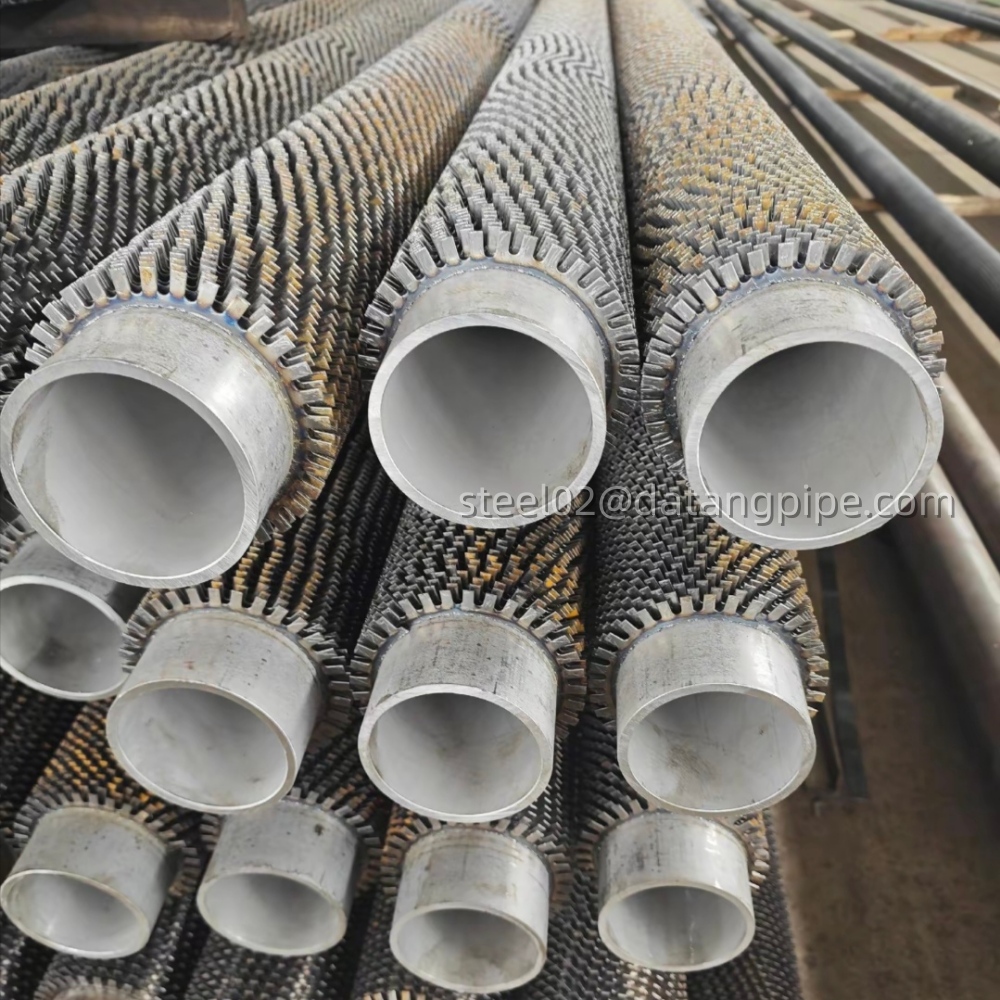
Serrated Fin Tube with U-Shape Serrations | High Efficiency Finned Tube for Heat Exchangers


Serrated Fin Tube with U-Shape Serrations | High Efficiency Finned Tube for Heat Exchangers
Introduction
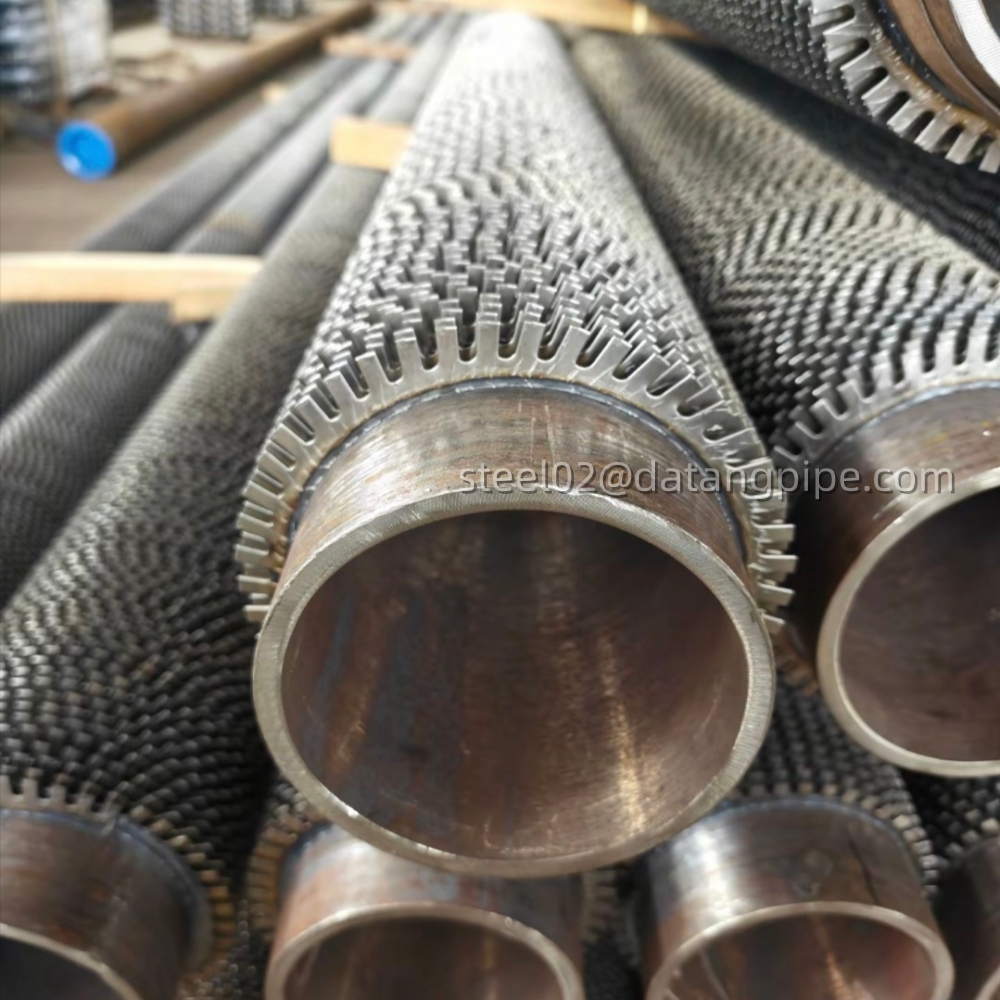
Serrated Fin Tube with U-shape serrations is an advanced type of spiral finned tube designed to improve heat transfer performance in industrial heat exchangers. Compared with conventional solid fin tubes, the serrated fin design introduces controlled interruptions on the fin surface, creating additional turbulence and improving the heat exchange efficiency between the tube and surrounding fluid.
The U-shaped serrations provide better airflow disturbance while maintaining strong mechanical strength and reliable fin-to-tube bonding. This makes serrated fin tubes widely used in high-performance heat transfer equipment, including air-cooled heat exchangers, boilers, economizers, condensers, and process heating systems.
For applications where air-side thermal resistance is the limiting factor, U serrated fin tubes offer an efficient solution by increasing heat transfer capability without significantly increasing equipment size.
What Is a Serrated Fin Tube with U-Shape Serrations?
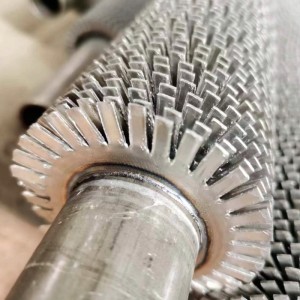
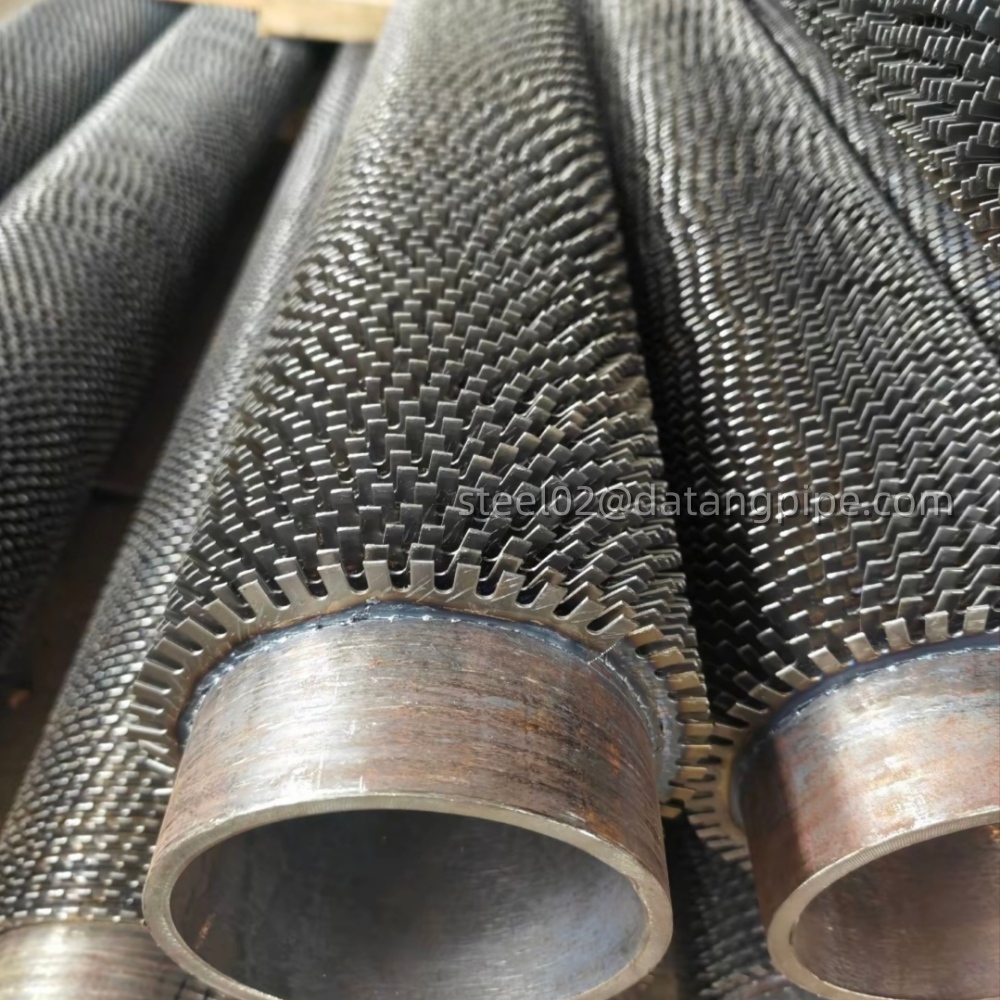
A Serrated Fin Tube with U-shape serrations is a spiral finned tube where the outer edge of the fin strip is precisely cut into repeated U-shaped segments before being wound around the base tube.
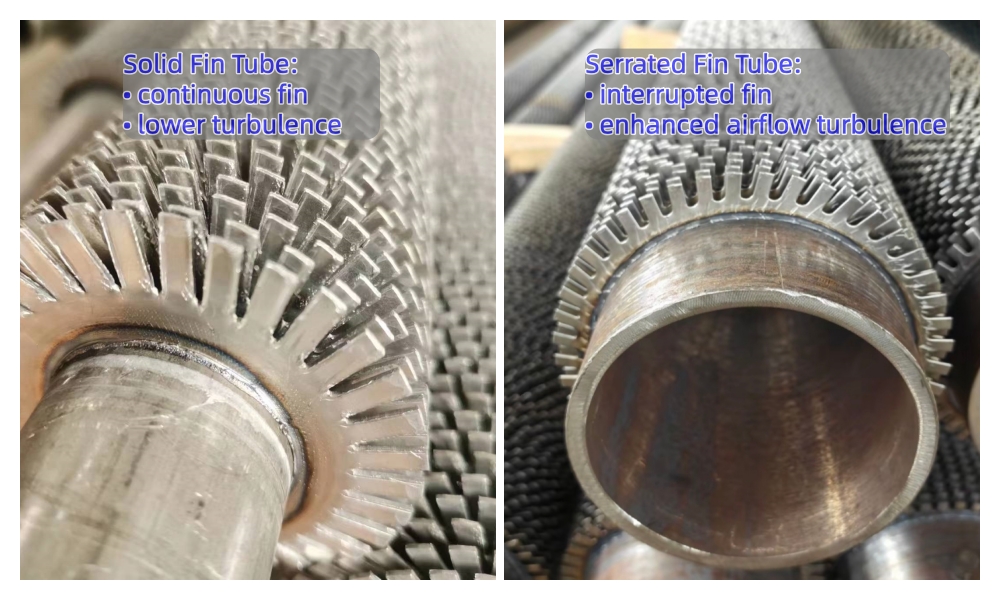
Unlike solid fin tubes with a continuous fin surface, serrated fins contain multiple openings between fin segments. These interruptions allow air or gas to flow across the fin surface more effectively, reducing the thickness of the thermal boundary layer and improving convective heat transfer.
The basic structure includes:
- Base tube: Provides the internal fluid passage for heat transfer
- Spiral fin strip: Expands the external heat transfer area
- U-shaped serrated edge: Creates turbulence and improves airflow mixing
- Welded or mechanically bonded connection: Ensures long-term reliability
The serration design is especially beneficial when heat transfer performance on the gas side is the controlling factor.
How Do U-Shape Serrations Improve Heat Transfer Performance?
During heat exchanger operation, a layer of relatively stagnant fluid called the thermal boundary layer forms near the fin surface. This layer reduces heat transfer efficiency because it acts as additional thermal resistance.
The U-shaped serrations solve this problem by:
1. Increasing Air Turbulence
The segmented fin structure interrupts smooth airflow and generates local turbulence around the fin surface.
This turbulent flow continuously renews the air contacting the fin, improving heat transfer between the fin and surrounding air or gas.
2. Reducing Boundary Layer Thickness
Compared with continuous solid fins, serrated fins repeatedly disturb the boundary layer, allowing heat to transfer more efficiently.
3. Improving Heat Transfer Efficiency Without Increasing Equipment Size
For limited installation space, improving fin geometry is often more practical than increasing tube length or heat exchanger volume.
Therefore, serrated fin tubes are commonly selected for compact and high-performance heat exchanger designs.
Research on serrated finned tubes has shown that fin geometry parameters, including serration depth, fin pitch, and fin height, have significant influence on heat transfer characteristics.
Serrated Fin Tube vs Solid Fin Tube
| Feature | Serrated Fin Tube | Solid Fin Tube |
|---|---|---|
| Fin Surface | Segmented with U-shaped cuts | Continuous fin surface |
| Heat Transfer Performance | Higher due to turbulence enhancement | Standard |
| Air Flow Condition | Improved mixing effect | More stable airflow |
| Boundary Layer Control | Better disruption | Easier formation |
| Suitable Applications | High-efficiency heat exchangers | General applications |
| Pressure Drop | Slightly higher | Lower |
For applications requiring higher thermal performance, such as air coolers, boilers, and economizers, serrated fin tubes are often preferred over traditional solid fin tubes.
Manufacturing Process of U-Shape Serrated Fin Tubes
The production of high-quality serrated fin tubes requires accurate fin cutting, controlled winding tension, and reliable fin-to-tube bonding.
1
Fin Strip Preparation
Metal strips are processed according to required thickness and material specifications.
The serrated pattern is precisely formed on the fin edge to achieve consistent U-shaped segments.
2
Spiral Fin Winding
The serrated fin strip is helically wound around the base tube under controlled tension.
The forming process ensures close contact between the fin and tube surface.
3
Fin-to-Tube Bonding
Depending on application requirements, serrated fin tubes can be manufactured using:
- High frequency resistance welding
- Gas metal arc welding
- Embedded or mechanical bonding methods
A strong bonding connection improves thermal conductivity and ensures long service life under high-temperature operation.
Materials Available for Serrated Fin Tubes
Serrated fin tubes can be manufactured with different combinations of tube and fin materials according to operating conditions.
Base Tube Materials:
- Carbon Steel
- Stainless Steel
- Alloy Steel
- Copper
- Titanium
Fin Materials:
- Carbon Steel
- Stainless Steel
- Aluminum
- Copper
Typical material selection depends on:
- Operating temperature
- Corrosion environment
- Working pressure
- Heat transfer medium
- Required service life
Main Applications of Serrated Fin Tubes
Air-Cooled Heat Exchangers (ACHE)
Serrated fin tubes are widely used in air-cooled heat exchangers because the fin side usually represents the major thermal resistance.
The serrated structure improves air-side heat transfer efficiency and helps reduce required heat exchanger size.
Boilers and Economizers
In boiler systems, serrated fin tubes help recover more heat from flue gas while maintaining compact equipment design.
Typical applications include:
- Waste heat recovery boilers
- Industrial boilers
- Power plant economizers
Petrochemical and Process Industries
Serrated fin tubes are suitable for demanding applications involving:
- Refinery equipment
- Gas cooling systems
- Process heaters
- Heat recovery units
Condensers and Cooling Equipment
The enhanced airflow disturbance makes serrated fin tubes suitable for cooling systems requiring higher heat transfer performance.
Technical Advantages of U-Shape Serrated Fin Tubes
Higher Heat Transfer Efficiency
The serrated fin geometry improves turbulence and enhances convection performance.
Strong Fin-to-Tube Connection
Proper welding or bonding technology ensures stable performance during thermal cycling and long-term operation.
Compact Heat Exchanger Design
Higher heat transfer capability allows engineers to achieve required performance with smaller equipment footprints.
Suitable for High Temperature Applications
Depending on material selection and manufacturing method, serrated fin tubes can be used in demanding industrial environments.
How to Select the Right Serrated Fin Tube?
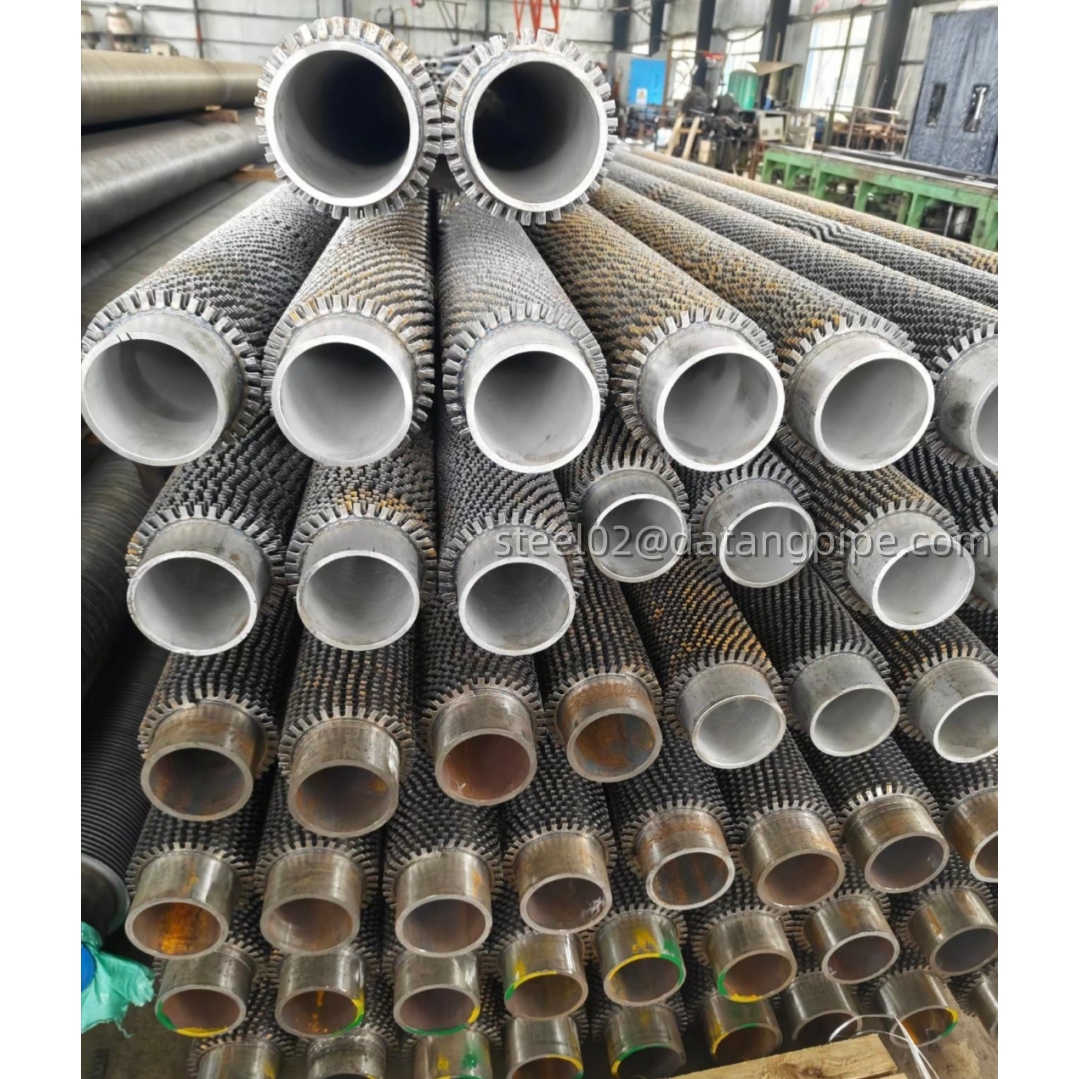
Engineers usually consider the following factors:
1. Operating Temperature
High-temperature applications may require alloy steel or stainless steel materials.
2. Heat Transfer Requirement
Higher heat duty may require optimized:
- Fin height
- Fin pitch
- Fin thickness
- Serration geometry
3. Fluid Characteristics
The selection should consider:
- Air velocity
- Gas composition
- Dust content
- Corrosion conditions
4. Equipment Design Requirements
Tube diameter, fin dimensions, and tube arrangement should match the heat exchanger design.
Why Choose Our Serrated Fin Tube Manufacturing?
With extensive experience in finned tube production, we provide customized serrated fin tube solutions according to different heat exchanger requirements.
Our manufacturing capability covers:
- High-frequency welded serrated fin tubes
- Customized tube and fin materials
- Different fin pitches and heights
- Engineering support for heat exchanger applications
We focus on reliable fin-to-tube bonding, consistent product quality, and solutions suitable for boilers, air coolers, economizers, and industrial heat recovery systems.
FAQ About Serrated Fin Tube with U-Shape Serrations
Q
What is the difference between serrated fin tube and solid fin tube?
The main difference is the fin structure. Serrated fin tubes have segmented fins that improve airflow turbulence, while solid fin tubes have continuous fins.
Q
Why are serrated fin tubes more efficient?
The U-shaped serrations disturb airflow, reduce thermal boundary layer resistance, and improve heat transfer performance.
Q
Are serrated fin tubes suitable for high-temperature applications?
Yes. With proper material selection and welding technology, serrated fin tubes can be used in boilers, petrochemical equipment, and high-temperature heat exchangers.
Q
What industries use serrated fin tubes?
They are widely used in power plants, petrochemical plants, air-cooled heat exchangers, boilers, economizers, and industrial heat recovery systems.
Conclusion
Serrated Fin Tube with U-shape serrations is an effective heat transfer enhancement solution for modern industrial heat exchangers. By combining increased surface area with improved airflow turbulence, it provides better thermal performance compared with conventional solid fin tubes.
For engineers and equipment manufacturers looking for higher efficiency, compact design, and reliable operation, U serrated fin tubes are an excellent choice for advanced heat exchanger applications.
Contact us for customized serrated fin tube solutions based on your operating conditions and heat exchanger requirements.