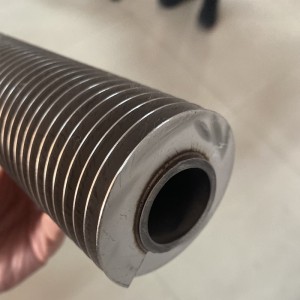
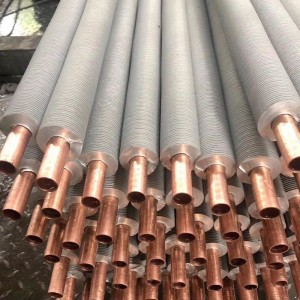
Finned Tube Coil | Laser Welded and Extruded Fin Tube Coils


A finned tube coil is a heat-transfer tube assembly in which finned tubes are formed into a compact coil, U-shape, circular, square, or serpentine configuration. By increasing the external heat-transfer surface area of the tube, the finned tube coil can improve heat transfer while making better use of limited installation space.
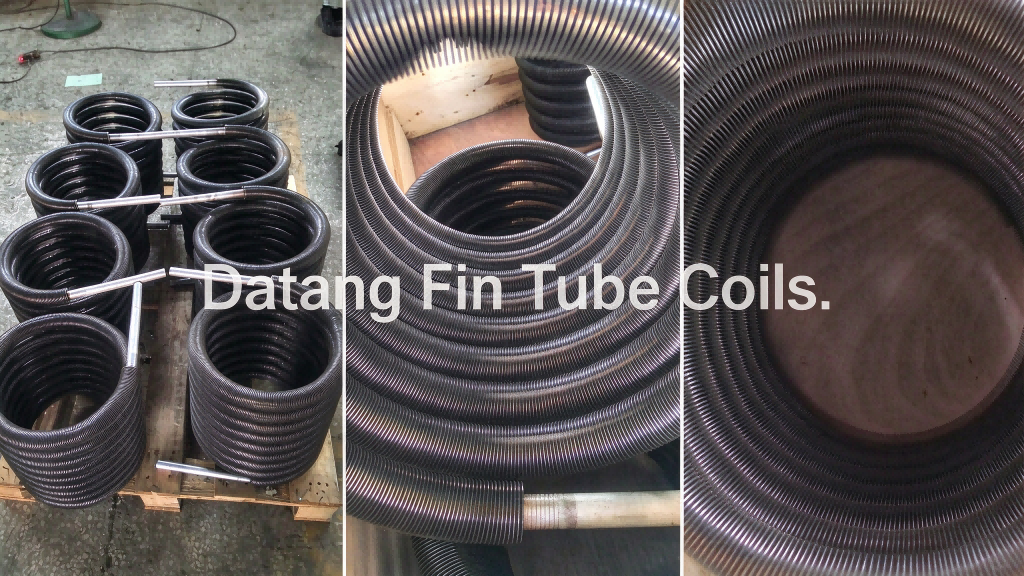
We manufacture customized finned tube coils using laser-welded and extruded fin tube technologies. Depending on the required heat-transfer performance, operating conditions, tube material, fin material, coil geometry, and installation space, the finned tubing can be supplied as straight tubes or further bent into the required coil configuration.
Our fabrication capability covers applications ranging from compact finned tube assemblies to larger custom coil structures, with tube bending, finning, coil forming, and material selection coordinated according to the customer’s requirements.
Table of Contents
- What Is a Finned Tube Coil?
- How Does a Finned Tube Coil Work?
- Laser Welded vs. Extruded Finned Tube Coils
- Finned Tube Coil Fabrication Process
- Finned Tube Coil Materials
- Finned Tube Coil Specifications
- Available Coil Shapes and Configurations
- Applications of Finned Tube Coils
- Custom Finned Tube Coil Manufacturing
- Why Use Finned Tube Coils for Heat Transfer?
- Frequently Asked Questions
What Is a Finned Tube Coil?
A finned tube coil combines the heat-transfer advantages of finned tubes with a formed coil geometry.
A conventional bare tube has a relatively limited external surface area for air-side heat transfer. By attaching fins to the outside of the tube, the effective external surface area can be substantially increased. The finned tube can then be bent or formed into a coil so that a larger heat-transfer area can be installed within a relatively compact space.
Depending on the equipment design, a finned tube coil may be manufactured in:
- U-shaped configurations
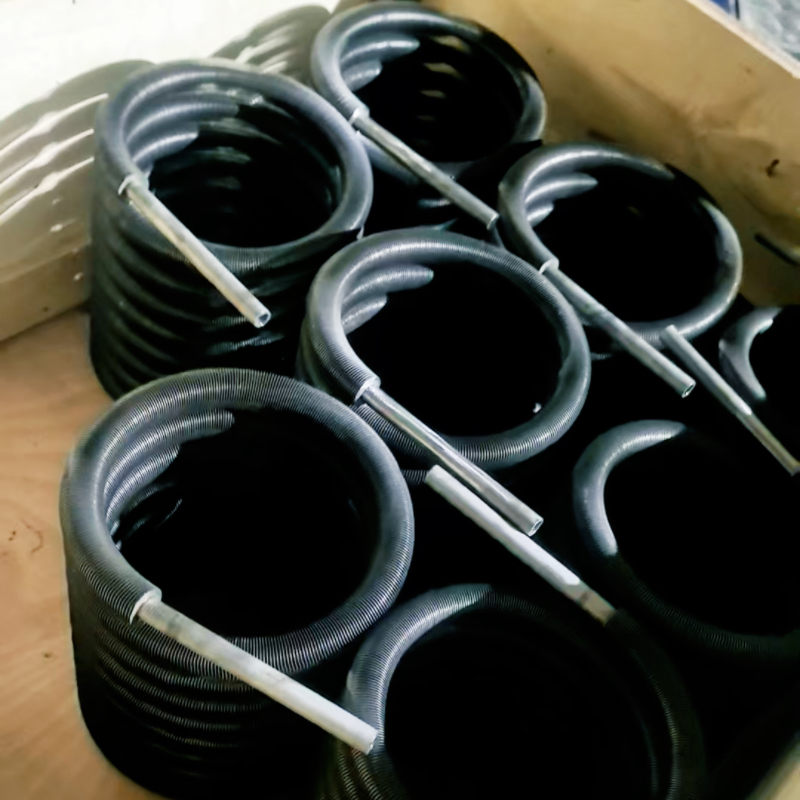
- Circular or ring-shaped coils
- Square or rectangular configurations
- Serpentine configurations
- Helical or spiral configurations
- Custom multi-row coil assemblies
The final geometry is selected according to the available installation space, airflow or fluid-flow requirements, heat-transfer duty, connection arrangement, and mechanical requirements.
How Does a Finned Tube Coil Work?
The basic principle is straightforward.
One fluid or heat-transfer medium flows inside the tube, while another medium passes over the external finned surface. Heat is transferred through the tube wall and fins between the two sides.
The fins provide additional external surface area, which is particularly useful when the external side of the heat exchanger is air or another gas with relatively low heat-transfer capability.
A typical heat-transfer path is:
Internal fluid → tube wall → fin-to-tube connection → external fins → surrounding air
For air heating and air cooling applications, the finned surface can therefore provide a practical way to increase the available heat-transfer area without requiring an excessively large bare-tube coil.
The coil geometry also allows a long heat-transfer path to be arranged within a limited installation area.
Laser Welded vs. Extruded Finned Tube Coils
Our finned tube coils are mainly manufactured using two finning technologies:
1. Laser Welded Finned Tube Coil
In a laser welded fin tube, the fin is continuously welded to the tube using a controlled laser welding process.
This technology provides a continuous connection between the fin and tube and can be used for demanding heat-transfer applications where a strong and consistent fin-to-tube connection is required.
Laser welded finned tubes can be formed into different coil configurations after the finning process, depending on the tube material, fin geometry, bending radius, and project requirements.
Typical applications include:
- Air heaters
- Air coolers
- Heat exchangers
- Process heating and cooling equipment
- Industrial drying equipment
- Thermal oil systems
- Steam heating systems
- Customized heat-transfer coils
For applications requiring a high level of control over the fin-to-tube connection, laser welded finned tube technology provides an alternative to conventional finning methods.
2. Extruded Finned Tube Coil
An extruded finned tube uses an extrusion-based fin structure around the tube. The resulting tube-and-fin construction provides a compact heat-transfer surface that can then be bent into the required coil configuration.
Extruded fin tubes are particularly useful when the application requires:
- High external surface area
- Compact heat-transfer equipment
- Good mechanical integration between tube and fin
- Aluminum-based fin structures
- Customized coil geometry
The appropriate tube and fin materials depend on the operating temperature, corrosion environment, pressure, thermal requirements, and equipment design.
For projects where both heat-transfer performance and compact construction are important, an extruded finned tube coil can be designed around the customer’s available installation space.
Finned Tube Coil Fabrication Process
The manufacturing process can be adapted to the required coil structure and finned tube technology.
A typical production route includes:
Tube preparation → Finning → Inspection → Tube bending → Coil forming → End preparation → Dimensional inspection → Final inspection
The finned tubing can be supplied as straight sections before bending or processed directly into the required coil configuration.
We can handle tube bending and coil-forming projects in different configurations. The finned tubing can be twisted and bent into various shapes according to the equipment layout.
For example, a tube length can be formed into a:
U-shape → Circle → Square/Rectangular Shape → Serpentine Coil
This makes it possible to use installation space more efficiently rather than leaving large unused areas around conventional straight-tube arrangements.
Finned Tube Coil Materials
Material selection is an important part of finned tube coil design because the tube and fin may operate under different thermal, mechanical, and corrosion conditions.
According to the supplied product specifications, available materials include carbon steel, stainless steel, and copper for the fin and tube components, with different grades available depending on the project.
Fin Materials
Common fin material grades include:
Carbon Steel
- A179
- A192
- A210
- A1/C
- A106 Gr. B
Stainless Steel
- TP304
- TP316
- TP321
- TP347
- A789
Copper
- TP2
Tube Materials
Common tube material grades include:
Carbon Steel
- A106 Gr. B
Stainless Steel
- TP304
- TP316
- TP321
- TP347
Copper and Copper Alloys
- C12200
- C14200
- C70600
- CuNi 70/30
- CuNi 90/10
The actual material combination should be selected according to operating temperature, pressure, fluid characteristics, corrosion conditions, thermal conductivity, mechanical requirements, and applicable design standards
Finned Tube Coil Specifications
The following specifications represent the available finned tube range shown in our product specification.
| Parameter | Metric Range | Imperial Range |
|---|---|---|
| Tube O.D. | 12–25 mm | 0.47–1.0 in |
| Tube Wall Thickness | 1–5 mm | 0.04–0.20 in |
| Tube Length | ≤28,000 mm | ≤92 ft |
| Fin Thickness | 0.5–2.5 mm | 0.02–0.10 in |
| Fin Height | 6–13 mm | 0.24–0.51 in |
| Fin Pitch | 1.8–4 mm | 6–14 FPI |
| Fin Type | Laser Welded / Extruded | — |
The final coil dimensions are not determined only by tube diameter and fin dimensions. Coil diameter, bending radius, number of rows, tube spacing, overall length, connection position, and support arrangement can all be customized according to the equipment design.
For projects outside the standard configuration, the technical team can evaluate the required tube, fin, coil geometry, and operating conditions before production.
Available Coil Shapes and Configurations
One of the main advantages of a finned tube coil is the flexibility of its geometry.
U-Shaped Finned Tube Coil
A U-shaped coil is commonly used where the tube needs to make a return path while keeping the overall assembly compact.
This configuration can reduce the amount of unused installation space and simplify the connection arrangement for certain equipment designs.
Circular Finned Tube Coil
A circular or ring-shaped coil can be used when the available installation space has a cylindrical or circular geometry.
This type of coil can be considered for customized heaters, coolers, process equipment, and other compact heat-transfer assemblies.
Square or Rectangular Coil
A square or rectangular configuration can make better use of equipment housings with straight internal walls.
The coil dimensions can be coordinated with the enclosure or air passage to achieve the required heat-transfer area within the available footprint.
Serpentine Finned Tube Coil
A serpentine configuration forms a continuous back-and-forth flow path.
It is useful when a relatively long tube length is required but the equipment has limited installation length.
Custom Coil Geometry
In addition to the configurations above, finned tubes can be bent into customized shapes according to the customer’s drawings or equipment requirements.
The bending process must consider the tube diameter, wall thickness, fin geometry, minimum bending radius, material properties, and the required final dimensions.
Applications of Finned Tube Coils
Finned tube coils are used in equipment where heat needs to be transferred between an internal fluid and an external air or gas stream.
Typical applications include:
Air Heating
Finned tube coils can be used as heating elements in industrial air heaters, drying systems, ovens, and process-air heating equipment.
The internal medium may be steam, hot oil, thermal fluid, or another heat-transfer medium.
Air Cooling
Finned tube coils can also be used to transfer heat from oil, refrigerant, water, or other process fluids to air.
This makes them suitable for air cooling equipment where water availability, water quality, or water consumption is a concern.
Industrial Drying
Drying equipment often requires a large amount of controlled hot air.
A finned tube coil can provide a compact heating surface while allowing the coil geometry to be adapted to the dryer structure.
Applications may include:
- Wood drying
- Food drying
- Industrial material drying
- Thermal processing
- Drying kilns
Heat Exchangers
Finned tube coils can form the heat-transfer section of customized air-to-liquid, air-to-steam, or air-to-thermal-fluid equipment.
The final configuration depends on the required heat duty, fluid conditions, airflow, pressure drop, and available installation space.
Thermal Oil and Hot Oil Systems
For thermal oil heating applications, finned tube coils can be designed as part of an air heating system or process heater.
The tube material and coil construction should be selected according to the thermal oil temperature and system operating conditions.
Customized Process Equipment
Because the finned tube can be bent into different configurations, it can also be incorporated into customized process equipment where a standard straight heat exchanger coil cannot efficiently utilize the available space.
Custom Finned Tube Coil Manufacturing
Finned tube coils are often application-specific products.
Instead of selecting a coil only by its external dimensions, the complete design may need to consider:
- Heat-transfer requirement
- Internal fluid
- Inlet and outlet temperature
- Operating pressure
- Air temperature
- Airflow
- Tube material
- Fin material
- Tube diameter
- Tube wall thickness
- Fin height
- Fin thickness
- Fin pitch
- Coil dimensions
- Tube bending radius
- Installation space
- Corrosion environment
- Connection requirements
This is particularly important for industrial heat-transfer equipment because two coils with similar external dimensions may have significantly different thermal performance when their operating conditions are different.
We can therefore manufacture the finned tube coil according to customer drawings, specifications, or application conditions.
When drawings are not yet available, the project can begin with the basic operating data and available installation dimensions.
Why Use Finned Tube Coils for Heat Transfer?
The combination of finned tubing and coil forming provides several practical engineering advantages.
Increased Heat-Transfer Surface
Fins increase the external surface area available for heat exchange, which is particularly useful for air-side heat transfer.
Compact Equipment Design
A long heat-transfer tube can be arranged into a compact coil rather than installed as one long straight section.
Flexible Installation
U-shaped, circular, rectangular, and serpentine configurations allow the coil to be adapted to different equipment layouts.
Material Flexibility
Carbon steel, stainless steel, and copper-based materials can be selected according to the operating environment and required performance.
Multiple Finning Technologies
Laser welded and extruded finned tubes provide different construction options for different heat-transfer equipment requirements.
Custom Engineering
Tube dimensions, fin geometry, coil shape, material combination, and overall dimensions can be coordinated with the customer’s application.
Frequently Asked Questions About Finned Tube Coils
What is the difference between a finned tube and a finned tube coil?
A finned tube is normally supplied as a straight section of tube with external fins. A finned tube coil is formed by bending or arranging finned tubing into a specific geometry such as a U-shape, circle, square, or serpentine configuration.
What types of finned tube coils can you manufacture?
We mainly manufacture finned tube coils using laser welded fin tubes and extruded fin tubes. The finished coil can be produced in different configurations according to the customer’s equipment design.
What materials are available?
Depending on the application, carbon steel, stainless steel, copper, and related material grades can be used for the tube and fin components.
Can the finned tube coil be customized?
Yes. Coil dimensions, tube diameter, wall thickness, fin height, fin thickness, fin pitch, material, bending configuration, and connection arrangement can be customized according to the project requirements.
What information is needed for a custom finned tube coil?
Useful information includes the required heat duty, internal fluid, operating temperature and pressure, airflow, available installation space, tube and fin material requirements, and connection dimensions. Existing equipment drawings are also helpful when available.
Finned Tube Coil for Custom Heat Transfer Applications
A finned tube coil is more than a finned tube that has simply been bent into a shape. The tube material, fin structure, finning technology, coil geometry, bending process, and operating conditions all influence the final heat-transfer assembly.
For this reason, the appropriate coil should be selected based on the complete application rather than only tube size or external dimensions.
We manufacture laser welded and extruded finned tube coils for customized heating, cooling, drying, heat exchanger, and process equipment applications. Customers can provide drawings, existing coil dimensions, or basic operating conditions for technical evaluation and coil configuration.