
Fin Tube Collar Support|Pipe Hoop for Finned Tube


Fin Tube Collar Support|Pipe Hoop for Finned Tube
The Essential Guide to Finned Tube Support Collars: Types, Materials, and Applications
When it comes to optimizing heat exchanger performance, the small components often make the biggest difference. One such critical component is the finned tube support collar — also known as a fin tube clamp, round spacer box, or isolation ring. This seemingly simple device plays a vital role in maintaining tube alignment, preventing vibration damage, and ensuring long-term reliability in finned tube systems.
In this comprehensive guide, we’ll explore everything you need to know about finned tube support collars, from material options and dimensional specifications to their compatibility with various finned tube types — including aluminum, extruded, L/LL/KL, and G‑based finned tubes.
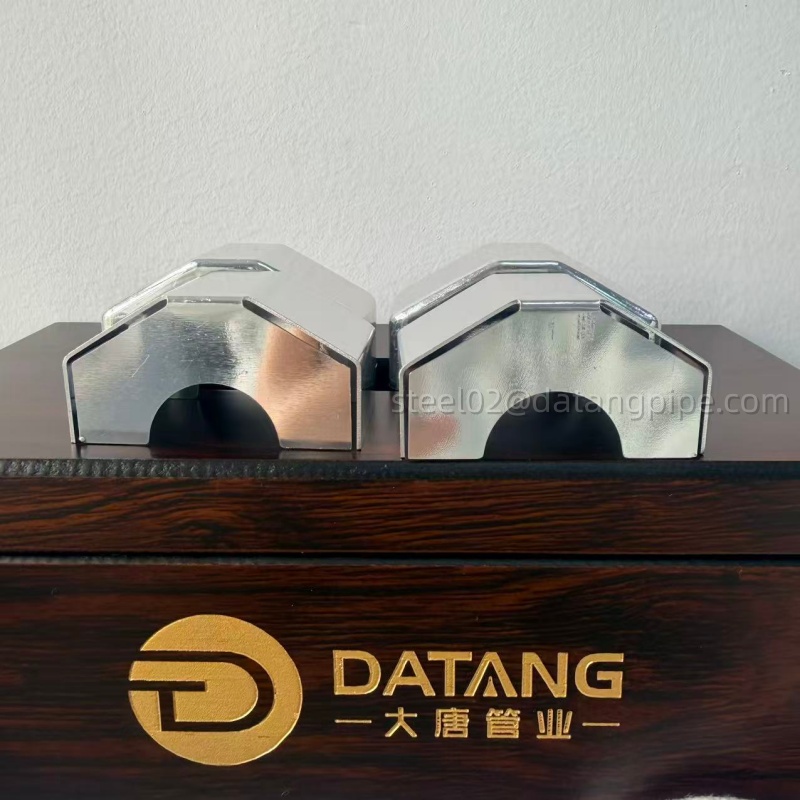
What Is a Finned Tube Support Collar?
A finned tube support collar is a mechanical fastener designed to secure finned tubes within heat exchangers, air coolers, condensers, and similar equipment. By holding tubes firmly in place, these collars prevent lateral movement, reduce mechanical stress, and maintain consistent spacing between tubes — all of which are essential for efficient heat transfer.
Pipe Hoop Aluminum G Type Embedded Finned Tube Support
Depending on the region or manufacturer, you might encounter alternative names such as:
- Fin tube clamp
- Round spacer box
- Isolation ring
- Hoop ring (especially in Asian markets)
- Tube support spacer
Regardless of the name, the function remains the same: to provide stable, non‑damaging support for finned tubes in demanding thermal environments.
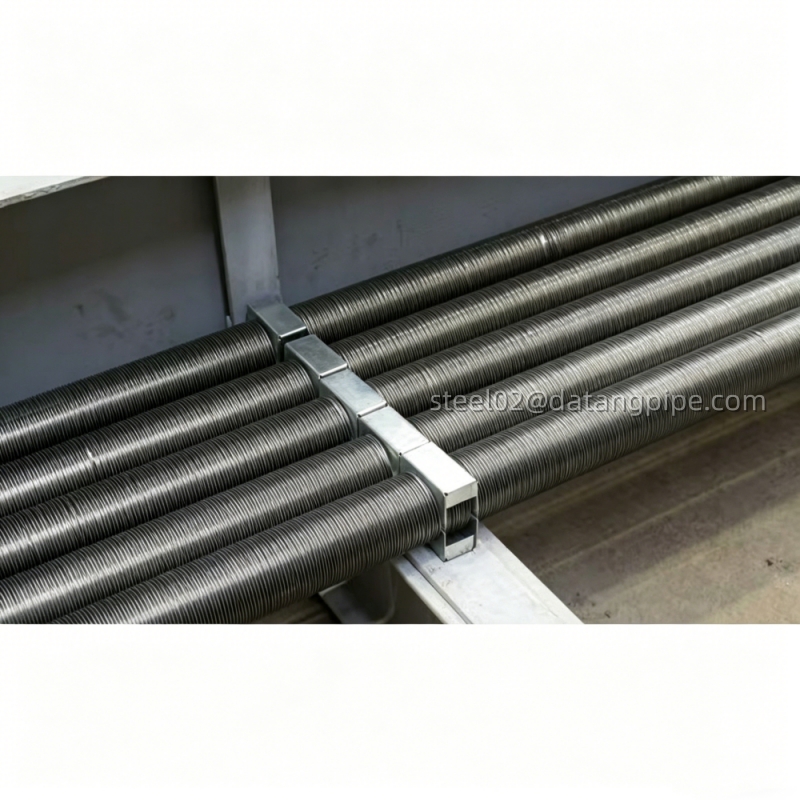
Why Are Support Collars So Important?
Finned tubes significantly increase the surface area available for heat exchange, but their extended surfaces (fins) can be fragile. Without proper support, tubes may:
- Sag or bend under their own weight or due to thermal expansion
- Vibrate excessively, leading to fretting wear at contact points
- Shift out of alignment, reducing heat transfer efficiency
- Suffer fin damage when rubbing against adjacent tubes or supports
Support collars eliminate these risks by locking tubes into a fixed position. They act as isolation barriers, preventing metal‑to‑metal contact between the tube and the support structure — hence the term “isolation ring.”
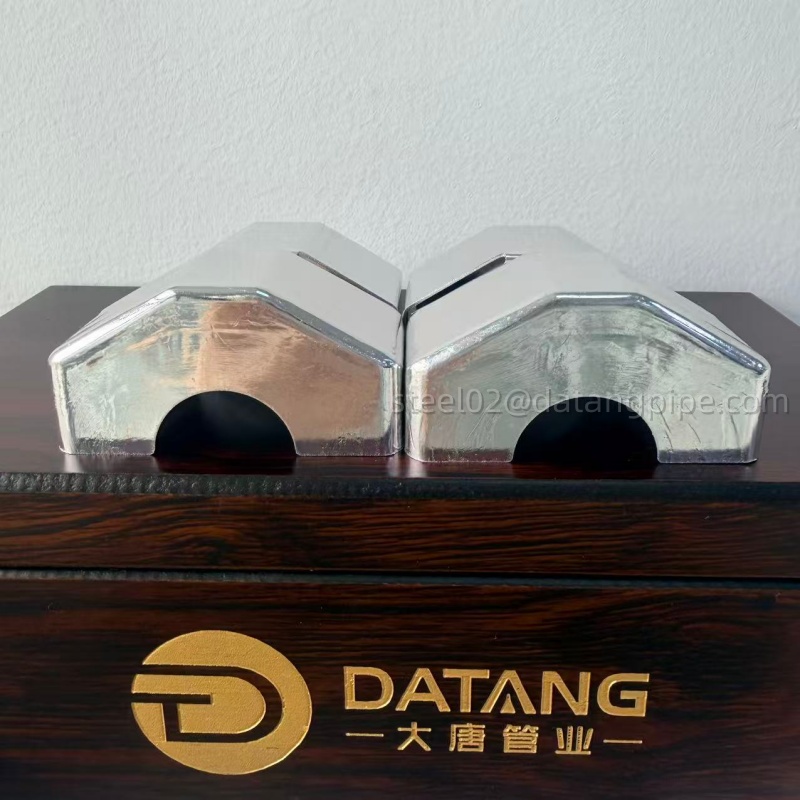
Compatibility: Which Finned Tubes Can Use These Collars?
One of the key strengths of modern support collars is their versatility. They are suitable for virtually all common finned tube types, including:
1. Aluminum Finned Tubes
Aluminum fins are widely used for their excellent thermal conductivity and corrosion resistance. Support collars for aluminum finned tubes are typically made from compatible materials (e.g., aluminum or galvanized steel) to avoid galvanic corrosion.
2. Extruded Finned Tubes
Extruded fins are formed from the same material as the base tube, creating a seamless, highly durable bond. Support collars for extruded fin tubes must accommodate the fin root geometry without crushing the fins.
3. L / LL / KL Finned Tubes
These refer to helically wound fins with different foot configurations:
- L‑type – L‑shaped foot wraps around the tube.
- LL‑type – Overlapping L‑foot for better heat transfer.
- KL‑type – Knurled base tube with L‑foot for enhanced bonding.
Support collars are designed to fit over the plain tube sections or between fin rows, making them fully compatible with L, LL, and KL fin profiles.
4. G‑Based Finned Tubes (Most Common Application)
The G‑base (or “embedded”) finned tube features fins embedded into a helical groove on the tube. This construction is extremely robust and widely used in air coolers and heat exchangers. Support collars are most frequently applied in G‑based systems because of the high mechanical loads and thermal cycling these tubes often encounter.
Note: While support collars work with all the above types, they are most commonly used with G‑based finned tubes due to the latter’s prevalence in heavy‑duty industrial applications.
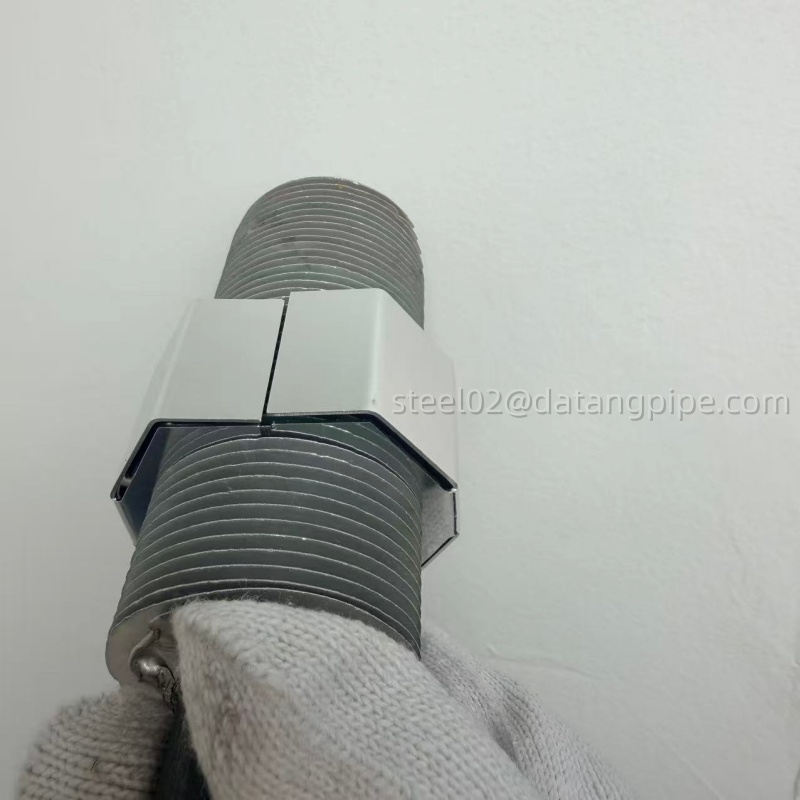
Material Options: Choosing the Right Collar for Your Environment
The material of the support collar must match both the tube material and the operating environment. Here are the three standard choices:
Aluminum
- Best for: Lightweight applications, aluminum finned tubes, and corrosive environments (e.g., marine or chemical plants).
- Advantages: Excellent corrosion resistance, low weight, good thermal compatibility.
- Considerations: Lower strength than steel; not suitable for very high mechanical loads.
Galvanized Steel
- Best for: General industrial use, moderate corrosion risk, cost‑sensitive projects.
- Advantages: High strength, good durability, affordable.
- Considerations: Zinc coating can wear over time in abrasive or highly acidic conditions.
Stainless Steel (e.g., 304, 316)
- Best for: High‑temperature, high‑corrosion, or sanitary applications (food/pharma).
- Advantages: Superior corrosion resistance, excellent mechanical strength, long service life.
- Considerations: Higher cost; requires careful design to avoid galvanic corrosion when paired with aluminum tubes.
Pro Tip: Always match or carefully consider the galvanic series when mixing collar and tube materials. Using an insulating sleeve or coating can prevent bimetallic corrosion.
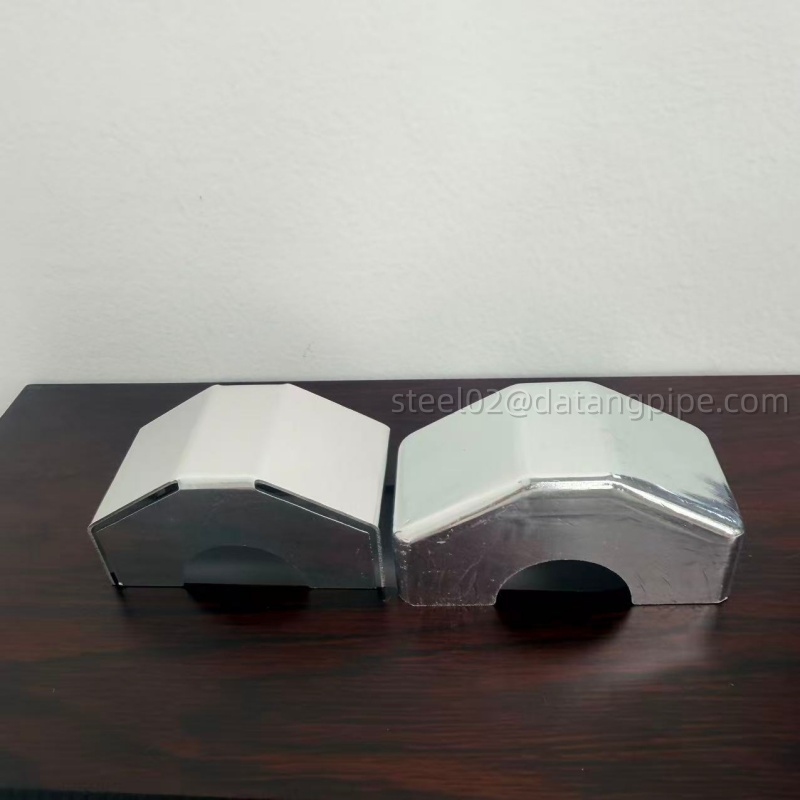
Standard Sizes and Dimensions
Support collars are manufactured to match common finned tube outer diameters (ODs). The most frequently requested sizes include:
- 63.5 mm OD – Common in medium‑duty heat exchangers.
- 73.5 mm OD – Used in larger air coolers and power plant condensers.
In addition to the collar’s outer diameter, the inner diameter (ID) must match the tube’s plain (unfinned) section. Typical tube core diameters (the base tube without fins) are:
- 25.4 mm (1 inch)
- 31.75 mm (1.25 inches)
- 38.1 mm (1.5 inches)
These diameters correspond to standard pipe sizes, ensuring compatibility with widely available finned tube products.
Custom sizes are also available from many manufacturers. If your project uses non‑standard tube dimensions, ask your supplier about bespoke collar production.
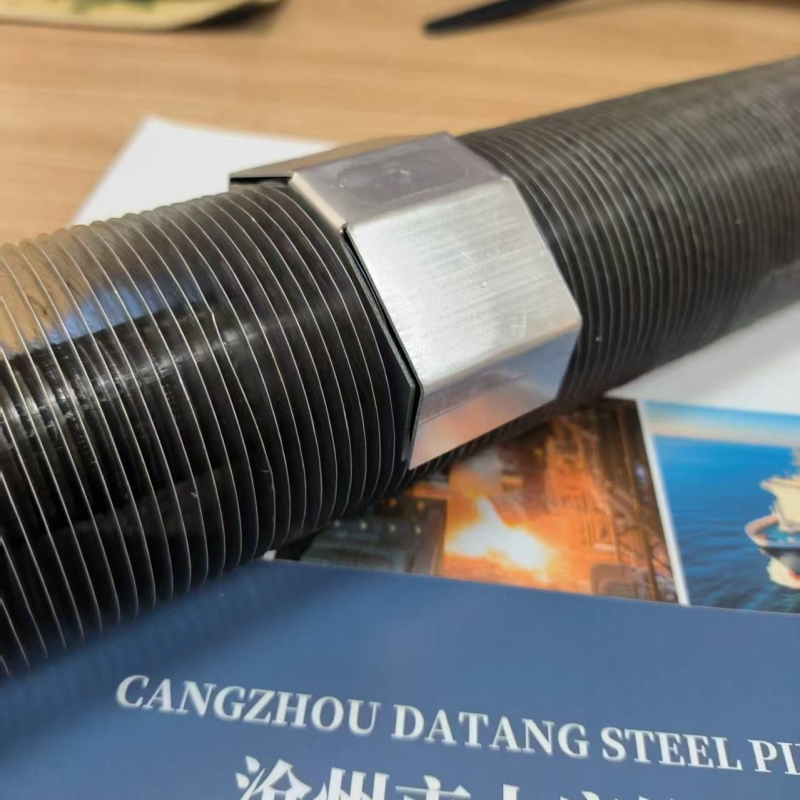
Shape Variations: Round, Hexagonal, and Octagonal
While round collars are the most common, other shapes offer specific advantages:
Round
- Simple, low‑cost, easy to manufacture.
- Provides uniform radial support.
- Best for most general applications.
Hexagonal (6 sides)
- Offers flat surfaces for wrenching during assembly.
- Can reduce rotational slippage.
- Useful in high‑vibration environments.
Octagonal (8 sides)
- Combines good grip with more contact points than hex.
- Often used in very large tube bundles where precise spacing is critical.
The choice of shape is largely driven by installation convenience and the need to prevent collar rotation over time. For most HVAC and industrial heat exchangers, round collars work perfectly. Hexagonal or octagonal collars are typically found in specialized or heavy‑duty equipment.
Placement Flexibility: Custom Support Positions
Unlike fixed‑location supports, finned tube collars can be placed at any point along the tube length to meet specific design requirements. This includes:
- Mid‑bare sections – Portions of the tube without fins (e.g., where the tube passes through a baffle or support plate).
- Between fin blocks – To maintain consistent fin‑to‑fin spacing.
- At tube ends – To secure the tube within the tube sheet or header.
Manufacturers can supply collars pre‑positioned on the tube or as separate components for field installation. This flexibility allows engineers to optimize support locations based on vibration analysis, thermal expansion calculations, and maintenance access.
How to Install a Finned Tube Support Collar
Installation is straightforward but requires attention to detail:
- Clean the tube surface – Remove any debris, oil, or loose fins from the area where the collar will sit.
- Slide the collar over the tube end – If the tube already has fins, you may need to slide the collar from the plain end before final assembly.
- Position the collar – Move it to the desired location (e.g., at a baffle or mid‑span).
- Secure (if needed) – Some collars are friction‑fit; others use a setscrew, clip, or spot weld. Always follow the manufacturer’s recommendation.
- Verify clearance – Ensure the collar does not contact adjacent tube fins or the heat exchanger casing.
For retrofitting existing tube bundles, split‑type collars (two halves bolted together) are available. These can be installed without removing the tube from the heat exchanger.
Common Applications Across Industries
Finned tube support collars are found wherever finned tubes are used, including:
- HVAC systems – Air handling units, fan coils, and condensing units.
- Power plants – Air‑cooled condensers (ACC) and feedwater heaters.
- Oil refineries – Air coolers for process streams.
- Chemical plants – Heat exchangers handling corrosive fluids.
- Food processing – Sterilizers and dryers with sanitary requirements.
- Compressor intercoolers / aftercoolers – Where vibration damping is critical.
In each case, the support collar ensures that the finned tubes remain in optimal alignment, maximizing heat transfer and minimizing unplanned downtime.
Benefits at a Glance
| Benefit | Description |
|---|---|
| Vibration reduction | Prevents tube fatigue and fretting damage. |
| Maintained spacing | Ensures uniform airflow or fluid flow between tubes. |
| Thermal expansion management | Allows axial movement while limiting lateral displacement. |
| Fin protection | Isolates fins from direct contact with supports. |
| Easy installation | Can be placed anywhere along the tube, including mid‑bare sections. |
| Cost‑effective | Low‑cost component that extends the life of expensive finned tube bundles. |
Selecting the Right Supplier
When sourcing finned tube support collars, look for a supplier that offers:
- Full material traceability – Especially important for stainless steel or critical applications.
- Precise dimensional tolerances – A loose collar will not provide support; a tight collar may damage fins.
- Customization options – Different OD, ID, height, and shape.
- Technical support – Guidance on material compatibility and installation.
Many suppliers also offer pre‑assembled tube bundles with collars already positioned according to your drawings — a time‑saving option for large projects.
Conclusion
The finned tube support collar (hoop/isolation ring) may be small, but its impact on heat exchanger reliability is enormous. By securing tubes, preventing vibration, and isolating fins from direct metal‑to‑metal contact, these components help maintain peak thermal performance over years of service.
Whether you’re working with aluminum, extruded, L/LL/KL, or G‑based finned tubes — and whether your tube OD is 63.5 mm, 73.5 mm, or a custom size — there is a support collar designed for your application. Choose the right material, shape, and placement strategy, and you’ll add significant longevity to your finned tube equipment.
Products categories
-

High Frequency Welding Finned Tubes Use For Woo...
-

Emerging Application Areas of Finned Tubes
-

G Type Finned Tube: Performance, Temperature Li...
-

Custom Inner Finned Tubes for Centrifugal Compr...
-

G-Type Embedded vs. Spiral-Wound L, LL, and KL ...
-

G-Fin vs. L-Fin vs. LL-Fin Tubes: The Ultimate ...