
Serrated Fin Tube: The Ultimate Guide to Selecting the Best Finned Tube Solution


Serrated Fin Tube: The Ultimate Guide to Selecting the Best Finned Tube Solution
In the world of thermal engineering, the selection of the right finned tube can make or break the efficiency of your heat exchanger. Whether you’re an engineer comparing serrated vs solid fin tube performance for a new air cooler, a procurement manager scanning for a reliable serrated fin tube manufacturer, or a maintenance lead looking to replace old heat exchanger fin tubes, this comprehensive guide will walk you through everything you need to know about serrated finned tubes—from how they work to how to source them intelligently.
What Is a Serrated Fin Tube?
A serrated fin tube (often called a serrated finned tube) is a type of extended surface tube where the fins are cut or “serrated” into numerous small segments along their outer edge. Unlike a continuous solid fin tube, the serrations divide the fin into a series of tiny teeth or arcs. The most common production method is the high frequency welded fin tube process, where a steel strip is continuously welded to the base tube using high-frequency electric resistance welding, and then the fin is mechanically cut to create the serrated profile. Other constructions, such as helical serrated fin tube and extruded serrated fin tube, also exist for specific operating conditions.
This segmented design fundamentally changes how air or gas flows over the fin surface, leading to significant improvements in heat transfer coefficient and anti-fouling behavior.
How Serrated Fin Tube Technology Enhances Heat Transfer
When hot fluid passes through the tube, heat conducts to the fins and must be transferred to the surrounding gas (usually air). On a solid fin, the boundary layer of air grows thicker as it travels along the fin surface, acting as an insulating blanket that limits heat dissipation.
Serrated finned tubes disrupt this boundary layer. Each serration acts as a new leading edge, restarting the boundary layer and creating intense micro-turbulence. This turbulence dramatically improves the air-side heat transfer coefficient. In many industrial air-cooled applications, a serrated fin tube can achieve 15–30% higher thermal efficiency compared to a geometrically similar solid fin tube, while adding only a marginal increase in pressure drop.
Key Advantages of Serrated Finned Tubes
When you evaluate serrated fin tube types for your project, the operational benefits extend far beyond just higher heat transfer rates:
- Enhanced Thermal Performance – The increased turbulence and effective surface area (due to the serrations) reduce the required tube length or number of rows, making your finned tube heat exchanger more compact.
- Reduced Fouling – The jagged profile and turbulence help sweep away dust, lint, and debris. For air coolers operating in dusty environments, a serrated fin tube stays cleaner longer than a solid fin, maintaining its design performance.
- Compact & Lightweight Design – Improved heat transfer per meter of tube means fewer tubes and smaller headers, lowering the structural weight and cost of the entire unit.
- Lower Operating Cost – Better heat recovery and less fouling directly reduce fan power demand and cleaning downtime, especially vital for large air cooler fin tube banks in refineries.
- Wide Material Compatibility – Serrated fins can be applied to carbon steel, stainless steel, duplex, and alloy steel base tubes, giving you freedom in serrated fin tube material selection.
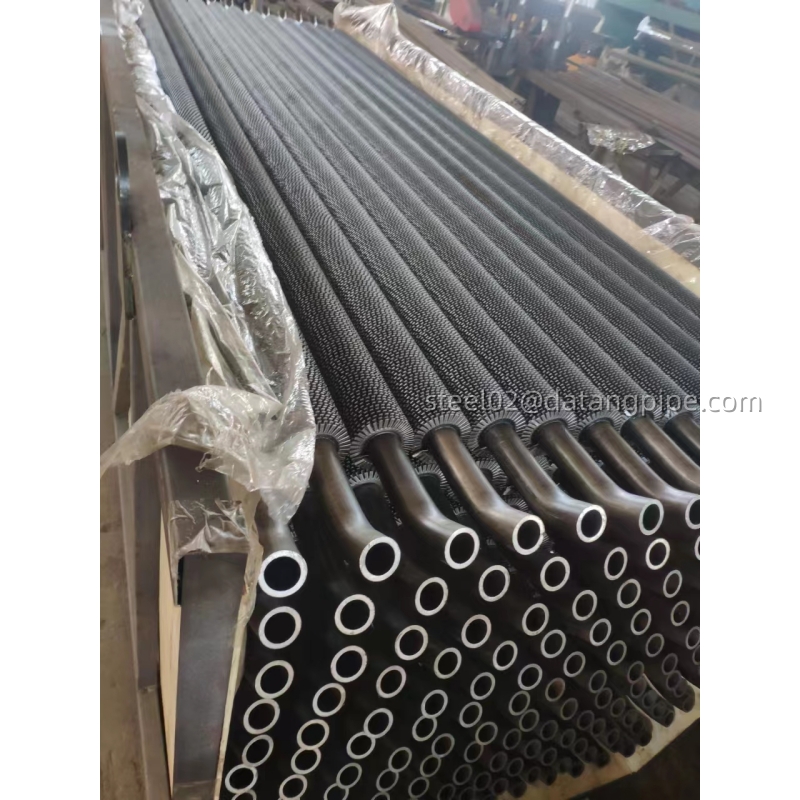
Common Types of Serrated Finned Tubes
Not all serrated finned tubes are manufactured equally. The best choice depends on your operating temperature, corrosion risk, and mechanical stress requirements.
| Type | Manufacturing Process | Max Fin Temperature (approx.) | Best Suited For |
|---|---|---|---|
| High Frequency Welded Serrated Fin Tube | Steel strip continuously HF-welded to base tube, then serrated | Up to 400°C | Air coolers, economizers, process heaters |
| Helical Serrated Fin Tube (L/LL/KL type) | Fin strip wrapped helically and mechanically locked onto tube, with serrated edges formed before or after winding | 150–300°C depending on type | Low-temperature HVAC, small heat exchangers |
| Extruded Serrated Fin Tube | Bimetallic tube with aluminum outer fin layer extruded and then serrated | Up to 300°C | Corrosive environments, offshore air cooling |
The high frequency welded fin tube is the industry workhorse for most heavy-duty finned tube heat exchanger applications because of its strong metallurgical bond and high thermal conductivity. For particularly corrosive atmospheres, an extruded serrated fin tube provides superior protection between the aluminum fin and the base tube.
Serrated Fin Tube vs Studded Fin Tube – Which Should You Choose?
Engineers often weigh up serrated fin tube vs studded fin tube solutions for fired heaters and waste heat recovery units. While both increase surface area, they serve different roles:
- Studded fin tube consists of individual studs welded to the bare pipe, offering extreme durability in high-temperature radiant sections (up to 1,000°C flue gas).
- Serrated finned tube excels in convective sections where moderate temperatures and higher gas velocities make its continuous, serrated fin profile significantly more efficient at capturing heat.
In a typical refinery fired heater, you will find studded fin tubes in the radiant zone and helical serrated fin tubes or high frequency welded finned tubes in the convection bank—choosing the right tool for each zone maximizes overall plant efficiency.
Material Selection and Custom Serrated Fin Tube Options
Every custom serrated fin tube starts with defining the right combination of base tube and fin material. Common configurations include:
- Carbon steel base + carbon steel fin (economical, for clean gas)
- Carbon steel base + 11Cr fin (better corrosion resistance)
- Stainless steel 304/316 base + SS304/316 fin (food, chemical)
- Duplex/super duplex base + matching fin (offshore, seawater-exposed)
You can also specify:
- Tube O.D. (typically 25.4 mm to 50.8 mm / 1″ to 2″)
- Fin height (10 mm to 16 mm)
- Fin thickness (0.8 mm to 1.5 mm)
- Serration density (number of teeth per inch, commonly 4 to 6 per inch)
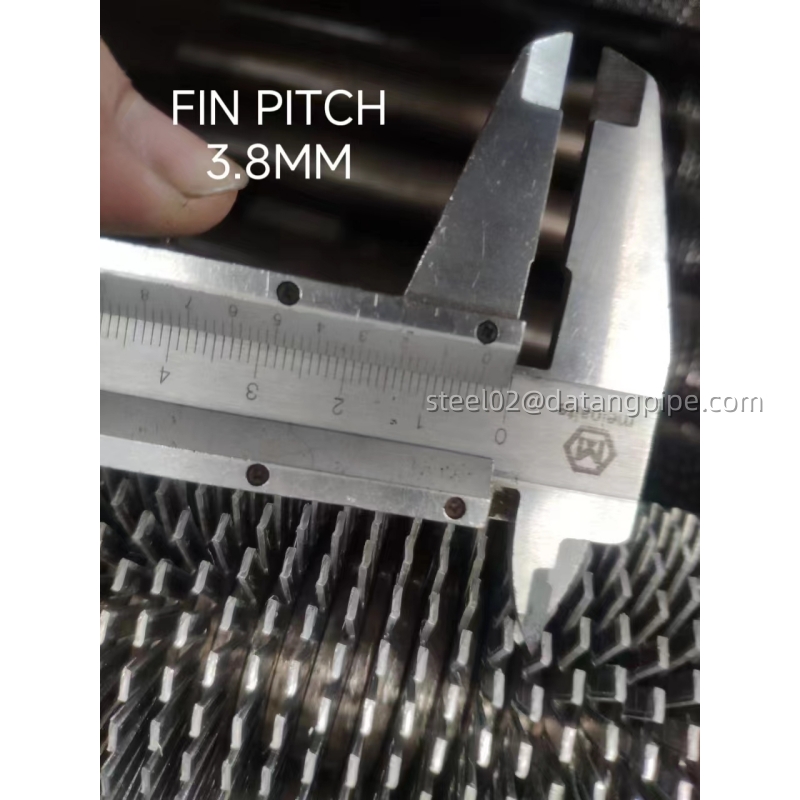
- Fin pitch (fins per inch, determining the compactness)
If you are operating an air cooler in a sandy desert or a coastal installation, discussing serrated fin tube material and coating options with your serrated finned tube supplier early in the design phase will save millions in lifecycle costs.
Industrial Applications of Serrated Fin Tubes
Thanks to their versatility, serrated fin tube applications span nearly every industry that depends on thermal management:
- Air Cooled Heat Exchangers – The backbone of petrochemical plants; air cooler fin tube bundles use serrated fins to reject process heat.
- Economizers & Waste Heat Boilers – Recovering heat from turbine exhaust or flue gas.
- Gas Processing & LNG – Cryogenic and low-temperature exchangers frequently use aluminum extruded serrated fins.
- Power Generation – Steam condenser air cooling and auxiliary cooling loops.
- HVAC & Refrigeration – Where compact, high-efficiency finned tube for air cooler and dry coolers is essential.
Finding a Reliable Serrated Fin Tube Manufacturer
In a global market crowded with serrated fin tube manufacturers, how do technical buyers identify a partner who delivers both quality and consistency? Look for these proof points:
- Certifications – ISO 9001, ASME “U” or “S” stamps, and relevant welding qualifications (EN 3834, AWS).
- In-House HF Welding Lines – A manufacturer that operates its own high frequency welding mills can control lead times and quality far better than a trader.
- Testing Capabilities – Dye penetrant inspection, pull-off bond tests, hydrostatic testing, and material certificates traceable to the heat number.
- Engineering Support – A true serrated finned tube supplier will help you select the optimal fin geometry and material rather than just selling a commodity.
- Export Experience – If you are sourcing globally, a factory with a strong track record in serrated finned tube China exports will handle logistics, packing, and documentation professionally.
Request sample sections, ask for thermal performance curves, and always validate whether the quoted serrated finned tube price includes compliance with your project’s international codes. A slightly higher upfront cost for an ASME-certified custom serrated fin tube can prevent catastrophic field failures down the line.
Frequently Asked Questions (FAQ)
What is the difference between a serrated fin tube and a solid fin tube?
A serrated fin tube has its fins cut into small segmented teeth, while a solid fin tube maintains a continuous circular rim. The serrations break up the air boundary layer, increasing turbulence and heat transfer by 15–30% over a solid fin tube in typical air-cooled services.
Can serrated fin tubes handle high temperatures?
Yes. A high frequency welded fin tube with appropriate material can operate continuously at fin temperatures up to 400°C. For higher-temperature gas streams where serrated fins may exceed their limit, a studded fin tube is often used instead.
What serrated fin types are most common for air coolers?
The helical serrated fin tube (wound type) and the high frequency welded serrated fin tube are both popular. For process-side high pressure and temperature, the welded type is strongly recommended due to its robust bond and long lifecycle.
How does fouling affect serrated finned tube performance?
All finned tubes foul in dirty air, but serrated finned tubes exhibit a self-cleaning tendency because the turbulent wakes behind each serration dislodge light dust. They typically retain a higher fraction of their clean performance compared to solid fins after months of service.
How can I get an accurate serrated fin tube price?
A reliable serrated finned tube supplier will base quotation on tube material, O.D., wall thickness, fin material, fin height, pitch, serration count, and order quantity. Always provide your heat exchanger data sheet to get a meaningful serrated fin tube price that matches your thermal design.
Are serrated fin tubes available in stainless steel?
Absolutely. Stainless steel 304, 316, and duplex grades are all available as base tubes and fins. Serrated fin tube material selection should follow your process fluid corrosivity and the external atmospheric environment.
Unlock Your Heat Exchanger’s Potential with the Right Serrated Fin Tube
Whether you are fine-tuning a new finned tube heat exchanger design or need reliable replacements for an existing air cooler fin tube bundle, the switch to a high-performance serrated fin tube can deliver substantial CAPEX and OPEX savings. By understanding the manufacturing methods, material options, and sourcing best practices, you are now equipped to make a data-driven choice that satisfies both your engineering team and your budget holders.
If you are ready to compare serrated finned tube options designed specifically for your operating conditions, reach out to our engineering team. We provide custom serrated fin tube solutions with full material traceability and thermal performance guarantees—helping you achieve more with every square meter of heat transfer surface.
Products categories
-

G-Fin vs. L-Fin vs. LL-Fin Tubes: The Ultimate ...
-

Integral Extruded Finned Tubes: The Complete Gu...
-

U-Shaped Finned Tubes:Boost Industrial Performa...
-

Laser Welded Finned Tubes | 10–273 mm Base Tube...
-

Serrated Fin Tube with U-Shape Serrations | Hig...
-

Spiral Finned Vacuum Heat Pipes for Efficient H...