
G-Fin vs. L-Fin vs. LL-Fin Tubes: The Ultimate Technical Comparison Guide (2026)


G-Fin vs. L-Fin vs. LL-Fin Tubes: The Ultimate Technical Comparison Guide (2026)
In the world of industrial heat transfer, selecting the right finned tube process is critical for balancing thermal efficiency, equipment lifespan, and CAPEX. This guide provides a deep-dive comparison between three of the most common helical-wrapped fin types: G-Fin (Embedded), L-Fin (Wrap-Around), and LL-Fin (Overlapping).
1. Process Definitions & Technical Characteristics
G-Fin (Embedded Fin)
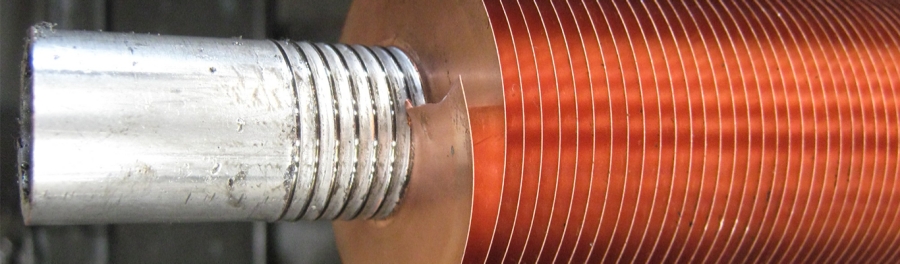
The G-Fin is manufactured by machining a helical groove into the outer wall of the base tube. The fin strip is then mechanically tensioned into this groove and backfilled with the displaced tube material to ensure a “locked-in” mechanical bond.
-
Bond Type: High-pressure mechanical lock.
-
Max Temp: Up to 400°C(750°F).
-
Best For: High-temperature cycles and high-vibration environments.
L-Fin (Wrap-Around / Footed Fin)
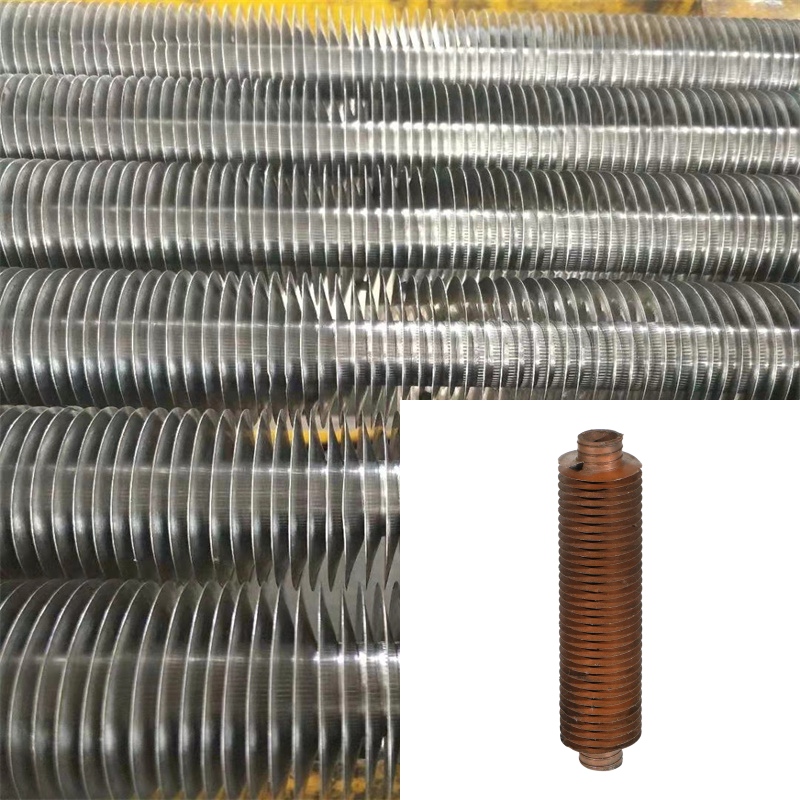
The L-Fin involves a fin strip formed into an “L” shape and tension-wrapped around the tube. The “foot” of the L provides surface contact with the base tube.
-
Bond Type: Tension-based friction.
-
Max Temp: Up to 150°C-180°C.
-
Best For: Low-to-medium temperature air-cooled heat exchangers.
LL-Fin (Double L / Overlapping Fin)
The LL-Fin is an evolution of the L-Fin where the foot of one fin overlaps the previous one, completely enclosing the base tube.
-
Bond Type: Overlapping tension wrap.
-
Max Temp: Up to 180°C.
-
Best For: Corrosive environments where the base tube requires protection.
2. Technical Selection & Performance Comparison
When conducting parameter calculations for heat exchangers, engineers must weigh thermal contact resistance against environmental factors.
Performance Data Matrix
| Technical Parameter | G-Fin (Embedded) | L-Fin (Wrap-Around) | LL-Fin (Overlapping) |
| Heat Transfer Efficiency | High (Excellent bond) | Moderate | Moderate to High |
| Thermal Contact Resistance | Minimal (Stable) | Moderate (Can increase) | Low (Stable) |
| Max Operating Temp | 400°C | 180°C | 180°C |
| Atmospheric Corrosion | Low protection | Poor (Tube exposed) | Excellent (Full cover) |
| Mechanical Strength | Excellent (Locked) | Low | Moderate |
| Typical Fin Materials | Al, Cu, Carbon Steel | Aluminum, Copper | Aluminum, Copper |
| Base Tube Materials | Any (CS, SS, Alloy) | Any | Any |
3. Engineering Design & Selection Logic
When to Choose G-Fin?
Designers specify G-Fin when the process involves Thermal Cycling. Because the fin is embedded, the different expansion rates of the fin and tube won’t cause the fin to loosen over time. It is the gold standard for Air Cooled Heat Exchangers (ACHE) in refineries.
When to Choose LL-Fin?
Choose LL-Fin for Corrosive Coastal Environments. In a standard L-Fin, the small gap between fin feet allows moisture to reach the base tube (often carbon steel), leading to galvanic corrosion. The LL-Fin’s overlapping design seals the tube, acting as a “skin” against the atmosphere.
4. Cost Evaluation & Lifecycle Analysis (2026)
The total cost of ownership (TCO) is not just the purchase price but the efficiency over 10+ years.
-
L-Fin (Budget Option): Lowest manufacturing cost. Ideal for dry, non-corrosive environments with low thermal loads.
-
LL-Fin (Value for Money): Slightly higher cost than L-Fin but significantly reduces maintenance in humid or industrial zones.
-
G-Fin (Premium/High-Spec): Highest upfront cost due to the machining process. However, its durability in high-temp applications prevents the massive costs of unplanned shutdowns.
5. Engineering Formulas for Comparison
The heat transfer rate (Q) for these tubes is calculated by:
Where:
-
$U$ = Overall heat transfer coefficient (heavily influenced by the contact resistance of the fin-to-tube bond).
-
$A$ = Total extended surface area.
For G-Fin, the contact resistance remains constant up to $400^\circ\text{C}$, whereas for L-Fin, $U$ may drop by $20\%$ if the tension is lost due to thermal expansion above $150^\circ\text{C}$.
Final Verdict for Procurement
-
High Temp / Critical Service? Go with G-Fin.
-
Corrosive / Salt Air / Outdoor? Go with LL-Fin.
-
Clean Air / Low Temp / Budget Driven? Go with L-Fin.
Products categories
-

Extruded Finned Tubes | High Efficiency Bimetal...
-

U-Shaped Finned Tubes:Boost Industrial Performa...
-

High Frequency Welding Finned Tubes Use For Woo...
-

G Type Finned Tube: Performance, Temperature Li...
-

Low Fin Tube (Integrally Rolled Type)
-

Finned Tube Used in Wood Drying Kiln Project in...