
KL Type Fin Tube (Knurled Finned Tube): The Ultimate Guide for High-Efficiency Heat Transfer

KL Type Fin Tube (Knurled Finned Tube): The Ultimate Guide for High-Efficiency Heat Transfer
Introduction
In the world of industrial heat exchangers, selecting the right fin tube can directly impact thermal performance, operational costs, and equipment longevity. Among the many fin tube types—L-Fin, LL-Fin, G-Fin, Extruded, and High-Frequency Welded—the KL Type Fin Tube (commonly known as Knurled Finned Tube) stands out for its unique mechanical bonding process and superior heat transfer efficiency.
Whether you are an engineer designing an air cooler, a procurement manager sourcing fin tube for boiler applications, or a plant operator looking to retrofit aging heat exchangers, understanding the advantages of knurled fin tube technology is essential.
This guide covers everything you need to know: manufacturing process, key benefits, technical specifications, applications, comparison with other fin types, and answers to frequently asked questions. Let’s dive in.
What Is KL Type Fin Tube (Knurled Finned Tube)?
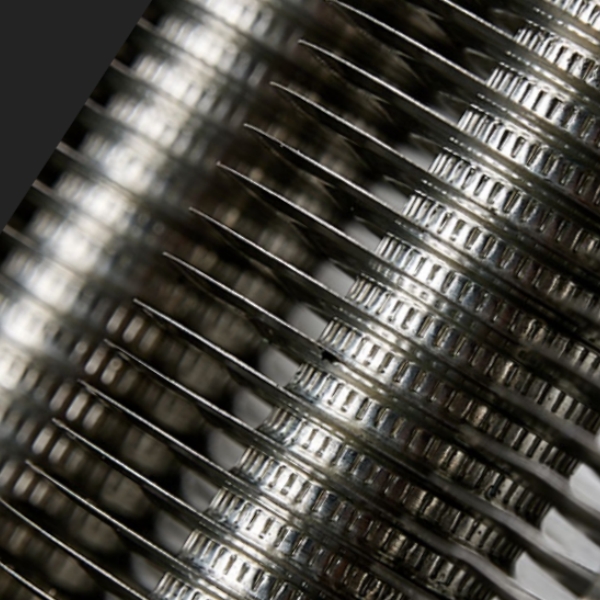
The KL Type Fin Tube—where “KL” stands for Knurled (sometimes referred to as “Knurled-Lock” or K-L fin)—is a mechanically bonded finned tube. Unlike extruded or welded fins, the knurling process creates a tight, interference fit between the fin strip and the base tube without melting the base material.
Manufacturing Process of Knurled Finned Tube
- Base Tube Preparation – A carbon steel, stainless steel, or aluminum tube is cleaned and inspected.
- Knurling (Rolling Grooves) – A special knurling wheel rolls a precise spiral groove onto the outer surface of the base tube.
- Fin Strip Insertion – A metal fin strip (usually aluminum or copper) is wound under tension into the knurled groove.
- Backfill & Locking – The displaced metal from the knurling process flows back over the fin foot, mechanically locking the fin in place. No filler or adhesive is used.
This cold-forming process produces a rolled knurled fin tube with excellent bond strength and consistent fin spacing.
Key Characteristics
| Parameter | Typical Range |
|---|---|
| Base tube OD | 15 mm – 63 mm (0.625″–2.5″) |
| Fin height | 5 mm – 16 mm |
| Fin thickness | 0.3 mm – 0.6 mm |
| Fin density | 4 – 11 fins per inch (FPI) |
| Materials | Base: CS, SS, Cu-Ni; Fin: Al, Cu |
| Max. operating temp. | 280°C – 320°C (Al fin on CS tube) |
Why Choose KL Type Fin Tube? Top 5 Advantages
1. Superior Heat Transfer Efficiency
The knurled mechanical bond eliminates air gaps found in L/LL type fins. The metal-to-metal contact area is increased by 30–50% compared to wrap-on fins, resulting in lower thermal resistance and higher fin tube heat exchanger effectiveness.
2. Excellent Mechanical Strength
Because the fin foot is embedded into the knurled groove and backfilled, the fin strip resists loosening under vibration, thermal cycling, and high-velocity gas flow. This makes KL fin tube ideal for harsh environments like compressor intercoolers and air-cooled condensers.
3. Corrosion Resistance & Galvanic Compatibility
The cold-working process does not alter the metallurgy of the base tube. Common combinations:
- Aluminum knurled fin tube on carbon steel (lightweight, economical)
- Copper knurled fin tube on stainless steel (for marine or chemical service)
When proper sacrificial coatings are applied, the knurled finned tube outperforms bimetallic types in acidic or salty atmospheres.
4. Cost-Effective for Medium-Temperature Applications
Operating up to ~300°C, the KL Type fills the gap between cheap L-Fin tubes (limited to 180°C) and expensive extruded or welded fins (400°C+). For many industrial air coolers, steam condensers, and radiator cores, knurled fins provide the best value.
5. Easy Maintenance & Cleaning
The uniform fin geometry and open spacing (typically 4–6 FPI for dirty gases) allow water jetting or steam cleaning. Unlike high-density extruded fins, knurled fin tube resists fouling and is field-repairable if a section is damaged.
Technical Specifications & Standards
KL Type Fin Tubes are commonly manufactured according to:
- ASTM A179 / A192 (seamless carbon steel tubes)
- ASTM A213 (stainless steel tubes)
- ASME Section VIII (for pressure vessel applications)
- ISO 15547 (plate-fin and finned tube heat exchangers)
Dimensional Tolerances (Typical)
| Parameter | Tolerance |
|---|---|
| Tube OD | ±0.1 mm |
| Fin height | ±0.5 mm |
| Fin pitch | ±0.2 mm per 100 mm |
| Fin strip thickness | ±0.03 mm |
Thermal Performance Data (Example: 25.4 mm OD base tube, Al fin, 6 FPI, 12 mm fin height)
- Heat transfer coefficient (air side): 55–80 W/m²·K
- Enhanced surface area ratio: 12–18 times bare tube
Actual values depend on airflow, fin geometry, and contamination factor.
Applications of KL Knurled Finned Tube (Industry-Specific)
Power Generation
- Knurled fin tube for boiler economizers
- Air-cooled condenser (ACC) bundles
- Generator hydrogen coolers
Petrochemical & Refining
- Fin tube air coolers for hydrocarbon condensing
- Compressor intercoolers & aftercoolers
- Lube oil coolers
HVAC & Refrigeration
- Remote air-cooled condensers
- Dry coolers for data centers
- Ammonia evaporators (using copper fins)
Food & Pharmaceutical Processing
- Sterilization air heaters
- Low-fouling pasteurization coolers
Industrial Manufacturing
- Radiator cores for diesel generators
- Hydraulic oil coolers
- Waste heat recovery units (low-to-medium temperature)
KL Type vs. Other Fin Tube Technologies: A Decision Matrix
| Feature | L-Fin (Wrap-on) | LL-Fin (Overlap) | KL / Knurled Fin | G-Fin (Embedded) | Extruded (Bimetal) | HF Welded |
|---|---|---|---|---|---|---|
| Max temperature | ~180°C | ~200°C | ~300°C | ~400°C | ~350°C | ~550°C |
| Bond type | Foot wrap | Overlap wrap | Knurled mechanical | Groove embed | Cold extrusion | Fusion weld |
| Contact resistance | Medium | Medium | Low | Very low | Very low | Lowest |
| Corrosion protection | Moderate | Moderate | Good | Excellent | Excellent | Good |
| Relative cost | $ | $ | $$ | $$$ | $$$$ | $$$ |
| Best for | Dry, clean air | Clean, moderate temp | Oily/dirty air, vibration | High temp/pressure | Aggressive corrosion | Extreme temp |
Verdict: Choose knurled finned tube when you need better thermal contact than L/LL type, but your budget and temperature do not justify extruded or welded fins.
How to Select a Reliable Knurled Fin Tube Manufacturer
When sourcing knurled fin tube manufacturers, consider these factors:
- Process Control – Does the manufacturer monitor knurling depth, backfill consistency, and fin tension in real time?
- Material Certification – Ask for EN 10204 3.1 or 3.2 certificates for base tube and fin strip.
- Surface Preparation – Proper degreasing before knurling prevents micro-slip under thermal cycles.
- Testing Capabilities – Air leak test, helium leak test, or eddy current inspection for the base tube.
- Lead Times & MOQ – Many Asian manufacturers offer economical knurled fin tube price with MOQ as low as 500 meters.
Pro tip: Request a fin pull-off test sample. For a quality KL fin tube, the pull force should exceed 60 N per fin, measured according to ANSI/ASTM B359.
Maintenance, Longevity, and Failure Prevention
Knurled fin tubes typically last 15–25 years in moderate service. Common failure modes and mitigation:
| Failure Mode | Root Cause | Prevention |
|---|---|---|
| Fin loosening | Cyclic thermal shock beyond 320°C | Upgrade to G-fin or welded fin |
| Galvanic corrosion | Dissimilar metals + moisture + electrolyte | Apply epoxy coating or use monometallic design |
| Erosion (fins) | High-velocity particulates (sand, catalyst) | Reduce air velocity, add inlet screen, or choose thicker fin strip |
| Base tube pitting | Under-deposit corrosion | Regular cleaning schedule, chemical treatment of process fluid |
Routine inspections: visual check for fin damage, pull testing every 5 years, and ultrasonic thickness measurement on the base tube.
Frequently Asked Questions (FAQ)
Q1: Is a knurled fin tube the same as an extruded fin tube?
No. Extruded fins are formed from a thick aluminum outer tube (bimetal), creating a seamless, monolithic fin. Knurled fin tube uses a separate fin strip mechanically locked into a groove. Extruded has higher temperature capability (350°C) and better corrosion protection, but costs 30–50% more.
Q2: Can I replace my existing L-Fin bundle with KL Type fin tubes?
Yes, in most cases. The outer diameter and mechanical footprint can be identical. The improved heat transfer may allow you to reduce fan power or increase process throughput. Always check the maximum operating temperature of your application.
Q3: What is the typical knurled fin tube price per meter?
Prices depend on materials, dimensions, and quantity. Approximate range (2025):
- Aluminum fin on CS tube, 25mm OD, 6 FPI: $8–15/meter (OEM quantity)
- Copper fin on SS tube: $25–45/meter
- Small batch or custom: +30–50%
Get quotes from 3–5 knurled fin tube manufacturers for accurate pricing.
Q4: Does knurling weaken the base tube?
Properly controlled knurling creates a surface deformation less than 0.2 mm deep. Burst pressure tests show no significant reduction (less than 5%) compared to a plain tube. However, for very high-pressure tubes (e.g., >100 bar), consider embedded (G-fin) or welded designs.
Q5: Where can I find technical drawings or a knurled fin tube catalog?
Reputable manufacturers provide dimensional drawings, thermal performance curves, and sample specifications. Search for “KL fin tube datasheet” or “knurled finned tube manufacturer” on industrial marketplaces like Alibaba, ThomasNet, or direct from suppliers in India, China, South Korea, and Europe.
Q6: Can I use knurled fins in a falling-film evaporator or condenser with condensation?
Absolutely. The knurled surface roughness (unlike smooth L-fin) promotes nucleate boiling and condensate drainage. Many refrigeration engineers specify copper knurled fin tube for ammonia evaporators.
Conclusion: Is KL Type Fin Tube Right for Your Project?
The KL Type Fin Tube (Knurled Finned Tube) offers a sweet spot between cost and performance:
- Better thermal efficiency than L/LL fins
- Lower cost than extruded or welded fins
- Reliable mechanical bond up to 300°C
- Suitable for medium-fouling and vibration-prone services
If you are designing a new fin tube heat exchanger or retrofitting an existing air cooler, request samples from qualified knurled fin tube manufacturers and run a side-by-side thermal comparison.
Next Steps for Decision Makers
- Engineers: Download technical datasheets and performance curves.
- Procurement: Request quotes with EN 10204 3.1 material certificates.
- Plant Managers: Schedule a pilot bundle replacement to quantify energy savings.
For a rapid selection guide or to compare KL fin tube vs extruded fin tube for your specific operating conditions, contact a specialized fin tube supplier today.
Products categories
-

Steel-Aluminum Extruded Finned Tube Manufacturi...
-

L-Foot Finned Tubes: The Comprehensive Selectio...
-

Serrated Fin Tube with U-Shape Serrations | Hig...
-

U-Shaped Finned Tubes:Boost Industrial Performa...
-

Extruded Finned Tubes | High Efficiency Bimetal...
-

Custom Inner Finned Tubes for Centrifugal Compr...