
Aluminum Finned Tube | High-Efficiency Aluminum Fin Tube for Fin Fan Coolers

Introduction
In modern heat exchanger systems, improving heat transfer efficiency while reducing equipment weight and manufacturing costs has become increasingly important.
Aluminum finned tubes are widely used in industrial heat exchangers, air coolers, refrigeration equipment, LNG vaporization systems, and HVAC applications because aluminum provides excellent thermal conductivity, lightweight characteristics, and strong corrosion resistance.
Compared with traditional steel or copper-based fin tubes, aluminum finned tubes offer a high surface area-to-weight ratio, making them an ideal solution for applications where compact design, efficient heat dissipation, and long-term performance are required.
As an experienced finned tube manufacturer, we provide customized aluminum fin tube solutions based on customers’ drawings, operating conditions, heat transfer requirements, and equipment design.
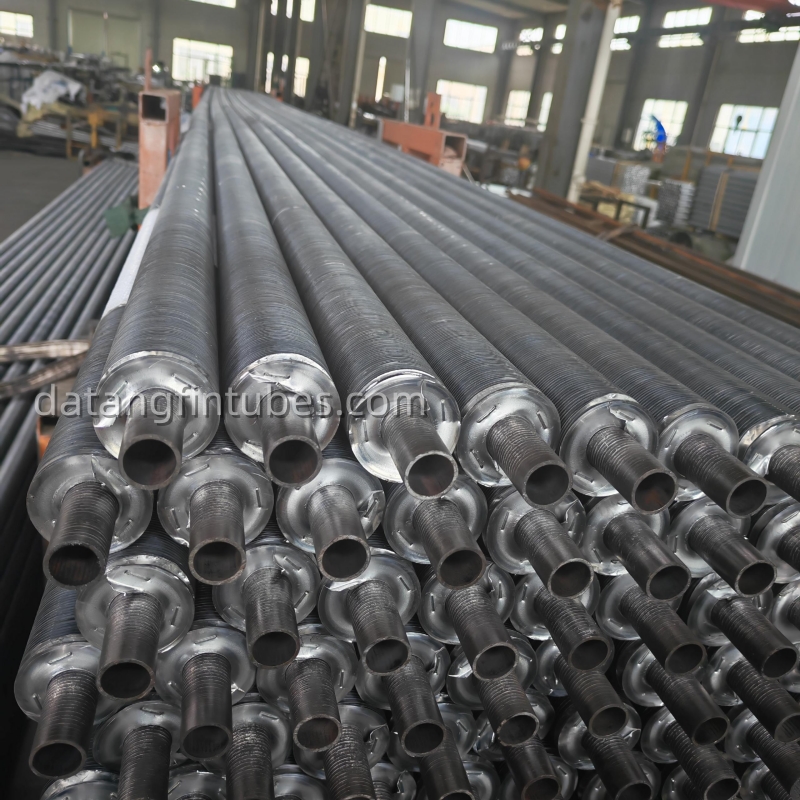
Table of Contents
What Is Aluminum Finned Tube?
How Does Aluminum Finned Tube Improve Heat Transfer Efficiency?
Why Choose Aluminum for Finned Tubes?
Types of Aluminum Finned Tubes
Aluminum Extruded Finned Tube
Embedded Aluminum Fin Tube
L-Foot Aluminum Finned Tube
Aluminum Finned Tube Manufacturing Process
Applications of Aluminum Finned Tubes
Aluminum Finned Tube vs Other Fin Tube Materials
Customized Aluminum Finned Tube Solutions
Quality Control During Aluminum Finned Tube Production
Frequently Asked Questions About Aluminum Finned Tubes
Contact Us for Customized Aluminum Finned Tube Solutions
What Is Aluminum Finned Tube?
An aluminum finned tube is a heat transfer component consisting of a base tube and aluminum fins attached or formed around the tube surface.
The main purpose of the aluminum fins is to significantly increase the external surface area of the tube. Since the heat transfer area directly affects the overall efficiency of a heat exchanger, adding fins allows the equipment to achieve higher thermal performance within a smaller footprint.
The basic structure includes:
1. Base Tube
The base tube works as the internal heat transfer passage.
Depending on the application requirements, the tube material can be:
- Carbon steel
- Stainless steel
- Copper
- Aluminum
- Aluminum alloy
- Other customized materials
The internal fluid flows through the tube, transferring heat between the process medium and the external environment.
2. Aluminum Fins
The aluminum fins are installed around the outside surface of the tube.
Because aluminum has excellent thermal conductivity, the fins quickly spread heat from the tube surface to the surrounding air, increasing heat exchange efficiency.
The fin design can be customized according to:
- Fin height
- Fin thickness
- Fin spacing
- Tube diameter
- Operating temperature
- Air velocity
- Heat transfer requirements
How Does Aluminum Finned Tube Improve Heat Transfer Efficiency?
The heat transfer capability of a bare tube is limited because only the tube surface contacts the surrounding air.
By adding aluminum fins, the external heat transfer area can be increased several times compared with a smooth tube.
The heat transfer process can be explained as follows:
Step 1: Heat Transfer Through The Tube Wall
The hot or cold fluid flows inside the tube.
Heat energy transfers through the tube wall by conduction.
Step 2: Heat Spreading Through Aluminum Fins
The aluminum fins quickly conduct heat away from the tube surface.
Due to aluminum’s high thermal conductivity, heat can be distributed efficiently across the entire fin area.
Step 3: Heat Exchange With Surrounding Air
The enlarged fin surface contacts more air, improving heat dissipation or heat absorption.
Therefore, aluminum finned tubes are especially suitable for air-side heat transfer applications where the thermal resistance of air is much higher than liquid.
Why Choose Aluminum for Finned Tubes?
Aluminum has become one of the most commonly selected fin materials because of its unique advantages.
Excellent Thermal Conductivity
Aluminum provides good thermal conductivity, allowing heat to transfer efficiently from the tube surface to the fins.
This makes aluminum fin tubes suitable for:
- Air-cooled heat exchangers
- Refrigeration condensers
- Evaporators
- HVAC coils
- LNG vaporization equipment
Lightweight Design
Compared with copper or steel fin solutions, aluminum has a lower density.
This helps reduce:
- Equipment weight
- Transportation cost
- Supporting structure requirements
For large heat exchanger systems, weight reduction can provide significant engineering advantages.
Good Corrosion Resistance
A natural oxide layer forms on aluminum surfaces, providing protection against many environmental conditions.
This makes aluminum finned tubes suitable for outdoor applications such as:
- Air coolers
- Cooling systems
- Energy equipment
- Industrial ventilation systems
Flexible Manufacturing Possibilities
Aluminum can be processed into different fin structures, including:
- Extruded aluminum fins
- Embedded aluminum fins
- Integral aluminum fin tubes
- Special profile aluminum fins
This allows manufacturers to design fin tubes according to different heat transfer requirements.
Types of Aluminum Finned Tubes
According to different manufacturing methods and application requirements, aluminum finned tubes can be produced in several different structures.
The most common types include:
- Aluminum extruded finned tubes
- Embedded aluminum fin tubes
- L-foot aluminum finned tubes
- Wrapped aluminum fin tubes
- Customized aluminum fin tube solutions
Different designs provide different levels of mechanical strength, heat transfer performance, temperature resistance, and corrosion protection.
1. Aluminum Extruded Finned Tube
Aluminum extruded finned tube is one of the most advanced and widely used aluminum fin tube designs.
During the manufacturing process, an aluminum outer sleeve is mechanically extruded around the base tube.
The extrusion process creates a tight mechanical bond between the aluminum fin and the tube surface, ensuring excellent heat transfer performance.
The typical structure includes:
- Inner core tube
- Aluminum outer sleeve
- Integral extruded fins
Because the aluminum fin is directly bonded with the tube, there is almost no contact resistance between the tube and fin.
This makes extruded aluminum fin tubes highly efficient for demanding heat exchanger applications.
Advantages of Aluminum Extruded Finned Tubes
High Mechanical Bond Strength
The extrusion process creates strong contact pressure between the aluminum fin and the base tube.
This structure provides:
- Excellent thermal contact
- Good vibration resistance
- Long service life
It is especially suitable for equipment operating under continuous thermal cycling conditions.
Excellent Heat Transfer Performance
Compared with traditional wrapped fin tubes, extruded aluminum fin tubes provide a more stable heat transfer path.
The aluminum fins work as an integrated part of the tube, reducing thermal resistance and improving overall exchanger efficiency.
Better Protection of Base Tube
The aluminum outer layer can also provide additional protection for the inner tube.
For example:
- Aluminum-steel composite fin tubes combine the strength of steel tubes with the corrosion resistance of aluminum fins.
- The aluminum layer helps protect the tube surface in outdoor environments.
2. Embedded Aluminum Fin Tube
Embedded aluminum fin tube is manufactured by machining a spiral groove on the outside surface of the base tube and embedding an aluminum strip into the groove.
The aluminum fin is mechanically locked into the tube surface, creating a reliable connection between the tube and fin.
The structure provides:
- Good heat transfer efficiency
- Strong mechanical connection
- Suitable performance under medium temperature conditions
Embedded aluminum fin tubes are commonly used in:
- Heating equipment
- Heat recovery systems
- Industrial air heaters
- Thermal processing equipment
3. L-Foot Aluminum Finned Tube
L-foot aluminum finned tube is manufactured by wrapping an aluminum strip around the base tube.
The bottom part of the aluminum strip forms an L-shaped foot that covers the tube surface.
The main advantages include:
Cost-Effective Solution
L-foot fin tubes provide a good balance between performance and manufacturing cost.
Flexible Material Combination
The tube and fin materials can be selected separately.
Common combinations include:
- Carbon steel tube + aluminum fin
- Stainless steel tube + aluminum fin
- Copper tube + aluminum fin
Suitable Operating Temperature
L-foot aluminum fin tubes are widely used for moderate temperature applications.
Aluminum Finned Tube Comparison
| Type | Manufacturing Method | Main Advantage | Typical Applications |
|---|---|---|---|
| Aluminum Extruded Finned Tube | Aluminum sleeve extrusion | High efficiency and strong bonding | Air coolers, heat exchangers, LNG equipment |
| Embedded Aluminum Fin Tube | Fin embedded into tube groove | Strong mechanical connection | Industrial heaters, heat recovery |
| L-Foot Aluminum Fin Tube | Aluminum strip wrapping | Economical and flexible | HVAC, refrigeration systems |
| Wrapped Aluminum Fin Tube | Spiral wrapped fin | Simple production and customization | General heat exchange equipment |
Aluminum Finned Tube Manufacturing Process
As a professional aluminum finned tube manufacturer, production quality depends on precise control of every manufacturing step.
The typical manufacturing process includes:
Step 1: Raw Material Inspection
Before production begins, all incoming materials are inspected.
The inspection includes:
- Tube material verification
- Aluminum alloy checking
- Dimension measurement
- Surface quality inspection
Selecting qualified raw materials ensures stable performance during operation.
Step 2: Tube Preparation
The base tubes are processed according to customer requirements.
Common preparation includes:
- Cutting to required length
- Surface cleaning
- Straightening
- Dimensional checking
A clean and accurate tube surface is important for achieving reliable bonding between tube and aluminum fins.
Step 3: Aluminum Fin Forming
The aluminum material is processed into the required fin shape through specialized equipment.
Parameters can be customized according to customer requirements:
- Fin height
- Fin thickness
- Fin pitch
- Tube diameter
- Overall length
Step 4: Fin Assembly
The aluminum fins are assembled onto the tube using different manufacturing methods:
For extruded fin tubes:
The aluminum sleeve is mechanically expanded onto the tube surface.
For embedded fin tubes:
The aluminum strip is inserted into the machined groove.
For L-foot fin tubes:
The aluminum strip is tightly wrapped around the tube.
Step 5: Quality Inspection
Each batch of aluminum finned tubes can be inspected according to customer requirements.
Typical inspection items include:
- Outer diameter measurement
- Fin pitch inspection
- Fin height inspection
- Bonding quality inspection
- Surface inspection
- Pressure testing (if required)
Customized Aluminum Finned Tube Manufacturing
Different heat exchanger projects require different fin tube designs.
Therefore, aluminum finned tubes are usually not standard products.
Professional manufacturers customize solutions based on:
Tube Specifications
Including:
- Tube diameter
- Tube wall thickness
- Tube material
- Tube length
Fin Specifications
Including:
- Aluminum alloy type
- Fin height
- Fin thickness
- Fin spacing
- Fin shape
Operating Conditions
Including:
- Working temperature
- Pressure requirements
- Heat transfer capacity
- Environmental conditions
By optimizing these parameters, the aluminum fin tube can achieve better thermal performance and longer service life.
Applications of Aluminum Finned Tubes
Due to their excellent thermal conductivity, lightweight structure, and flexible customization options, aluminum finned tubes are widely used in various heat transfer equipment.
They are especially suitable for applications where air-side heat transfer efficiency, compact design, and corrosion resistance are important.
The major applications include:
1. Air-Cooled Heat Exchangers
Air-cooled heat exchangers (ACHE) use ambient air as the cooling medium instead of cooling water.
Because the heat transfer resistance on the air side is relatively high, increasing the external heat transfer surface area is critical.
Aluminum finned tubes are widely used in air coolers because they provide:
- Large heat transfer surface area
- Lightweight structure
- Excellent air-side performance
- Good outdoor corrosion resistance
Typical applications include:
- Oil and gas processing plants
- Petrochemical facilities
- Power generation systems
- Industrial cooling systems
2. LNG Vaporizer Systems
Aluminum finned tubes play an important role in LNG vaporization equipment.
During LNG regasification, heat from the surrounding environment is transferred through the aluminum fins and tube wall to vaporize liquefied natural gas into gaseous form.
Because aluminum provides:
- High thermal conductivity
- Lightweight design
- Good resistance to outdoor environments
Aluminum finned tubes are widely used in:
- Ambient air vaporizers (AAV)
- LNG vaporizer systems
- Gas supply stations
- Industrial gasification equipment
For LNG applications, fin geometry and material selection are usually optimized according to:
- LNG flow rate
- Ambient temperature
- Required vaporization capacity
- Installation conditions
3. HVAC and Refrigeration Equipment
In HVAC and refrigeration systems, efficient heat exchange directly affects equipment energy consumption.
Aluminum finned tubes are commonly used in:
- Air conditioning systems
- Refrigeration condensers
- Evaporators
- Heat pump systems
- Cooling coils
The lightweight characteristics of aluminum help manufacturers design compact and efficient heat exchangers.
4. Industrial Heating and Cooling Equipment
Many industrial processes require customized heat transfer solutions.
Aluminum finned tubes can be used in:
- Air heaters
- Heat recovery units
- Drying systems
- Industrial ventilation equipment
- Process heating systems
By optimizing fin dimensions and tube materials, aluminum fin tubes can meet different temperature and performance requirements.
Aluminum Finned Tube vs Other Fin Tube Materials
Choosing the correct fin material is important for heat exchanger performance.
The following comparison shows the main differences between aluminum, copper, and steel fin tubes.
| Feature | Aluminum Finned Tube | Copper Finned Tube | Steel Finned Tube |
|---|---|---|---|
| Thermal Conductivity | High | Very High | Medium |
| Weight | Lightweight | Heavy | Heavy |
| Corrosion Resistance | Excellent | Good | Depends on coating |
| Cost Efficiency | High | Higher cost | Moderate |
| Outdoor Application | Excellent | Good | Requires protection |
| Large Equipment Application | Excellent | Limited by weight | Common |
Why Choose Aluminum Finned Tube?
1. High Heat Transfer Efficiency
The main advantage of aluminum finned tubes is the increased external heat transfer area.
The aluminum fins allow more contact with air, improving heat exchange performance without significantly increasing equipment size.
This is especially important for air-side heat exchangers where compact design is required.
2. Lightweight Heat Exchanger Design
For large industrial equipment, reducing weight can provide significant advantages.
Using aluminum finned tubes can help:
- Reduce equipment transportation costs
- Reduce supporting structure requirements
- Improve installation convenience
3. Excellent Outdoor Performance
Many heat exchanger systems operate outdoors.
Aluminum naturally forms a protective oxide layer, helping improve resistance against environmental exposure.
Therefore, aluminum finned tubes are widely selected for:
- Outdoor air coolers
- Energy equipment
- Refrigeration systems
- Industrial cooling applications
4. Flexible Customization
Different projects have different thermal requirements.
A professional aluminum fin tube manufacturer can customize:
Tube Parameters
- Tube diameter
- Tube thickness
- Tube material
- Tube length
Fin Parameters
- Fin height
- Fin thickness
- Fin pitch
- Fin shape
Performance Requirements
- Heat transfer capacity
- Operating temperature
- Pressure requirements
- Installation conditions
Customized Aluminum Finned Tube Solutions from Manufacturer
Every heat exchanger project has different operating conditions.
Standard catalog products cannot always provide the best performance.
Therefore, we provide customized aluminum finned tube solutions based on:
Customer Drawings
Customers can provide:
- Equipment drawings
- Tube bundle drawings
- Existing specifications
Our engineers can manufacture according to the required dimensions.
Engineering Parameters
For new projects, aluminum fin tubes can be designed according to:
- Heat transfer requirements
- Fluid characteristics
- Working environment
- Equipment structure
Prototype Development
For special applications, prototype production and testing can be provided before mass production.
This helps customers verify:
- Product compatibility
- Manufacturing feasibility
- Heat transfer performance
Quality Control During Aluminum Finned Tube Production
Reliable heat exchanger components require strict quality control throughout manufacturing.
Our quality control process includes:
Incoming Material Inspection
Checking:
- Aluminum alloy grade
- Tube material
- Chemical composition
- Dimensions
Manufacturing Process Inspection
During production:
- Fin dimensions are checked
- Bonding quality is monitored
- Surface condition is inspected
Final Product Inspection
Before delivery, finished products can be inspected according to customer requirements:
Including:
- Dimensional inspection
- Appearance inspection
- Bond strength checking
- Pressure testing
- Packing inspection
Strict quality control ensures stable performance during customer operation.
Why Choose Us as Your Aluminum Finned Tube Manufacturer?
Selecting the right aluminum finned tube supplier is important for ensuring the long-term performance of heat exchanger equipment.
A qualified manufacturer should not only provide products but also understand the relationship between:
- Heat transfer requirements
- Material selection
- Manufacturing technology
- Equipment application
With experience in customized finned tube production, we support customers with engineering-based solutions for different heat exchanger applications.
Customized Manufacturing Capability
Different industries require different aluminum fin tube designs.
Our manufacturing capability allows us to customize aluminum finned tubes according to:
Customer Drawings
Customers can provide:
- Product drawings
- Equipment drawings
- Technical specifications
Our production team follows customer requirements to manufacture aluminum fin tubes with accurate dimensions and consistent quality.
Customized Dimensions
Available customization includes:
Tube Side:
- Outer diameter
- Wall thickness
- Tube length
- Material selection
Fin Side:
- Aluminum alloy
- Fin height
- Fin thickness
- Fin spacing
- Fin configuration
This flexibility allows aluminum finned tubes to be integrated into different heat exchanger designs.
Engineering Support for Heat Transfer Applications
For new projects, customers may only provide operating conditions instead of finished drawings.
In this situation, engineers can evaluate requirements such as:
- Heat transfer capacity
- Working temperature
- Medium characteristics
- Air flow conditions
- Equipment structure
Based on these parameters, a suitable aluminum finned tube solution can be developed.
Typical Project Applications
Aluminum finned tubes have been supplied for different industries and applications worldwide.
LNG and Gas Processing Projects
Aluminum finned tubes are widely used in LNG vaporization systems because of their excellent heat transfer performance and lightweight structure.
Typical applications include:
- Ambient air vaporizers
- Gasification equipment
- LNG supply systems
Industrial Heat Exchanger Projects
Customized aluminum fin tubes can be integrated into:
- Air coolers
- Cooling systems
- Heating equipment
- Energy recovery units
HVAC and Refrigeration Projects
For manufacturers of refrigeration and HVAC equipment, aluminum fin tubes provide an efficient solution for compact heat exchanger designs.
Frequently Asked Questions About Aluminum Finned Tubes
What is an aluminum finned tube?
An aluminum finned tube is a heat transfer tube with aluminum fins attached or formed around the tube surface.
The fins increase the external surface area, improving heat transfer efficiency in air-side heat exchanger applications.
What are aluminum finned tubes used for?
Aluminum finned tubes are commonly used in:
- Air-cooled heat exchangers
- LNG vaporizers
- HVAC systems
- Refrigeration equipment
- Industrial heating and cooling systems
What is the difference between aluminum fin tube and aluminum extruded fin tube?
Aluminum fin tube is a general term for finned tubes using aluminum fins.
Aluminum extruded fin tubes use an extrusion process where an aluminum sleeve is mechanically bonded to the base tube.
This provides stronger bonding and improved heat transfer performance.
Are aluminum finned tubes better than copper finned tubes?
The choice depends on the application.
Copper provides higher thermal conductivity, while aluminum offers advantages including:
- Lower weight
- Better cost efficiency
- Good corrosion resistance
- Better suitability for large equipment
For many air-side heat exchanger applications, aluminum provides an excellent balance between performance and cost.
Can aluminum finned tubes be customized?
Yes.
Professional manufacturers can customize:
- Tube diameter
- Tube material
- Aluminum alloy
- Fin height
- Fin pitch
- Fin thickness
- Overall dimensions
according to customer drawings or project requirements.
What information is needed for aluminum finned tube quotation?
To provide an accurate solution, customers can provide:
- Product drawing (if available)
- Tube specification
- Fin specification
- Application equipment
- Working temperature
- Heat transfer requirements
Our engineers can evaluate the suitable design based on the project conditions.
Conclusion
Aluminum finned tubes are an efficient heat transfer solution for modern heat exchanger systems requiring lightweight design, high efficiency, and reliable outdoor performance.
From air-cooled heat exchangers and LNG vaporization systems to HVAC and industrial equipment, aluminum fin tubes provide flexible solutions for different engineering requirements.
With customized manufacturing capability, technical support, and experience in finned tube production, we help customers develop suitable aluminum fin tube solutions for their heat transfer applications.
Contact Us for Customized Aluminum Finned Tube Solutions
If you are looking for aluminum finned tubes for heat exchangers, air coolers, LNG equipment, or industrial applications, please provide your drawings or project requirements.
Our engineering team can help evaluate the suitable fin tube design based on your application conditions.
Contact us to discuss your aluminum finned tube project requirements.
Products categories
-
Aluminum Copper Alloys Extruded Finned Tube
-
Aluminum Embedded Finned Tubes
-

Bimetallic Extruded Finned Tube with Aluminum F...
-
Copper Tube Aluminum Fin Composited Extruded Fi...
-

Extruded Finned Tubes | High Efficiency Bimetal...
-

Fin Fan Coolers: The Ultimate Guide to Fans for...
-

Air Cooled Heat Exchanger/Air Cooler/Fin Fan Co...