Steel-Aluminum Extruded Finned Tube Manufacturing Process & Specifications | Bimetallic DR Type


What is a Steel-Aluminum Extruded Bimetallic Finned Tube (DR Type)?
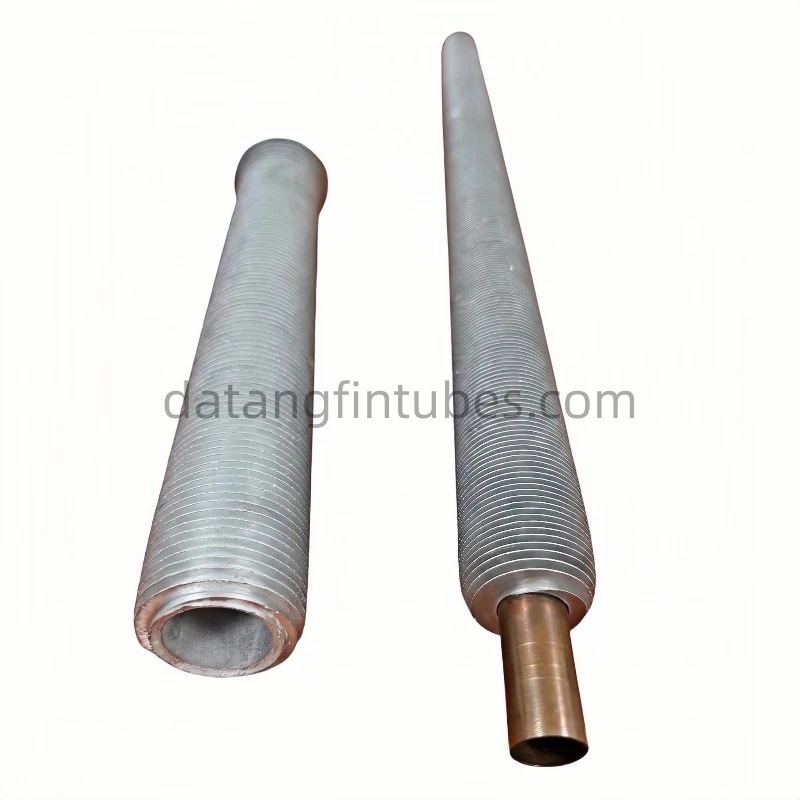
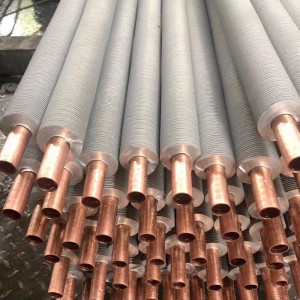
A Steel-Aluminum Extruded Bimetallic Finned Tube (commonly known as a DR Type Finned Tube) is a high-efficiency heat transfer element designed for harsh thermal and corrosive environments.
Unlike conventional high-frequency welded (HFW) or L/LL/KL tension-wound finned tubes, the DR type finned tube features a double-pipe structure consisting of a carbon/stainless steel base tube inserted into a thick-walled aluminum sleeve (typically AA1060 or AA3003). Through a specialized 3-roll rotary cold extrusion process, the aluminum sleeve is plastically deformed into continuous helical fins while simultaneously forming a seamless mechanical bond around the steel base pipe.
Key Advantages for Industrial Thermal Applications
-
Zero Thermal Contact Resistance: Cold extrusion eliminates micro-gaps between the steel pipe and aluminum fins, ensuring stable high thermal efficiency up to 300℃ (572 ℉).
-
Complete Base Tube Protection: The seamless aluminum sleeve covers 100% of the base tube’s outer surface, shielding steel pipes from atmospheric corrosion.
-
Vibration Resistance & High Rigidity: Integrated extruded fins offer far superior structural strength compared to tension-wound fins, making them ideal for high-vibration air coolers (AHE) and heat recovery units.
10-Step Manufacturing Process of Extruded Finned Tubes
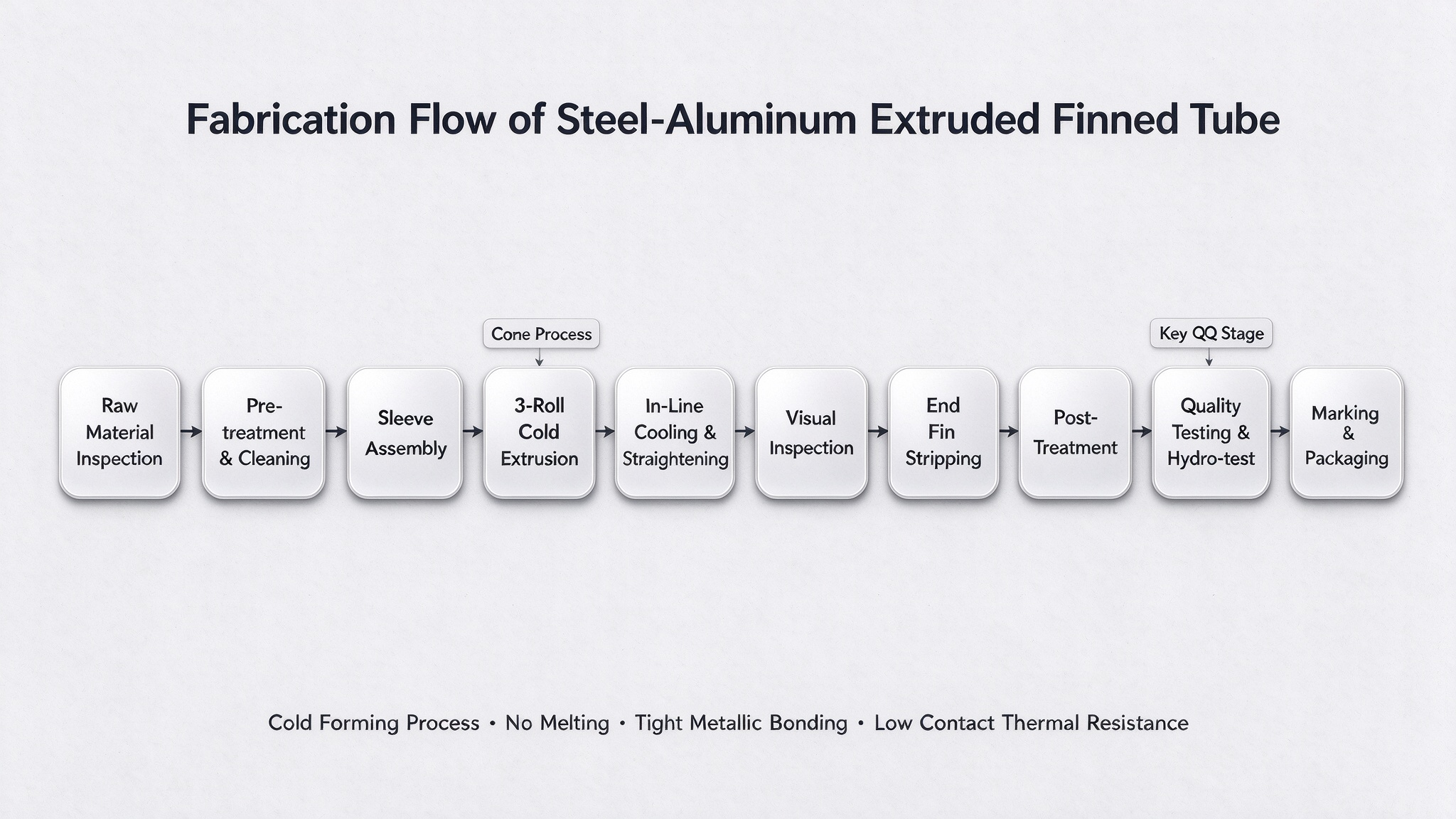
Step 1: Raw Material Incoming Inspection
Quality control starts at the source. Both the base pipe and aluminum sleeve undergo rigorous material verification before entering the production line:
-
Steel Base Tube (Seamless Carbon Steel / Stainless Steel / Alloy Steel):
-
Verification of Material Test Certificates (MTC) matching heat/batch numbers.
-
Dimensional inspection (OD, wall thickness, length, and straightness).
-
Ultrasonic Testing (UT) / Pre-hydrostatic testing for pressure-bearing reliability.
-
-
Thick-Walled Aluminum Sleeve (AA1060 / AA3003):
-
Optical Emission Spectrometry (OES) chemical composition analysis.
-
Inner/outer diameter tolerance checking to ensure tight control over assembly clearance.
-
Step 2: Base Tube & Aluminum Sleeve Pre-Treatment
-
Precision Cutting & Deburring: Steel and aluminum tubes are cut to exact drawing lengths with clean, burr-free edges.
-
Surface Cleaning & Degreasing: Chemical degreasing and surface shot-blasting remove rust, mill scale, and oils. Surface cleanliness is critical to achieving maximum metal-to-metal contact during extrusion.
-
Primary Straightening & Drying: Base tubes are straightened to prevent axial deviation during high-pressure rolling.
Step 3: Tube Insertion & Concentric Assembly
The steel base tube is coaxially inserted into the thick-walled aluminum sleeve. At this stage, a controlled clearance exists between the two metals. Both ends of the aluminum sleeve are positioned with calculated margins reserved for end stripping and tube sheet welding/expansion.
Step 4: 3-Rotary-Roll Cold Extrusion (Core Process)
The assembled bimetallic tube enters the 3-roll cold extrusion finning machine:
-
Mechanism: Three synchronized, angled rotary die rolls exert high hydraulic and mechanical forces on the outer aluminum sleeve at room temperature.
-
Plastic Flow: The aluminum flows plastically into the die grooves, forming continuous helical fins upward while shrinking tightly onto the inner steel tube wall.
-
Zero-Fusion Bonding: The process involves no heat, no welding, and no melting, keeping the metallurgical grain structure of the steel base tube entirely intact and stress-free.
Step 5: In-Line Cooling & Preliminary Straightening
Extrusion generates significant frictional and deformation heat. High-velocity air blowers cool the tube in real-time to prevent aluminum softening, followed by an immediate alignment step to correct minor fin tilt or pitch irregularities.
Step 6: In-Line Dimensional & Visual Inspection
Trained technicians use digital calipers and pitch gauges to perform continuous checks:
-
Fin Height , Fin Thickness , and Fin Pitch.
-
Detection of surface flaws (e.g., fin tearing, burrs, uneven pitch, or mechanical deformation).
Step 7: Fin Stripping at Tube Ends (Stripping / Bare End Machining)
-
Unique Identification Step: Using specialized stripping lathes, fins at both ends of the tube are cleanly removed over a specified length, exposing the smooth outer sleeve/steel tube.
-
Purpose: Ensures precise fitment into tube sheets, baffles, or header boxes, providing a clean surface for seal welding or mechanical expansion.
Step 8: Post-Processing & Surface Finish
-
Degreasing & Chemical Wash: Removes all rolling lubricants and oil residues, restoring the natural metallic luster of the aluminum.
-
Secondary Straightening: Full-length precision straightening ensures straightness within 1.0 mm/m.
-
Optional Surface Coating: Passivation, anodizing, or high-temperature anti-corrosion spray painting (e.g., aluminum powder paint) based on client specifications.
-
End Preparation: Beveling or chamfering of the steel pipe ends to facilitate site welding.
Step 9: Quality Control & Product Testing
-
100% Dimensional Audit: Total length, bare length, fin geometry, and wall thickness.
-
Bonding Integrity Test: Destructive peel tests and ultrasonic bonding inspections ensure zero gap between metals.
-
Pressure Testing: Hydrostatic test (up to $1.5\times$ design pressure) or pneumatic air-under-water test to verify pressure integrity.
Step 10: Marking, End Protection, and Export Packaging
-
Traceable Marking: Stenciling with heat number, size, alloy grade, and PO details.
-
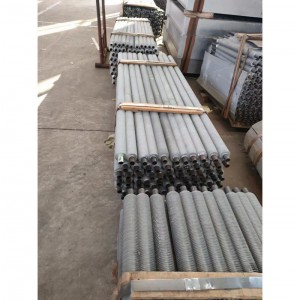
Protective Caps & Crating: Plastic end caps safeguard tube internals; custom wooden crates or steel-framed boxes prevent fin crushing during ocean transport.
Extruded Finned Tube vs. High-Frequency Welded (HFW) vs. Tension-Wound (L/LL/KL)
| Feature | Extruded (DR Type) | High-Frequency Welded (HFW) | Tension Wound (L / LL / KL) |
| Manufacturing Method | 3-Roll Cold Plastic Extrusion | High-Frequency Resistance Welding | Mechanical Tension Wrapping |
| Bonding Quality | Mechanical 100% Surface Fit | Fusion Weld at Fin Root | Friction / Mechanical Contact |
| Max Operating Temp | Up to 300℃ (572℉) | Up to 450℃ – 550℃ | Up to 120℃ – 250℃ |
| Corrosion Resistance | Excellent (Complete Base Pipe Cover) | Moderate (Exposed Base Pipe) | Moderate (Risk of Atmospheric Moisture Ingress) |
| Thermal Contact Resistance | Extremely Low / Stable | Low | Increases over time (fin relaxation) |
Frequently Asked Questions (FAQ) for Global Buyers
Q1: What base tube materials can be used for DR Type Extruded Finned Tubes?
A: We offer a wide range of base tube materials depending on process fluid requirements:
-
Carbon Steel: ASTM A179, ASTM A214, ASTM A106 Gr.B
-
Stainless Steel: TP304/304L, TP316/316L, Duplex 2205
-
Alloy Steel: ASTM A213 T11, T22, T91
-
Copper & Nickel Alloys: CuNi 70/30, Monel 400
Q2: Why is the Extruded Type preferred over L/KL Wrapped Fin Tubes for Air Coolers?
A: Extruded finned tubes eliminate atmospheric corrosion between the fin root and the base tube. Even under cyclic thermal expansion or intense mechanical cleaning (e.g., high-pressure water jetting), the extruded aluminum fins will not loosen, crack, or lose thermal contact.
Q3: Can you supply custom fin pitches and tube lengths?
A: Yes. We manufacture finned tubes with lengths up to 18 meters (59 ft). Fin pitch typically ranges from 7 FPI to 12 FPI (Fins Per Inch), and fin heights range from 9.5 mm to 15.8 mm.