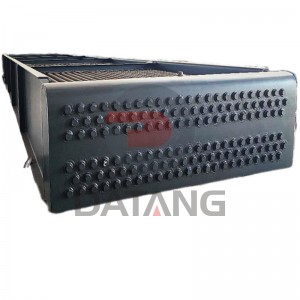
Fin Fan Coolers: The Ultimate Guide to Fans for Finned Tube Air Coolers – Specifications & Selection Tips

Fin Fan Coolers: The Ultimate Guide to Fans for Finned Tube Air Coolers – Specifications & Selection Tips
Meta Description:
Learn everything about fans for finned tube air coolers. This guide covers working principles, key technical parameters, types of fans, and practical selection advice to optimize performance and energy efficiency.
Introduction: The Heart of an Air Cooler
A finned tube air cooler (also called an air-cooled heat exchanger) relies on one critical component to reject heat: the fan. Without the fan, even the most advanced finned tube bundles cannot perform. The fan moves ambient air across the finned tubes, carrying heat away from the process fluid inside.
Choosing the right fan for your finned tube air cooler is not a trivial task. An undersized fan leads to overheating; an oversized fan wastes energy and creates excessive noise. This guide provides a clear, practical overview of fan types, key technical specifications, and a step-by-step selection guide – helping engineers, purchasers, and plant operators make informed decisions.
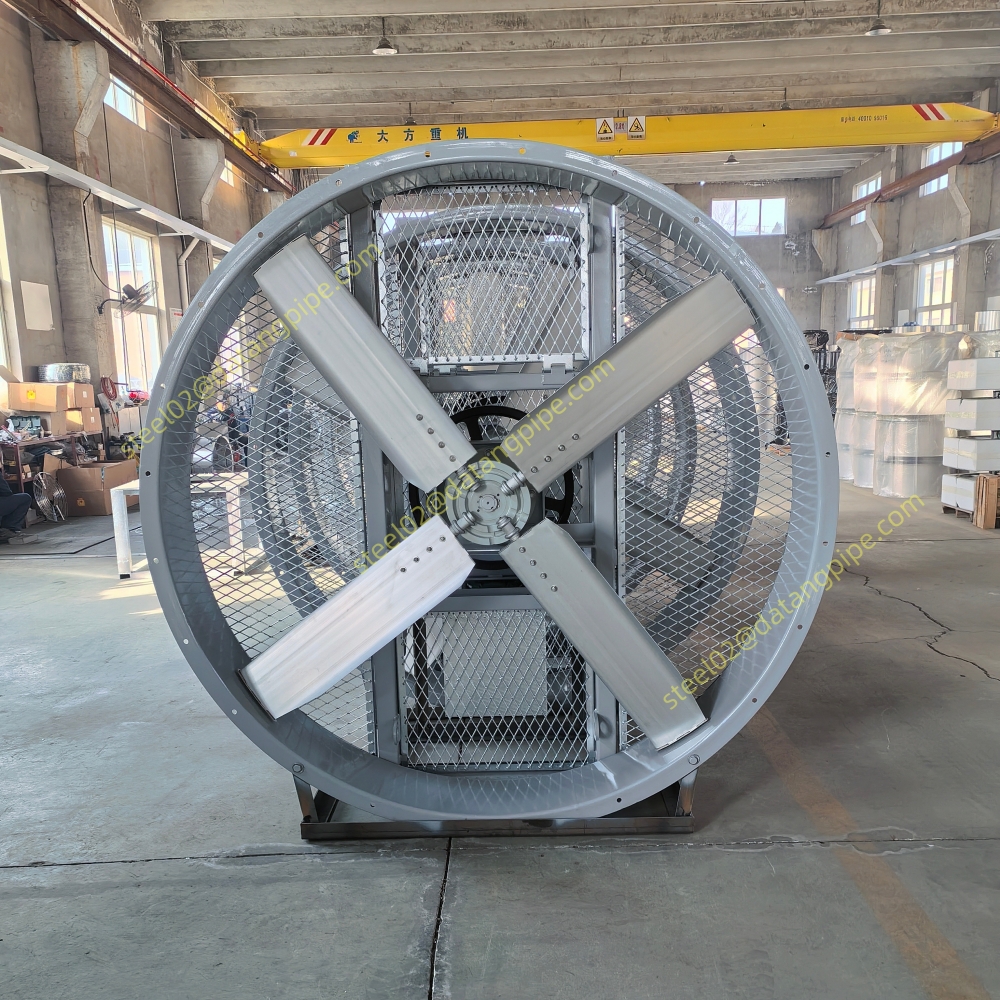
Part 1: What Does the Fan Do in a Finned Tube Air Cooler?
In a typical air-cooled heat exchanger, hot process fluid (gas or liquid) flows inside tubes with extended finned surfaces. Fans – usually mounted above or below the tube bundle – force or draw air across the fins. The air absorbs heat, cooling the fluid.
Fans for finned tube air coolers are often called “fin fans” in industry. They operate 24/7 in many applications, including:
- Petrochemical plants
- Power generation stations
- Natural gas compression and processing
- Refrigeration and condenser systems
Because these coolers often run outdoors in harsh environments, the fan must be robust, corrosion-resistant, and energy-efficient.
Part 2: Types of Fans Used in Finned Tube Air Coolers
Two main fan types dominate the market:
1. Axial Flow Fans (Most Common)
Axial fans move air parallel to the fan blade shaft. They are highly efficient at moving large volumes of air against relatively low static pressure – exactly what a finned tube bundle needs.
Advantages:
- High volumetric flow rate
- Lower energy consumption per cubic meter of air
- Compact and lightweight
- Easy to install and maintain
Typical applications: Most forced-draft and induced-draft air coolers, especially those with horizontal tube bundles.
2. Centrifugal Fans
Centrifugal fans move air perpendicular to the intake direction. They generate higher static pressure but move less air for the same power input compared to axial fans.
Advantages:
- Higher pressure capability – useful for ducted systems or very dense finned bundles
- Better for induced-draft arrangements where the fan handles hot air
Disadvantages:
- Lower efficiency than axial fans in most air cooler setups
- Larger footprint
Verdict: For standard finned tube air coolers, axial flow fans are the industry standard. Centrifugal fans are reserved for special cases with high pressure drop or space constraints.
Part 3: Key Technical Parameters – What the Numbers Mean
When evaluating a fan for a finned tube air cooler, you will encounter these critical specifications:
1. Air Volume Flow Rate (m³/h or CFM)
The volume of air the fan moves per hour. This is directly linked to the cooler’s heat rejection requirement. Higher heat duty needs more air.
Rule of thumb: Calculate the required airflow based on the process outlet temperature target and ambient air temperature.
2. Static Pressure (Pa or mmH₂O)
The resistance the fan must overcome – including the finned tube bundle pressure drop, any louvers, guards, and inlet/exit losses. Typical values range from 50 to 300 Pa for axial fans.
Important: Do not confuse static pressure with total pressure. For air coolers, static pressure is the key figure.
3. Fan Speed (RPM)
Speed determines both airflow and noise. Most fin fans operate at 300–900 RPM. Slower fans are quieter and more reliable but require larger diameters to achieve the same airflow.
4. Blade Diameter (mm or inches)
Common diameters: 2.5 m to 5 m (8 to 16 feet) for industrial coolers. Larger blades move more air at lower speeds – better for noise and efficiency.
5. Blade Material and Finish
- Aluminum alloy – lightweight, corrosion-resistant, standard choice
- Glass fiber reinforced plastic (FRP) – excellent for corrosive environments (e.g., coastal or chemical plants)
- Coated steel – heavy but durable, often with epoxy or hot-dip galvanized finish
6. Motor Power (kW or HP)
Directly related to airflow and pressure. Oversizing wastes energy; undersizing causes motor burnout. Use fan affinity laws to scale power from known reference points.
7. Noise Level (dB(A))
Increasingly important due to workplace and environmental regulations. Measured at a defined distance (e.g., 1 m from the fan). Low-noise designs use swept blades, larger diameters, or lower RPMs.
8. Drive Type
- Direct drive – motor shaft connected directly to fan hub. Simple, efficient, no belt maintenance. Speed control via VFD (variable frequency drive).
- Belt drive – allows speed changes by pulley ratio. Easier for retrofits, but belts require periodic tensioning and replacement.
Part 4: Fan Selection Guide – 7 Steps to Get It Right
Follow this practical guide when choosing a fan for your finned tube air cooler:
Step 1: Define the Thermal Duty
Start with the heat exchanger’s required heat rejection (kW or BTU/hr). Use software or manual calculations to determine the needed air mass flow rate. This becomes your fan’s target airflow.
Step 2: Calculate Air Side Pressure Drop
Obtain the air pressure drop curve for your finned tube bundle from the manufacturer. Add allowances for guards, inlet obstructions, and any louvers or diffusers. This total is your required static pressure.
Step 3: Choose Axial vs. Centrifugal
For 95% of finned tube air coolers, choose axial flow fans. Only consider centrifugal if pressure drop exceeds 400 Pa and ducting is unavoidable.
Step 4: Select Fan Diameter and Speed
Larger diameter = better efficiency and lower noise. Use fan selection software (e.g., from Howden, Venti Oelde, or Kruger) to match airflow and static pressure with a specific blade design. Aim for tip speeds below 60 m/s to avoid excessive noise.
Step 5: Pick Blade Material
- Standard environment → aluminum alloy
- High humidity or salt → FRP or coated aluminum
- Abrasive dust → wear-resistant edge treatment
Step 6: Decide Drive Type
- New installation with VFD → direct drive
- Existing cooler with belt system → belt drive (unless upgrading)
- Variable process load → always include a VFD for energy savings
Step 7: Check Noise Limits
If your cooler is near offices or residential areas, request low-noise fan options. Some suppliers offer swept-back blades that reduce turbulence and noise by 3–5 dB(A).
Part 5: Common Mistakes to Avoid
- Matching fan to maximum, not operating, conditions – Fans operate most of the time at average loads. Oversizing leads to inefficient part-load performance.
- Ignoring ambient temperature variations – Air density changes with temperature. A fan sized for winter may move insufficient air on a hot summer day.
- Neglecting maintenance access – Fans need cleaning, balancing, and bearing replacement. Ensure the fan can be safely reached.
- Forgetting about blade pitch adjustment – Many axial fans allow adjustable blade angles. Use this feature to fine-tune airflow on-site.
Conclusion: Get the Right Fan, Get the Most from Your Air Cooler
The fan is not an accessory – it is the engine of a finned tube air cooler. A properly selected fan ensures stable process temperatures, lower electricity bills, and longer equipment life. Always work with a reputable fan manufacturer and provide them with accurate thermal and pressure drop data.
Remember: the best fan is one you never think about – because it runs quietly, efficiently, and reliably for years.
Need help selecting a fan for your finned tube air cooler? Contact our engineering team. We supply complete air-cooled heat exchanger systems with matched, high-efficiency axial fans – built for your specific process and climate.