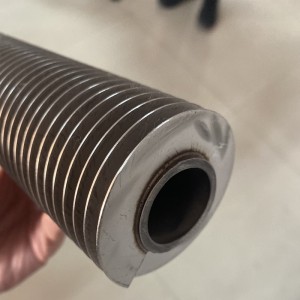
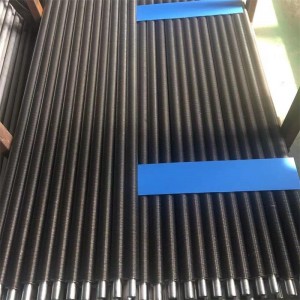
Laser Welded Finned Tubes | 10–273 mm Base Tube OD for Industrial Heat Exchangers


Laser Welded Finned Tubes for Industrial Heat Exchangers
Introduction
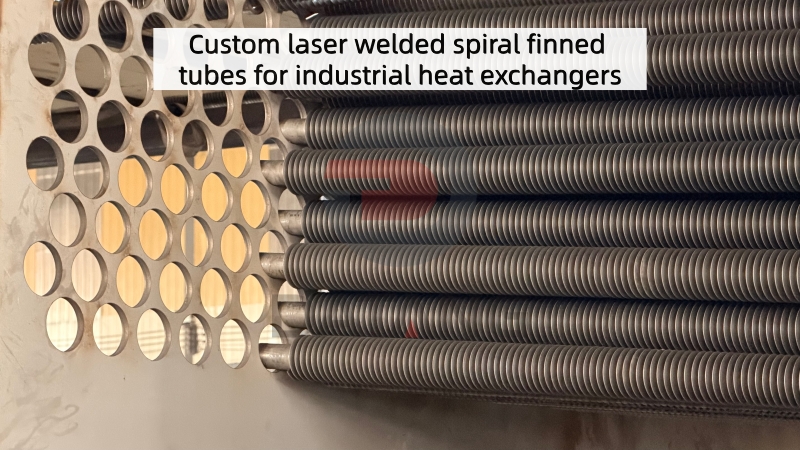
Laser welded finned tubes are designed to increase the external heat transfer area of a base tube while maintaining a strong, continuous connection between the fin strip and tube surface. They are widely considered for industrial heat exchangers, air coolers, waste heat recovery systems, process heaters, and other thermal equipment where heat transfer performance, dimensional flexibility, and manufacturing consistency are important.
At Cangzhou Datang Steel Pipe Co., Ltd., we manufacture customized laser welded finned tubes for different operating conditions and heat exchanger designs. With our upgraded laser welding equipment, our current manufacturing range covers base tube outside diameters from 10 mm to 273 mm, providing greater flexibility for both conventional and large-diameter finned tube applications.
For selected specifications, laser welded finned tubes can also serve as an alternative to high-frequency welded finned tubes, particularly when thin fins, close fin spacing, and a shorter production schedule are required.
Table of Contents
- What Are Laser Welded Finned Tubes?
- How Does Laser Welding Work?
- Technical Specifications
- Key Advantages of Laser Welded Finned Tubes
- Laser Welding vs. High-Frequency Welding
- Applications
- Materials and Customization
- How to Select the Right Laser Welded Finned Tube
- Frequently Asked Questions
1. What Are Laser Welded Finned Tubes?
A laser welded finned tube consists of a base tube and a metal fin strip continuously welded to the outside surface of the tube using a focused laser beam.
The base tube carries the working fluid, while the fins increase the external surface area available for heat exchange with air or another surrounding medium. The laser welding process creates a metallurgical bond between the fin and the tube, helping heat pass efficiently from the tube wall into the fins.
Compared with finned tubes produced using some conventional manufacturing methods, laser welded finned tubes allow manufacturers to work with relatively thin fin strips and closely controlled fin spacing. These characteristics can help engineers increase the available heat transfer area within a given installation space.
The final thermal performance depends on the tube and fin materials, fin height, fin pitch, airflow, operating temperature, and the overall heat exchanger design.
2. How Does Laser Welding Work?
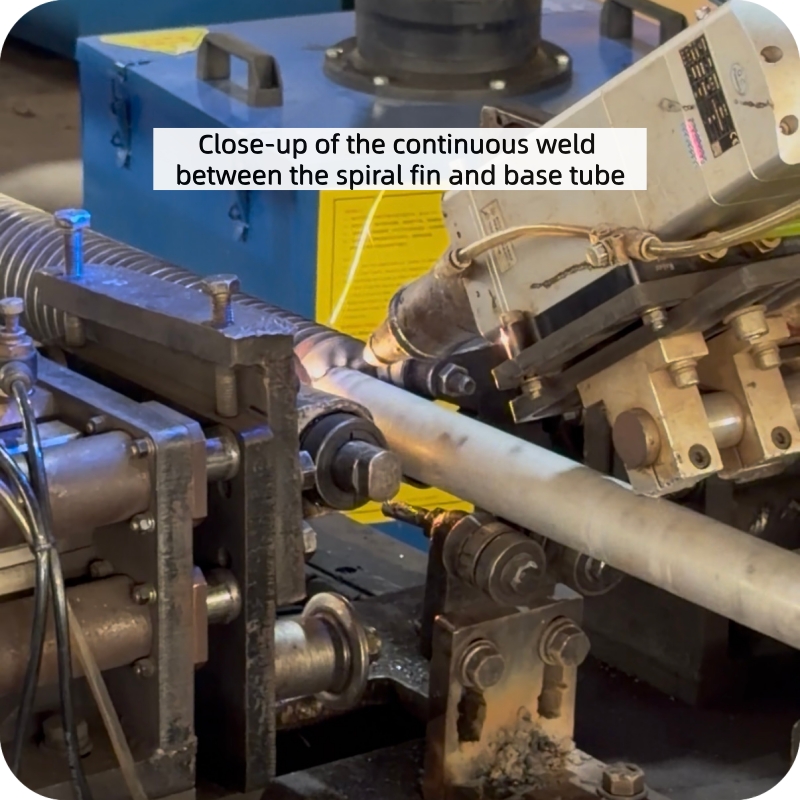
Laser welding uses a concentrated, high-energy beam to melt the contact area between the fin strip and the base tube. As the molten metal solidifies, it forms a continuous welded joint along the fin root.
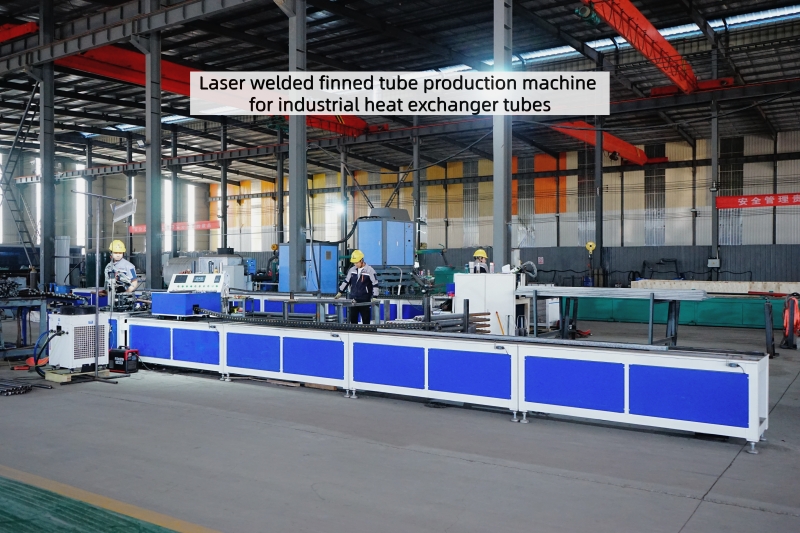
In an automated production line, the base tube rotates while the fin strip is fed and wound around the tube. The laser welding head follows the fin-to-tube contact area to produce a continuous spiral fin structure.
The main process characteristics include:
- Localized heat input: Energy is concentrated around the welding area, helping limit unnecessary heating of the surrounding material.
- Continuous fin attachment: The fin strip is welded along the tube rather than relying solely on mechanical contact.
- Controlled fin geometry: Automated feeding and rotation support consistent fin pitch and alignment.
- Suitability for thin fins: Laser welding can accommodate relatively thin fin strips, depending on the material combination and production parameters.
A stable welding result depends on more than laser power alone. Material compatibility, surface condition, fin-strip tension, tube rotation, welding speed, and parameter control all contribute to joint quality.
3. Technical Specifications of Our Laser Welded Finned Tubes
Our upgraded laser welding production line expands the range of base tube diameters we can process, giving customers more options when developing heat exchangers and other thermal equipment.
| Parameter | Manufacturing Capability |
|---|---|
| Base tube outside diameter | 10–273 mm |
| Fin thickness | 0.4–1.0 mm |
| Fin pitch | 1.9–20 mm |
| Laser source power | 6 kW |
| Machine bed width | 800 mm |
| Chuck size | 250 mm |
| Spindle motor power | 7.5 kW |
| Fin configuration | Continuous spiral fin, subject to design |
| Tube and fin materials | Selected according to project requirements |
| Dimensions and tolerances | Confirmed according to drawings and technical agreement |
Important: The ranges above describe our stated processing capabilities. The achievable combination of tube diameter, fin thickness, fin pitch, material, and fin height must be confirmed for the specific order. Maximum tube length, fin height, dimensional tolerances, and material combinations can be discussed during technical evaluation.
Upgraded Laser Welding Equipment
Our equipment upgrade focuses on expanding the processable diameter range and supporting a wider variety of customer specifications.
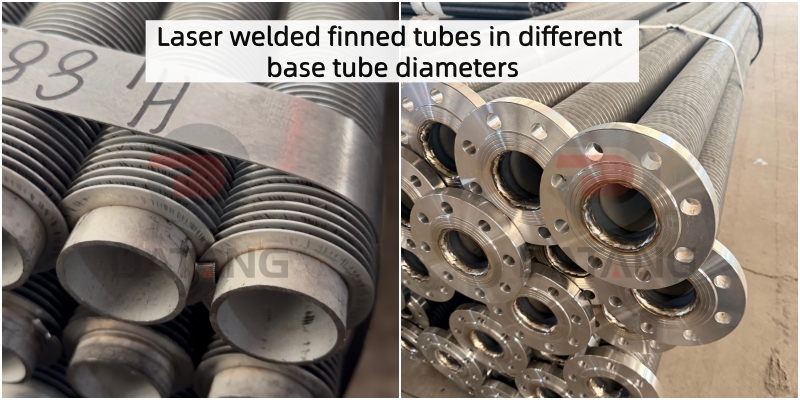
- 10–273 mm base tube OD range: Provides greater flexibility when manufacturing finned tubes for different equipment sizes.
- 6 kW laser source: Supplies the laser energy required for the selected welding process and material configuration.
- 800 mm machine bed width: Supports the upgraded machine layout.
- 250 mm chuck and 7.5 kW spindle motor: Form part of the upgraded tube rotation and workholding system.
These equipment improvements enable us to evaluate a broader range of finned tube designs rather than limiting production to small-diameter tubes.
4. Key Advantages of Laser Welded Finned Tubes
4.1 Efficient Heat Transfer Through a Continuous Welded Joint
The fin-to-tube connection is an important part of the heat transfer path. A properly formed continuous laser weld helps establish effective thermal contact between the base tube and the fin strip.
This reduces the risk of poorly bonded areas that can impede heat flow. The resulting performance depends on weld quality, fin geometry, material properties, and the heat exchanger’s operating conditions.
For engineers seeking to improve heat transfer within a limited equipment footprint, laser welded finned tubes provide an additional design option.
4.2 Thin Fins and Flexible Fin Spacing
Our fin thickness range is 0.4–1.0 mm, with fin pitch from 1.9–20 mm.
This allows fin density to be adjusted according to the requirements of the application.
Closer fin spacing can increase the external surface area per unit tube length, which may benefit compact heat exchanger designs when airflow and fouling conditions permit. Wider spacing may be more appropriate where dust accumulation, cleaning access, or air-side pressure drop is a concern.
The optimum fin pitch should therefore be selected according to the actual operating conditions rather than simply choosing the smallest available spacing.
4.3 A Wider Range of Base Tube Diameters
Many conventional laser welded fin tube offerings focus on smaller tube diameters. Our upgraded production equipment extends the stated processing range to 273 mm.
This expanded range gives customers greater flexibility when specifying finned tubes for larger-diameter base pipes, industrial heat exchange equipment, and non-standard project requirements.
For large-diameter orders, the production feasibility of the complete tube-and-fin configuration should be confirmed before finalizing the design.
4.4 Potentially Shorter Production Lead Times
For suitable specifications, laser welding can simplify the manufacturing route and support efficient automated production.
Our updated equipment and expanded processing range give us more flexibility when arranging production for different customer requirements. Depending on the order configuration, material availability, quantity, and production schedule, laser welded finned tubes may offer a shorter production lead time than a comparable high-frequency welded option.
Actual lead time is confirmed against the specific order rather than assumed from the welding method alone.
4.5 A Practical Alternative to High-Frequency Welded Finned Tubes
High-frequency welding remains a well-established manufacturing method for industrial finned tubes. However, some customers need a different balance of fin thickness, fin pitch, material configuration, and production flexibility.
Laser welding can be a practical alternative for selected specifications, especially where relatively thin fins and close fin spacing are required.
For projects where the technical requirements can be met by either process, we can evaluate the two manufacturing options and help customers compare their technical suitability, delivery schedule, and quoted cost.
5. Laser Welding vs. High-Frequency Welding
Both laser welded and high-frequency welded finned tubes are used in industrial heat exchange. The appropriate choice depends on the design requirements and production conditions.
| Comparison | Laser Welded Finned Tubes | High-Frequency Welded Finned Tubes |
|---|---|---|
| Heat source | Focused laser beam | High-frequency electrical current |
| Fin-to-tube connection | Fusion-welded joint | Welded bond formed through high-frequency heating and pressure |
| Heat input | Highly localized | Concentrated around the fin-to-tube interface |
| Fin thickness | 0.4–1.0 mm in our stated range | Depends on equipment and specification |
| Fin pitch | 1.9–20 mm in our stated range | Depends on equipment and specification |
| Base tube diameter | 10–273 mm in our upgraded processing range | Depends on the production line |
| Production speed | Depends on tube size, fin pitch, material, and welding parameters | Often well suited to high-volume continuous production |
| Production lead time | Can be shorter for suitable orders | Depends on production planning and specification |
| Manufacturing cost | Can be comparable for selected specifications | Often competitive for established, high-volume specifications |
| Main selection factors | Fin geometry, material compatibility, welding quality, lead time | Production volume, established specifications, cost and operating conditions |
Can Laser Welding Replace High-Frequency Welding?
For some products, yes. Laser welding can be considered as an alternative when the required dimensions, material combination, mechanical properties, and operating conditions are compatible with the process.
However, it should not be treated as a universal replacement. High-frequency welding remains suitable for many conventional industrial applications, particularly where its production efficiency and established manufacturing process match the project requirements.
When comparing the two processes, customers should consider:
- Required heat transfer area and fin pitch.
- Base tube and fin materials.
- Operating temperature and pressure.
- Weld integrity and mechanical requirements.
- Required quantity and delivery schedule.
- Total quoted cost for the specified product.
Our objective is to identify the appropriate manufacturing route for the application, rather than recommend a welding process without considering the customer’s technical requirements.
Is Laser Welding More Energy-Efficient?
Laser equipment and high-frequency welding equipment use different energy-conversion processes, so their rated power figures cannot be compared directly to determine energy consumption per finished tube.
Our laser source is rated at 6 kW, while the high-frequency welding equipment referenced for comparison has a rated power of 3 kW. These figures describe equipment power ratings, not verified electricity consumption per metre of finished finned tube.
To establish which process consumes less electricity for a particular product, the comparison should measure actual energy use over a defined production period and divide it by the quantity of conforming finished product.
Where energy consumption is a key purchasing criterion, we recommend evaluating both production routes under comparable conditions, including tube diameter, fin pitch, production speed, and finished-product quality.
Can Laser Welded Finned Tubes Have a Similar Cost to High-Frequency Welded Products?
For selected specifications, the quoted cost can be close to that of comparable high-frequency welded finned tubes.
The result depends on material prices, fin geometry, production efficiency, order quantity, and the manufacturing route. It should be assessed on a like-for-like basis rather than assumed for every product.
We can review customer drawings and compare feasible manufacturing options before quotation.
6. Applications of Laser Welded Finned Tubes
Laser welded finned tubes can be used in various heat exchange and thermal processing systems where the fin structure, materials, and welding process are appropriate for the operating conditions.
Industrial Heat Exchangers
Finned tubes increase the external heat transfer area and can support more compact heat exchanger arrangements. Laser welding offers flexibility for selected fin geometries and tube sizes.
Air Coolers and Gas Coolers
In air-cooled equipment, finned tubes transfer heat between the fluid inside the tube and the surrounding air. Fin pitch should be selected with airflow resistance, dust levels, and cleaning requirements in mind.
Waste Heat Recovery Systems
Industrial exhaust gas and other waste heat streams can be used to recover thermal energy. The tube material, fin arrangement, and weld quality should be selected according to gas composition, temperature, fouling tendency, and corrosion risk.
Industrial Heating Equipment
Finned tubes may be incorporated into air heaters, process heating systems, and other thermal equipment where an increased heat transfer surface is beneficial.
Petrochemical and Process Industries
Finned tubes can be used in suitable heating and cooling duties throughout process plants. Material compatibility and the actual service conditions must be assessed for each application.
Power Generation and Energy Systems
Depending on the design, finned tubes can be used in heat recovery, cooling, and other thermal management equipment associated with power generation and industrial energy systems.
The final application suitability depends on the complete equipment design, not solely on the fin welding process.
7. Materials and Customization
Material selection should be based on operating temperature, pressure, working fluid, corrosion conditions, and the required service life.
Depending on the specific product and confirmed process compatibility, material options may include:
- Carbon steel.
- Stainless steel.
- Alloy steel.
- Other suitable tube and fin material combinations confirmed during technical review.
The base tube and fin strip do not necessarily need to use the same material, but dissimilar-metal combinations require particular attention to laser absorption, weldability, joint integrity, and service conditions. Not every material combination is suitable for every tube diameter or fin configuration.
For customized inquiries, please provide the following information where available:
- Base tube outside diameter and wall thickness.
- Base tube material and fin material.
- Fin height, thickness, and pitch.
- Required tube length and quantity.
- Operating temperature, pressure, and working medium.
- Application or heat exchanger drawing.
These details help us assess manufacturing feasibility and recommend an appropriate specification.
8. How to Select the Right Laser Welded Finned Tube
Selecting a finned tube requires balancing heat transfer performance, mechanical requirements, installation space, and operating conditions.
Step 1: Define the operating conditions. Identify the working fluid, operating temperature, pressure, corrosion risks, and expected service environment.
Step 2: Determine the required tube dimensions. Specify the base tube outside diameter, wall thickness, length, and material.
Step 3: Select the fin geometry. Fin height, thickness, and pitch affect the available heat transfer area, air-side pressure drop, fouling behavior, and mechanical stability.
Step 4: Confirm welding feasibility. Check whether the proposed material combination and dimensions are compatible with the manufacturing process.
Step 5: Evaluate production and cost. Compare the available welding methods against the required quantity, delivery schedule, quality requirements, and total quoted cost.
For projects with demanding heat transfer targets, the finned tube should be evaluated as part of the complete heat exchanger design. Increasing fin density alone does not guarantee a proportional increase in overall heat transfer performance.
9. Frequently Asked Questions
What is the available base tube diameter range for your laser welded finned tubes?
Our upgraded laser welding equipment supports a stated base tube outside diameter range of 10–273 mm. The feasibility of each complete specification should be confirmed according to the required fin dimensions and materials.
What fin thickness and pitch can you manufacture?
Our stated fin thickness range is 0.4–1.0 mm, and the fin pitch range is 1.9–20 mm. The available combinations depend on the tube diameter, fin height, material, and production parameters.
Are laser welded finned tubes more efficient than high-frequency welded finned tubes?
Laser welding can provide advantages for certain designs, including localized heat input and flexibility with thin fins. However, the overall heat transfer performance depends on the complete finned tube geometry and operating conditions. The welding method alone does not establish a universal performance advantage.
Can laser welded finned tubes be manufactured at a similar price to high-frequency welded products?
For selected specifications, the cost can be comparable. A reliable comparison requires the same product dimensions, materials, quantity, quality requirements, and delivery terms.
Do laser welded finned tubes consume less electricity?
The answer depends on actual production conditions and the complete equipment’s energy consumption. Rated laser power alone is insufficient to establish lower electricity consumption. A comparison based on measured energy use per metre of conforming finished product is more meaningful.
Can you manufacture finned tubes according to customer drawings?
Yes. We can review customer drawings and technical requirements to assess manufacturing feasibility, material selection, fin geometry, and the appropriate production route.
What information is needed for a quotation?
Please provide the tube diameter, wall thickness, material, fin thickness, fin height, fin pitch, tube length, order quantity, and intended application. A drawing or technical specification is particularly helpful for non-standard products.
Discuss Your Laser Welded Finned Tube Requirements
Cangzhou Datang Steel Pipe Co., Ltd. supplies finned tubes for industrial heat exchange applications and supports customized manufacturing according to project requirements.
Our upgraded laser welding equipment expands the base tube processing range to 10–273 mm, with fin thicknesses of 0.4–1.0 mm and fin pitches of 1.9–20 mm.
If you are developing a new heat exchanger or considering laser welding as an alternative to high-frequency welding, send us your drawings, specifications, or application details. We can review the technical requirements and provide a quotation based on the proposed product configuration.