The Ultimate Guide to Bimetallic Extruded Finned Tubes: Efficiency, Durability, and Applications

In the demanding world of industrial heat transfer, the choice of tubing can be the difference between a system that lasts decades and one that fails in months. Bimetallic Extruded Finned Tubes have emerged as the gold standard for medium-temperature applications, particularly in environments where atmospheric corrosion is a constant threat.
But what exactly makes the “extruded” process superior to other finning methods, and how do you choose the right material combination for your facility? This comprehensive guide explores the technology, advantages, and diverse applications of bimetallic finned tubes.
What is a Bimetallic Extruded Finned Tube?
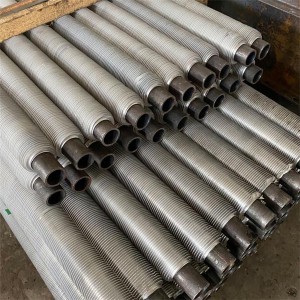
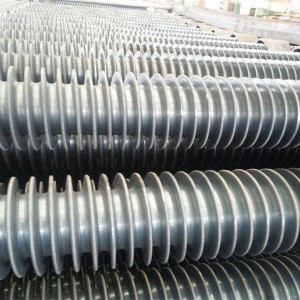
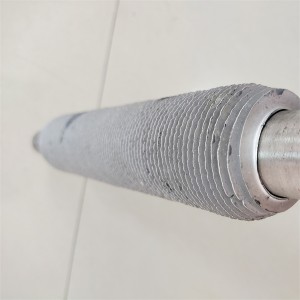
A bimetallic extruded finned tube consists of two different layers: an inner base tube (to handle pressure and fluid medium) and an outer muff tube (usually aluminum). Through a cold-extrusion process, the outer tube is compressed and formed into high-efficiency fins that are integrally linked to the base tube.
Unlike “wrap-on” or “L-foot” fins, there is no mechanical gap between the fin and the tube. This metallurgical-like bond ensures that heat flows seamlessly from the internal fluid to the external fins.
Technical Specifications at a Glance
For engineers and procurement officers, precision is key. Modern manufacturing allows for a wide range of customizations:
-
Tube OD: 12 mm to 51 mm
-
Wall Thickness: 1.65 mm to 3.0 mm
-
Max Length: Up to 18,500 mm (ideal for large-scale heat exchangers)
-
Fin Geometry: Fin heights from 5 mm to 16 mm with a pitch of 2.3 mm to 5 mm.
Material Synergy
The beauty of bimetallic tubes lies in the combination of materials. The Base Tube can be Carbon Steel (A179, A192, A106), Stainless Steel (TP304, 316L, Duplex A789), Copper, or even Titanium (B338 Gr2). The Outer Fin is typically Aluminum (Grades 1060, 1100, or 6063) or Copper, providing excellent thermal conductivity.
Top 5 Advantages of Extruded Finned Tubes
Why should a petrochemical plant in Kazakhstan or an offshore rig in the North Sea choose extruded fins over other types?
1. Superior Corrosion Resistance
The aluminum muff tube completely covers the base tube. This means the base tube (often carbon steel) is never exposed to the atmosphere. In “severe atmospheric corrosive environments,” such as coastal areas or chemical plants, this prevents the base tube from rusting and losing structural integrity.
2. Maximum Heat Transfer Efficiency
Because the fins are extruded directly from the outer muff tube, there is no air gap. In “L-foot” or “G-fin” designs, thermal cycling can cause the fins to loosen over time, creating a gap that acts as an insulator. Extruded fins maintain 100% thermal contact efficiency for their entire service life.
3. Easy Maintenance and Cleaning
Extruded fins are mechanically much stronger than “wrapped” fins. They can withstand high-pressure water jetting or “soot blowing” during routine maintenance without the fins bending or flattening. This makes them ideal for environments where dust or debris accumulation is common.
4. Resistance to Thermal Cycling
Designed for service temperatures up to 300°C, these tubes handle the expansion and contraction of start-up and shut-down cycles beautifully. The mechanical bond between the two metals remains tight, preventing “fin loosening.”
5. Extended Service Life
While the initial investment for bimetallic extruded tubes may be higher than tension-wound tubes, the Total Cost of Ownership (TCO) is significantly lower. They last longer, require fewer replacements, and maintain consistent energy efficiency.
Key Application Fields
Bimetallic extruded finned tubes are versatile “workhorses” across multiple industries:
1. Petrochemical and Refining
In oil refineries, these tubes are used in Air Cooled Heat Exchangers (ACHE) to cool process oils and gases. Their ability to handle high internal pressures while resisting external corrosion from chemical fumes is vital.
2. Power Generation
They serve as critical components in Boiler Economizers and Air Pre-heaters. By recovering waste heat from flue gases, they significantly reduce fuel consumption and carbon emissions.
3. HVAC and Refrigeration
Large-scale commercial cooling systems use aluminum-extruded fins for their light weight and high thermal performance, especially in condensers.
4. Food and Pharmaceutical Processing
Where hygiene and environmental control are paramount, the stainless steel base tube ensures fluid purity, while the aluminum fins provide the necessary cooling/heating speed.
Engineering Considerations: The “Fouling Factor”
When designing a heat exchanger bank, engineers must account for the Fouling Factor. Because extruded fins have a smooth surface and a robust structure, they are less prone to “trapping” particulates compared to serrated fins. This results in a more predictable pressure drop and stable performance over time.
Conclusion: Investing in Reliability
Choosing Bimetallic Extruded Finned Tubes is an investment in the reliability of your thermal process. By combining the strength of steel or titanium with the thermal conductivity of aluminum, you create a component capable of thriving in the world’s harshest industrial environments.
If your project involves medium-temperature heat exchange in a corrosive atmosphere, the bimetallic extruded tube is not just an option—it is the best engineering practice.