
Case Study: Laser Welded Finned Tubes for a Lithium Hydroxide Plant GGH Heat Exchanger
Project Overview
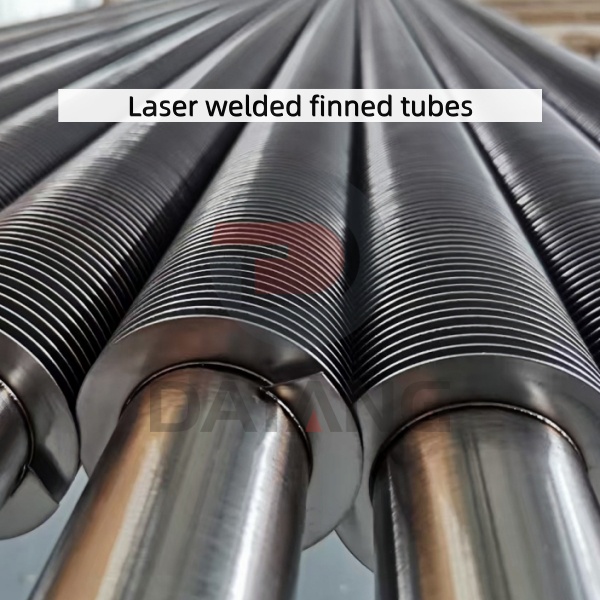
Laser welded finned tubes are a key heat transfer component in industrial gas-to-gas heat exchangers, particularly in applications where corrosion resistance, thermal performance, and long-term equipment reliability must be considered together.
We are currently manufacturing a customized heat pipe gas-to-gas heat exchanger (GGH) for the flue gas desulfurization system of a rotary kiln used in lithium hydroxide production. The equipment is intended to support flue gas reheating after desulfurization.
For this project, the finned tube configuration consists of 316L stainless steel base tubes combined with 2205 duplex stainless steel fins. The material selection considers the corrosive flue gas environment, including acidic components and chloride-related corrosion risks.
Our international project experience also includes two different types of supply: a heat exchanger incorporating laser welded finned tubes for a customer in the United States, and laser welded finned tubes supplied directly to a customer in Germany.
These projects demonstrate two complementary aspects of our business: manufacturing finned tube heat transfer equipment and supplying laser welded finned tubes as components for customers’ own equipment and engineering projects.
Table of Contents
- 1. Project Background
- 2. Application Requirements and Engineering Challenges
- 3. Material Selection: 316L Tubes and 2205 Fins
- 4. Why Laser Welded Finned Tubes
- 5. Manufacturing Process and Quality Control
- 6. How the Heat Pipe GGH Heat Exchanger Works
- 7. International Project Experience: United States and Germany
- 8. Application Benefits and Engineering Considerations
- 9. Related Products and Technical Support
1. Project Background
Lithium hydroxide production involves high-temperature processing and industrial exhaust gas treatment. In a rotary kiln system used for roasting spodumene, the flue gas treatment process must account for both environmental requirements and the demanding operating conditions of the gas stream.
For this project, the customer required a customized heat pipe GGH heat exchanger for integration with the kiln’s flue gas desulfurization system.
A GGH heat exchanger can transfer heat between two gas streams to help reheat the treated flue gas before discharge. Depending on the system design and operating conditions, this reheating process can support plume reduction, moisture management, and corrosion control in downstream gas handling equipment.
The equipment must therefore be designed around the actual process conditions rather than simply selecting a standard heat exchanger configuration.
During the preliminary engineering stage, our team worked with the customer through multiple rounds of technical communication to understand the kiln operating conditions, flue gas characteristics, corrosion concerns, and available installation space.
Based on these requirements, a customized heat transfer solution was developed using laser welded finned tubes.
Project status: The equipment is currently under manufacturing. Its operating performance and service life have not yet been established through commissioning or long-term operation.
2. Application Requirements and Engineering Challenges
Corrosive Flue Gas Conditions
One of the main engineering considerations is the corrosive environment associated with the flue gas treatment process.
Acidic gas components and chloride-containing condensates can create challenging corrosion conditions, depending on gas composition, temperature, humidity, and the formation of condensation on metal surfaces.
The corrosion risk cannot be assessed from the process name alone. It must be evaluated against the actual chemical composition, operating temperature range, and potential condensation conditions.
For this lithium hydroxide plant, corrosion-related requirements were an important factor in selecting the finned tube materials and developing the heat exchanger configuration.
Heat Transfer Requirements
The GGH heat exchanger must provide suitable heat transfer between the gas streams while meeting the process requirements of the desulfurization system.
The heat transfer surface, tube arrangement, gas flow conditions, and available installation space all affect the final design.
Laser welded finned tubes increase the external heat transfer surface area compared with bare tubes of the same base tube diameter, making them a suitable component for many compact industrial heat exchange applications.
Equipment Reliability and Maintenance
Material selection alone cannot guarantee a long service life. Weld quality, fabrication accuracy, operating temperature, condensate chemistry, fouling, and maintenance practices also influence equipment reliability.
For this reason, the project considered material compatibility, welding quality, component assembly, dimensional accuracy, and inspection requirements as connected parts of the overall manufacturing process.
3. Material Selection: 316L Tubes and 2205 Duplex Stainless Steel Fins
A defining feature of this project is the combination of 316L stainless steel base tubes and 2205 duplex stainless steel fins.
The two materials serve different roles in the finned tube structure.
316L Stainless Steel Base Tubes
316L is a low-carbon austenitic stainless steel commonly used in industrial equipment where corrosion resistance and weldability are important considerations.
Its suitability depends on the specific chemical environment, temperature, and mechanical requirements. In acidic or chloride-containing environments, the actual corrosion resistance must be verified against the process conditions.
2205 Duplex Stainless Steel Fins
2205 duplex stainless steel combines an austenitic-ferritic microstructure and generally offers higher strength and better resistance to chloride-induced stress corrosion cracking than conventional 316L stainless steel.
However, duplex stainless steel is not universally resistant to every acidic or chloride-containing environment. Its performance depends on factors such as temperature, chloride concentration, pH, oxidizing conditions, and fabrication quality.
For this project, 2205 was selected for the fins as part of the customized material configuration developed around the customer’s corrosion-related requirements.
Why the Material Combination Matters
The combination of 316L base tubes and 2205 fins provides a material configuration tailored to the application rather than relying on a single material for every component.
Before finalizing a similar specification, engineers should verify:
- Flue gas composition and potential corrosive species.
- Operating and startup/shutdown temperature ranges.
- Condensation conditions and condensate chemistry.
- Tube-to-fin welding compatibility and fabrication requirements.
- Expected thermal cycling, mechanical loads, and maintenance conditions.
The final material specification should be confirmed against the actual process data and applicable project requirements.
4. Why Laser Welded Finned Tubes
Laser welded finned tubes are manufactured by joining a metal fin strip to the outer surface of a base tube using a controlled laser welding process.
This creates a continuous helical fin structure designed to increase the available external heat transfer area.
For industrial heat exchangers, laser welding offers several manufacturing advantages when the process is properly designed and controlled.
Controlled Fin-to-Tube Welding
Laser welding concentrates energy within a relatively small area, helping control the welding process and limit unnecessary heat input compared with some conventional welding methods.
The actual weld profile and quality depend on the laser parameters, material combination, fin geometry, production speed, and process control.
Consistent Fin Geometry
A controlled manufacturing process helps maintain fin spacing, alignment, and weld continuity. These characteristics matter when finned tubes are incorporated into a larger heat exchanger assembly.
Suitability for Customized Industrial Equipment
Laser welded finned tubes can be manufactured to meet project-specific requirements for tube dimensions, fin geometry, materials, and overall tube configuration.
For this GGH project, the laser welded finned tube configuration was selected as part of the customized heat transfer design. Its suitability must be considered together with the complete heat exchanger structure and actual operating conditions.
5. Manufacturing Process and Quality Control
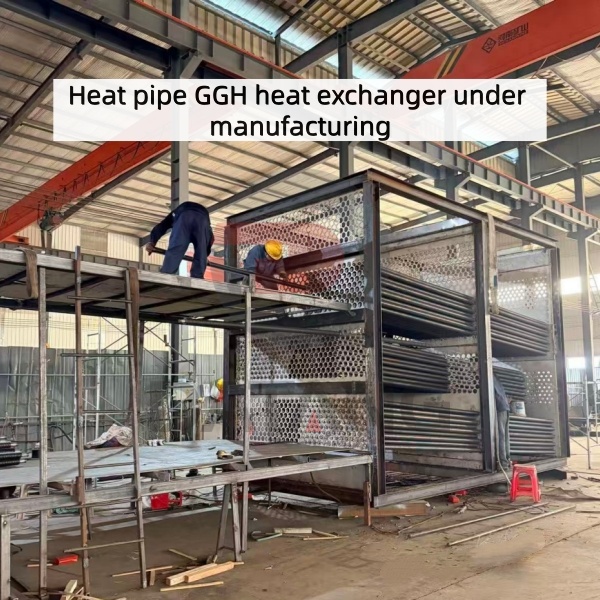
The heat pipe GGH heat exchanger is currently being manufactured in our workshop. Quality control is applied throughout the production process to help ensure that the components meet the specified manufacturing and assembly requirements.
Raw Material Inspection
Incoming materials are checked against the project specifications and applicable purchasing requirements. Material identification and traceability are important for confirming that the specified stainless steel grades are used in the intended components.
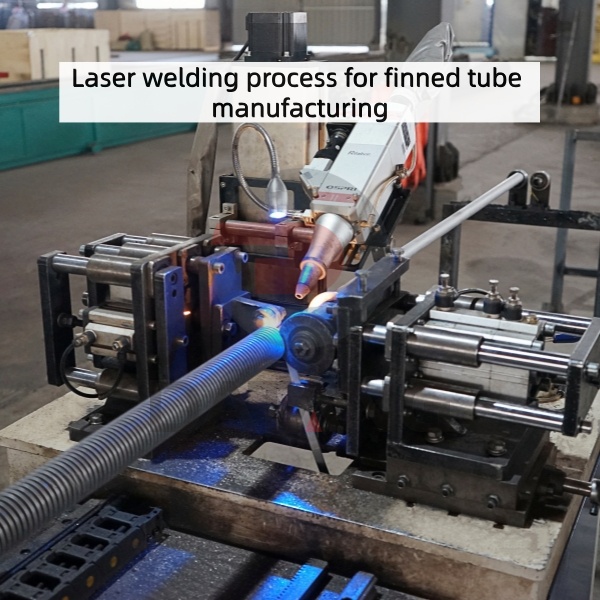
Laser Welding of Finned Tubes
The fin strips are joined to the base tubes using the specified laser welding process.
Process control focuses on welding consistency, fin alignment, dimensional stability, and the inspection requirements established for the project.
Component Assembly
After finned tube production, the relevant components are assembled according to the equipment drawings and manufacturing requirements.
Dimensional checks help verify that fabricated parts are consistent with the specified geometry and assembly tolerances.
Inspection and Dimensional Verification
Inspection activities may include visual examination, dimensional verification, weld inspection, and applicable nondestructive testing according to the project inspection plan.
The inspection methods and acceptance criteria should be determined by the applicable drawings, technical specifications, and quality requirements.
Final Quality Review
Manufacturing records, inspection results, and dimensional checks are reviewed as applicable before the equipment proceeds to subsequent production and delivery stages.
The objective is to identify manufacturing deviations early and maintain consistency between the approved design and the finished equipment.
6. How the Heat Pipe GGH Heat Exchanger Works
A heat pipe gas-to-gas heat exchanger transfers thermal energy between two gas streams through an intermediate heat transfer mechanism.
In a typical heat pipe arrangement, heat from the hotter gas stream is absorbed at the evaporator section of the heat pipe. The working fluid inside the sealed heat pipe vaporizes and transports energy to the cooler section, where it condenses and releases heat. The condensate then returns to the evaporator section through the heat pipe’s return mechanism.
This process allows heat to be transferred between the gas streams without requiring them to mix directly.
For a flue gas desulfurization application, the system can be configured to recover heat from one gas stream and use it to reheat the treated gas stream.
Depending on the process design, reheating can help reduce visible white plume formation and support downstream corrosion management. The actual outcome depends on gas composition, moisture content, outlet temperature, ambient conditions, and the overall desulfurization system design.
A heat pipe GGH is therefore not simply a collection of finned tubes. Its performance depends on the interaction between the heat transfer elements, gas flow arrangement, heat pipe design, materials, and operating conditions.
7. International Project Experience: United States and Germany
Our experience with laser welded finned tube technology extends beyond individual components to complete heat transfer equipment. Projects for customers in the United States and Germany illustrate two different ways our products serve industrial heat transfer applications.
7.1 United States: Heat Exchanger Manufactured with Laser Welded Finned Tubes
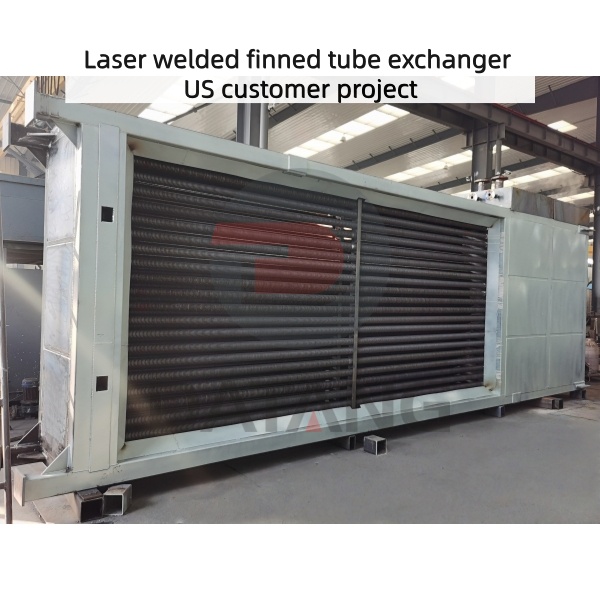
For our US customer, we supplied a heat exchanger incorporating laser welded finned tubes.
This project represents an equipment-level application of our finned tube technology. Rather than supplying the finned tubes alone, we provided a heat exchanger in which the finned tube components form part of the overall heat transfer assembly.
Laser welded finned tubes increase the external heat transfer surface area available within a given tube arrangement. Their contribution to the finished heat exchanger depends on the tube dimensions, fin geometry, material selection, gas or fluid conditions, and overall equipment design.
For equipment manufacturers and industrial end users, the relationship between the heat transfer components and the complete equipment configuration is an important consideration. Tube arrangement, fabrication accuracy, assembly requirements, and the intended operating conditions all influence the final design.
Our US project demonstrates our ability to supply heat transfer equipment incorporating laser welded finned tubes, extending our role beyond the manufacture of individual finned tube components.
Suggested project photos: Use actual photographs of the heat exchanger supplied to the US customer. A finished equipment view can help readers understand the overall assembly, while close-up photographs of the finned tube section can show the heat transfer components used in the equipment.
Project scope: Heat exchanger incorporating laser welded finned tubes. Specific operating conditions and performance results should only be included when supported by verified project data.
7.2 Germany: Laser Welded Finned Tubes Supplied as Heat Transfer Components
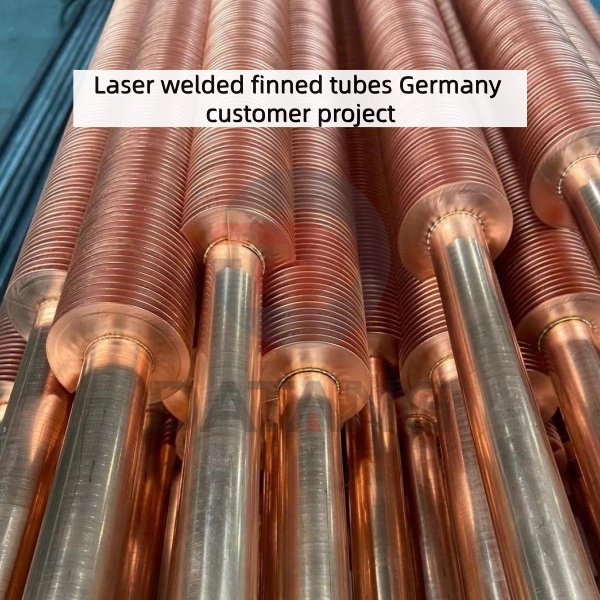
For our German customer, we supplied laser welded finned tubes as individual heat transfer components.
Unlike the US project, which involved a heat exchanger incorporating finned tubes, the German project focused on the finned tube products themselves. This type of supply is relevant to heat exchanger manufacturers, industrial equipment producers, and engineering companies that integrate finned tubes into their own equipment.
Laser welded finned tubes are manufactured by joining a metal fin strip to the outer surface of a base tube using a controlled laser welding process. The resulting fin structure increases the external heat transfer area compared with a bare tube of the same base tube diameter.
For component buyers, important considerations include base tube material, tube outside diameter, fin material, fin thickness, fin pitch, overall tube length, and the required welding quality. The appropriate specifications depend on the intended equipment and operating conditions.
Our German project demonstrates our experience supplying laser welded finned tubes directly to an international customer, supporting the customer’s own manufacturing and heat transfer requirements.
Suggested project photos: Use actual photographs of the laser welded finned tubes supplied to the German customer. Close-up views of the fin-to-tube weld, fin profile, and finished tube configuration are particularly useful for explaining the product.
Project scope: Laser welded finned tubes supplied as components. Specific dimensions, materials, order quantities, and end-use applications can be added when confirmed by the project records.
7.3 Two Supply Models, One Core Manufacturing Technology
The US and German projects illustrate two distinct supply models within the industrial heat transfer sector.
| Project | United States | Germany |
|---|---|---|
| Supplied product | Heat exchanger incorporating laser welded finned tubes | Laser welded finned tubes |
| Supply scope | Heat transfer equipment | Finned tube components |
| Main capability demonstrated | Equipment manufacturing and finned tube integration | Finned tube manufacturing and component supply |
| Relevant customer needs | Equipment configuration and integration | Product specifications and component compatibility |
For customers seeking a complete heat transfer assembly, an equipment-level solution may be the appropriate starting point. For heat exchanger manufacturers and engineering companies producing their own equipment, supplying finned tubes as components may be more suitable.
Our experience with both supply models helps us understand the different technical considerations involved in finned tube manufacturing and heat exchanger production.
Alongside these international projects, our current lithium hydroxide plant GGH project further illustrates how laser welded finned tubes can be incorporated into customized equipment for demanding industrial applications.
Customer-specific details should be disclosed only where permitted, and project performance claims should be based on verified information.
Conclusion
This lithium hydroxide plant project illustrates the role of laser welded finned tubes in a customized heat pipe GGH heat exchanger designed for a flue gas desulfurization application.
The combination of 316L stainless steel base tubes and 2205 duplex stainless steel fins was selected with the project’s corrosion-related requirements in mind. Material verification, controlled laser welding, dimensional inspection, and manufacturing quality control are important parts of preparing the equipment for its intended service.
Our international experience provides further examples of how this technology can be supplied for different customer requirements. In the United States, we supplied a heat exchanger incorporating laser welded finned tubes. In Germany, we supplied laser welded finned tubes as individual heat transfer components.
Together, these projects demonstrate our involvement in both equipment-level heat transfer solutions and finned tube component manufacturing.
For engineers, heat exchanger manufacturers, and industrial equipment producers evaluating laser welded finned tubes, the starting point is to establish the actual operating conditions, material requirements, and equipment configuration. These details help determine an appropriate finned tube specification and manufacturing approach for each application.
8. Application Benefits and Engineering Considerations
The customized laser welded finned tube configuration for this GGH heat exchanger addresses several important design considerations.
- Application-specific material selection: The 316L base tubes and 2205 duplex stainless steel fins were selected as part of the project’s corrosion-related design considerations.
- Increased external heat transfer area: Finned tubes provide more external surface area than bare tubes of the same base tube diameter.
- Controlled manufacturing process: Laser welding and dimensional inspection help maintain consistency in fin geometry and fabrication quality.
- Customized equipment integration: The finned tube components are designed for integration into the customer’s heat pipe GGH system.
- Manufacturing quality control: Material inspection, welding checks, component assembly, and dimensional verification are incorporated into the production workflow.
These are design and manufacturing considerations rather than claims of verified operating results. Final heat transfer performance, corrosion resistance, service life, and emissions-related outcomes must be evaluated against the completed equipment design and actual operating conditions.
9. Related Products and Technical Support
Laser welded finned tubes are used in a range of industrial heat transfer applications, including gas-to-gas heat exchangers, waste heat recovery equipment, air heaters, and other customized thermal systems.
Our work covers both finned tube manufacturing and the production of equipment incorporating finned tube heat transfer components.
For projects involving corrosive gases, high-temperature processes, or limited installation space, the design process should begin with the actual operating data rather than a standard product description.
Useful information for a preliminary technical evaluation includes:
- Gas composition and potential corrosive species.
- Gas inlet and target outlet temperatures.
- Gas flow rate and operating pressure.
- Expected condensation conditions and condensate chemistry.
- Available installation space and equipment configuration.
- Required materials, inspection methods, and applicable standards.
Based on the available information, the appropriate finned tube structure, material configuration, and manufacturing requirements can be evaluated for the intended application.
Explore our related products:
- Laser Welded Finned Tubes
- Heat Pipe Heat Exchangers
- Customized Finned Tube Solutions
- Finned Tube Production Equipment
For a project-specific discussion, customers can share their operating conditions, drawings, or preliminary technical specifications for further evaluation.
Conclusion
This lithium hydroxide plant project illustrates how laser welded finned tubes can be incorporated into a customized heat pipe GGH heat exchanger for an industrial flue gas desulfurization system.
The combination of 316L stainless steel base tubes and 2205 duplex stainless steel fins was selected with the project’s corrosion-related requirements in mind. Detailed technical communication, material verification, controlled welding, and manufacturing inspection are important parts of preparing the equipment for its intended service.
Together with our laser welded finned tube project experience in the United States and Germany, this project reflects our approach to industrial heat transfer: understand the application first, develop a suitable component configuration, and manufacture according to the agreed technical requirements.
For engineers and equipment manufacturers evaluating laser welded finned tubes for GGH systems or other industrial heat exchangers, the most useful starting point is a clear understanding of the process conditions, material requirements, and expected operating environment.
Post time: Oct-26-2026