L-Foot Finned Tubes: The Comprehensive Selection Guide for Optimal Thermal Performance

L-Foot Finned Tubes: The Comprehensive Selection Guide for Optimal Thermal Performance
Discover the complete range of L-foot finned tube options. Compare materials, fin dimensions, and configurations for air coolers and heat exchangers. Includes engineer’s selection checklist, cost insights, and FAQs.
The L-foot finned tube (also widely known as the L type finned tube, tension wound finned tube, or simply aluminum L foot fin tube) remains one of the most broadly specified extended surface components in the heat transfer industry. Its fundamental appeal lies in an elegant balance: good thermal contact, wide material compatibility, and economical manufacturing.
However, not all L-foot finned tubes are created equal. The term describes a family of products with widely varying performance envelopes depending on base tube material, fin alloy, fin height, fin thickness, and pitch. Selecting the correct L foot fin tube configuration can mean the difference between a 20-year maintenance-free heat exchanger and a bundle that fails within months.
This guide, crafted for engineers, procurement professionals, and plant managers, walks you through every critical decision point in specifying an L-foot finned tube heat exchanger tube, ensuring your choice maximizes uptime and efficiency.
What Makes an L-Foot Finned Tube?
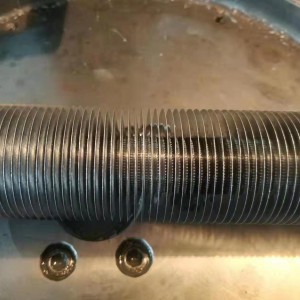
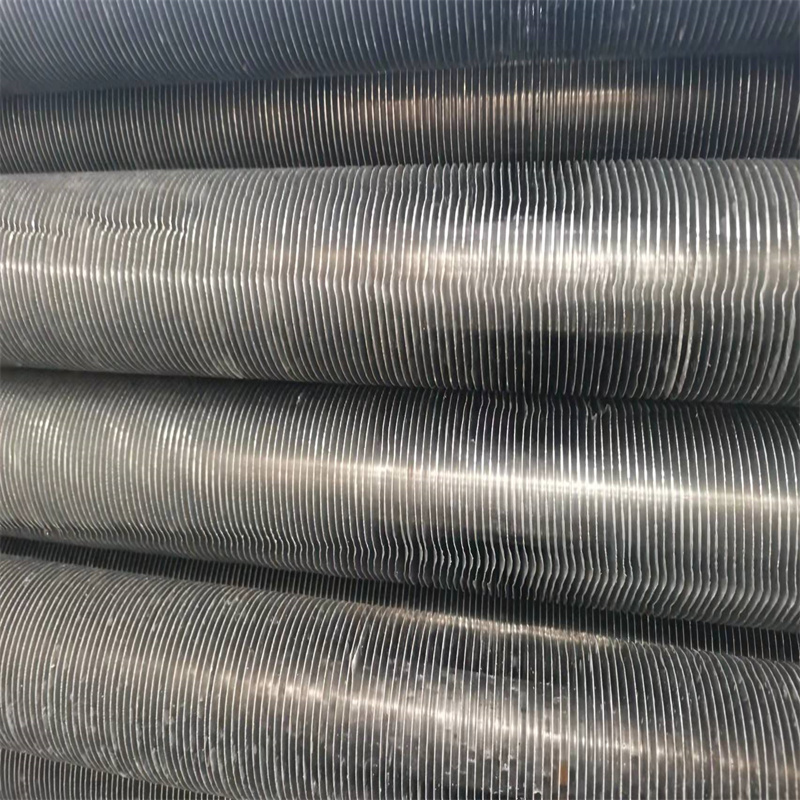
An L-foot finned tube is produced by cold-forming a metal strip (usually aluminum) into an L-shaped profile. This strip is then wound under controlled tension onto a base tube. The short horizontal leg of the “L” sits flush against the tube surface, providing a large contact area, while the vertical leg forms the fin. The process is purely mechanical, creating a dry contact pressure bond.
This construction creates the standard tension wound L-foot fin tube used in millions of air-cooled heat exchangers worldwide. Its simplicity allows for a huge range of customizations—the true power of this product.
Core L-Foot Finned Tube Options: Building Your Specification
When you contact a finned tube manufacturer, you aren’t just choosing a “type”; you are defining a precise configuration. Here are the primary L foot fin tube options you must consider.
1. Base Tube Material Selection
The tube carries the process fluid or gas and must resist internal pressure, corrosion, and temperature. Common choices include:
- Carbon Steel (e.g., SA179, A106): The default selection for most oil & gas, petrochemical, and HVAC applications. Provides high strength at low cost. Non-corrosive or inhibited internal fluids required.
- Stainless Steel (304/316): Specified when the process side is corrosive, demands high purity, or operates at high temperatures where carbon steel would oxidize rapidly. An L-foot finned tube stainless steel combination offers excellent external finning with superior internal resistance.
- Copper & Copper Alloys: For water and steam heating/cooling where carbon steel would corrode. Common in HVAC and commercial heating coils.
- Duplex & Super Duplex Stainless: For extreme chloride environments.
Selection Tip: Always match the base tube to the process fluid first. The external finning cannot protect a failing tube from internal corrosion.
2. Fin Material Selection
Aluminum dominates fin material for L-foot applications due to its excellent thermal conductivity, formability, and cost. However, alloys matter:
- Aluminum 1100 (Al99.0): Commercially pure, highest thermal conductivity. Used in general atmospheric service up to 150°C.
- Aluminum 1050/1060: Similar to 1100, excellent formability for deep L-foot profiles.
- Aluminum 3003: Slightly higher strength. Better resistance to fin damage during handling and cleaning.
- Copper Fins: Occasionally specified for specific heat transfer requirements or for full mono-metal construction with copper tubes, though L-foot is predominantly an aluminum fin technology.
- Special Fin Coatings: While the fin is aluminum, post-application coatings (epoxy, Heresite, baked phenolic) can be applied to protect against aggressive atmospheres.
3. Dimensional Options: The Performance Levers
The true art of specifying an L-foot finned tube lies in the dimensional ratios. Your finned tube manufacturer can adjust:
| Parameter | Common Range | Impact on Performance | Selection Note |
|---|---|---|---|
| Fin Height | 6.35 mm – 16 mm (0.25″ – 0.625″) | Higher fin = more surface area but lower fin efficiency. | Shorter fins are more efficient; use taller fins when space constraints limit bundle size. |
| Fin Thickness | 0.3 mm – 0.5 mm (0.012″ – 0.020″) | Thicker fins resist mechanical damage and erosion but increase weight and cost. | Select thicker fins for high-vibration or frequent cleaning environments. |
| Fin Density (Pitch) | 8 FPI – 12 FPI (fins per inch) typical; up to 16 FPI possible | Higher FPI packs more surface area into the same bundle but increases air-side pressure drop and fouling risk. | Use 8-10 FPI for dirty airstreams, 11-16 FPI for clean, forced-draft air. |
Engineer’s Rule of Thumb: For a given heat duty, start with 10 FPI, 12.7 mm (1/2″) fin height, and 0.4 mm thickness. Iterate from there with your thermal rating software.
4. Tube Diameter & Length
Standard tube outside diameters for L-type finned tubes include 15.88 mm (5/8″), 19.05 mm (3/4″), 25.4 mm (1″), and 31.75 mm (1 1/4″). Lengths are typically supplied up to 12 meters (40 feet). The combination of tube OD and fin height defines the fin tip diameter, which dictates the heat exchanger bundle casing size.
5. Fin Foot Enhancements: The KL Option
While technically a sub-type, the KL (Knurled) L-foot finned tube is a direct evolutionary step many customers include in their “L-foot” selection. It involves knurling the base tube before wrapping, significantly increasing the operational temperature limit and vibration resistance. If your process operates above 150°C or cycles frequently, specifying a knurled tube is a low-cost insurance worth considering as part of your L foot fin tube options.
Cost Factors in L-Foot Finned Tube Selection
Procurement professionals know that the cost of an L-foot finned tube isn’t just about the meter price. Let’s break down what drives total cost:
- Material Costs: A 304 stainless steel base tube costs 5-7x more than carbon steel. Aluminum fin alloy cost is relatively stable, but fin thickness adds weight and thus material cost.
- Manufacturing Complexity: Higher fin densities and taller fins require more time and material. Custom tube gauges and special temper requirements can increase the minimum order quantity (MOQ) and lead time.
- Quality Assurance: If your specification requires lock-seam testing, pull-force testing, and full material traceability (typically for API or pressure equipment directive compliance), the finned tube manufacturer will add a QA premium. This cost prevents downstream field failures.
- Logistics: L-foot finned tubes are light but bulky. Shipping costs for a 12-meter tube bundle can be significant, especially for export orders.
When to Stick with L-Foot and When to Move On
The decision often boils down to this question: “Can I reliably use an L-foot fin tube in this application?”
Stay with L-Foot (or KL Finned Tube) if:
- Continuous operating temperatures are below 170°C (338°F).
- The atmosphere is relatively clean and dry (standard industrial).
- Budget is the primary constraint, and you can accept periodic maintenance checks.
- The base tube is carbon steel and internal fluid is non-corrosive.
Consider alternatives (such as embedded G-fin, extruded bimetallic, or welded fin tubes) if:
- Temperatures exceed 200°C.
- The environment is marine, corrosive, or subject to high-pressure spray washing.
- Vibration from compressors or flow turbulence is severe.
- Zero maintenance over a 20-year life is mandated.
Frequently Asked Questions (FAQ)
What is an L-foot finned tube?
An L-foot finned tube, also called an L type finned tube or tension wound finned tube, is a heat transfer tube with an aluminum strip formed into an L-shape and tension-wrapped around the base tube. It provides an economical way to increase heat transfer surface area.
What materials are available for L-foot fin tubes?
Typically, aluminum fins (1100, 1050, 3003) are combined with carbon steel, stainless steel, or copper base tubes. This gives a wide range of L-foot finned tube material options to match various process fluids and ambient conditions.
What is the maximum fin density I can get on an L-foot finned tube?
Most manufacturers can produce up to 16 fins per inch (FPI) on a standard tension wound L foot fin tube, but thermal performance and fouling risk dictate that 8-12 FPI is the practical range for most air-cooled exchangers.
Can I use L-foot finned tubes with stainless steel base tubes?
Absolutely. An L-foot finned tube stainless steel combination is common when the process fluid requires stainless but the ambient air does not. Ensure the aluminum fin is compatible with the exterior atmosphere to avoid galvanic corrosion.
How do I select the right fin height and pitch?
This is driven by thermal design software such as HTRI or Aspen. Generally, high fins maximize surface area, while higher pitch (lower FPI) minimizes pressure drop. A qualified finned tube manufacturer can help optimize these L foot fin tube specifications against your heat duty.
What quality certifications should I look for?
For critical applications, look for manufacturers holding ISO 9001, ASME Section VIII (for pressure parts), and capable of providing positive material identification (PMI), fin pull tests, and dimensional inspection reports. Detailed quality control is the hallmark of a top-tier finned tube manufacturer.
Conclusion: Specifying with Confidence
The L-foot finned tube is a highly configurable, cost-effective workhorse. By understanding the implications of base tube materials, fin alloys, fin height, thickness, and density, you can dial in a product that meets your thermal target without over-engineering the cost. Whether you need a simple carbon steel aluminum L foot fin tube for a building’s HVAC system or a precision L type finned tube with stainless tube and thicker fins for a refinery air cooler, the solution exists off the shelf or with minimal tooling.
Use this selection guide to structure your next data sheet, and engage with your finned tube supplier early—the best outcomes arise from collaborative optimization rather than a blind lowest-bid process. A correctly specified L-foot tube will deliver years of robust, predictable heat transfer.