
Why Do Power Plants Prefer Laser Welded Fin Tubes Over HF Welded Finned Tubes?
For years, industrial buyers focused on one question when selecting finned tubes:
“Which type costs less?”
Today, the question has changed.
Modern power plants, petrochemical projects, waste heat recovery systems, and process industries are now asking:
- Which finned tube delivers higher thermal efficiency?
- Which solution survives thermal fatigue longer?
- Which design reduces shutdown risk?
- Which technology improves lifecycle ROI instead of only lowering initial cost?
That shift is exactly why Laser Welded Fin Tubes are rapidly becoming the premium choice in advanced heat exchanger manufacturing.
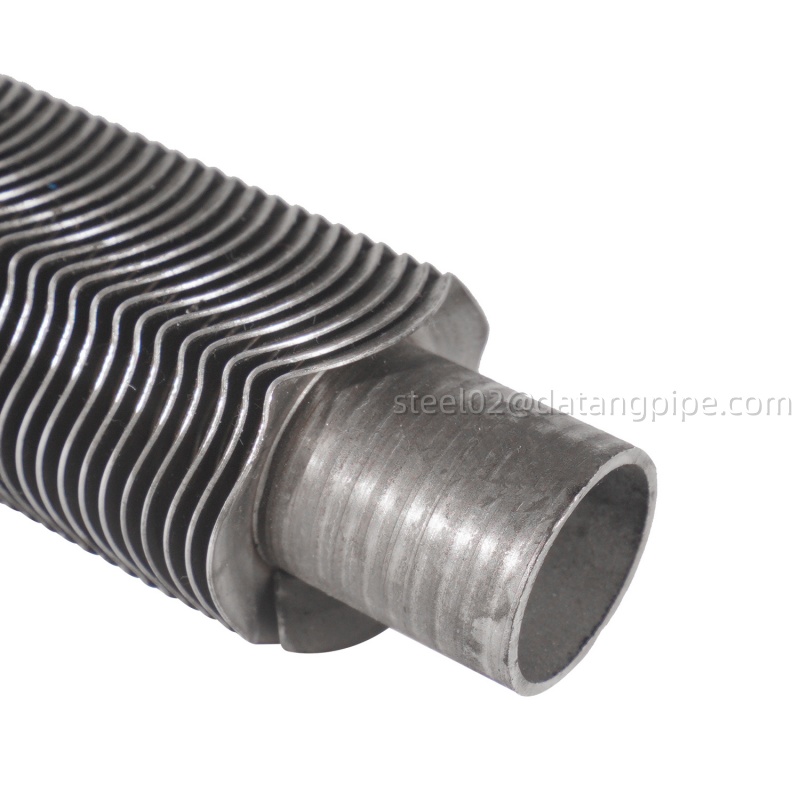
What Makes Laser Welded Fin Tubes Different?
A traditional welded fin tube joins the fin to the tube mechanically or through conventional welding methods.
A Laser Welded Fin Tube uses concentrated laser energy to create an ultra-precise metallurgical bond between the fin strip and the base tube.
The result is not simply “a fin attached to a tube.”
It becomes a high-integrity thermal component engineered for:
- extreme heat transfer efficiency,
- lower thermal resistance,
- higher structural stability,
- and long-duration industrial operation.
This is why industries searching for:
- laser welded fin tube manufacturer
- high efficiency finned tube
- heat exchanger fin tube
- stainless steel finned tube
- industrial fin tube supplier
are increasingly moving away from conventional finning technologies.
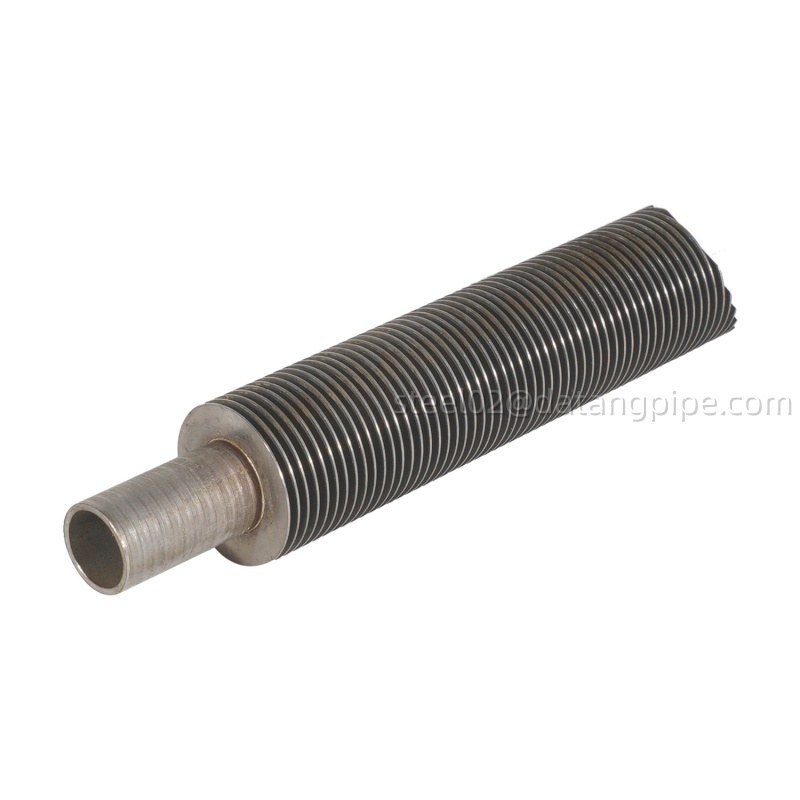
The Real Advantage Is Not the Weld — It’s Thermal Performance
Most online articles only describe the welding process.
Experienced engineers care more about what happens after installation.
The real value of a laser welded fin tube lies in three engineering outcomes:
1. Lower Thermal Contact Resistance
In heat exchangers, energy loss often occurs at the interface between the fin and the tube.
Laser welding creates a highly continuous bonding layer, reducing microscopic air gaps that normally reduce heat conduction.
That means:
- faster heat transfer,
- improved thermal responsiveness,
- and higher exchanger efficiency under the same operating conditions.
For economizers and air coolers, even small efficiency gains can translate into major annual energy savings.
2. Better Performance Under Thermal Cycling
Many fin failures are not caused by corrosion.
They are caused by repeated expansion and contraction.
In applications such as:
- boiler economizers,
- HRSG systems,
- fired heaters,
- exhaust gas recovery units,
the finned tube constantly experiences thermal stress.
A laser welded structure provides:
- stronger fin stability,
- reduced cracking risk,
- lower deformation probability,
- and improved resistance to thermal fatigue.
This is one reason why EPC contractors increasingly specify laser welded finned tubes for continuous-duty systems.
3. Cleaner Geometry Improves Air-Side Heat Transfer
Precision matters more than many buyers realize.
Laser welding allows:
- more accurate fin pitch,
- more uniform fin height,
- and cleaner weld seams.
This improves airflow distribution across the heat transfer surface.
In practical operation, that means:
- reduced fouling tendency,
- lower airflow resistance,
- improved heat dissipation,
- and easier maintenance.
For air-cooled heat exchangers, this becomes a major operational advantage.
Why High-End Projects Prefer Laser Welded Finned Tubes
Low-cost projects often prioritize purchase price.
High-value industrial projects prioritize:
- lifecycle stability,
- operational reliability,
- maintenance intervals,
- and thermal efficiency consistency.
That is why laser fin tubes are now widely used in:
Waste Heat Recovery Systems
Higher recovery efficiency directly improves energy utilization rates.
Petrochemical Plants
Excellent for high-temperature and corrosive operating environments.
Power Generation
Commonly used in boiler economizers and advanced heat recovery units.
Marine & Offshore Equipment
Compact structure with high thermal reliability.
Hydrogen & Clean Energy Projects
Increasingly selected for modern high-efficiency thermal systems.
Laser Welded Fin Tube vs High Frequency Welded Fin Tube
This comparison is now one of the most searched topics on Google in the finned tube industry.
| Technical Factor | Laser Welded Fin Tube | High Frequency Welded Fin Tube |
|---|---|---|
| Bonding Precision | Extremely High | Moderate |
| Thermal Contact Resistance | Lower | Higher |
| Fin Stability | Excellent | Good |
| Surface Finish | Cleaner | Rougher |
| Thermal Fatigue Resistance | Superior | Standard |
| High-End Heat Exchanger Suitability | Excellent | Limited in some conditions |
The market trend is clear:
high-frequency welding remains cost-effective, while laser welding is becoming the preferred technology for premium industrial applications.
What Professional Buyers Actually Look For
When procurement managers search for:
- laser finned tube supplier
- welded fin tube manufacturer
- heat exchanger tube company
they are no longer only comparing price.
They are evaluating:
- automated laser welding capability,
- metallurgy consistency,
- fin bonding integrity,
- production tolerances,
- material traceability,
- export standards,
- and long-term operational reliability.
This shift is transforming the global finned tube market from commodity manufacturing into precision thermal engineering.
The Future of Industrial Heat Exchange Is More Precise
As industries push toward:
- lower emissions,
- higher thermal efficiency,
- reduced fuel consumption,
- and smarter energy recovery,
traditional finning methods are reaching their limitations.
Laser welded fin tubes represent a new generation of heat transfer technology:
- more precise,
- more energy-efficient,
- and more aligned with modern industrial performance requirements.
For companies designing next-generation boilers, economizers, air coolers, and heat recovery systems, the question is no longer whether laser finning works.
The question is how much efficiency is lost without it.
Post time: May-14-2026